

Estimated reading time: 8 minutes
Cherry season only lasts for a few weeks and coincides with one of the busiest times of the year. Cherries can be a risky crop because they are damaged by rain, but for us, they’re one of the “must-have” trees in your garden.
It can be hard to carve out time for preserving, but the lure of cherry pie is irresistible. Time must be found!
For that reason, we look forward to rainy days in summer. We can’t be outside picking, so it’s the perfect chance for cherry kitchen time.
How many ways are there to preserve cherries?
Cherry pie is a wondrous thing (and we’ll get to it in a minute), but there are also plenty of other ways to preserve and cook cherries.
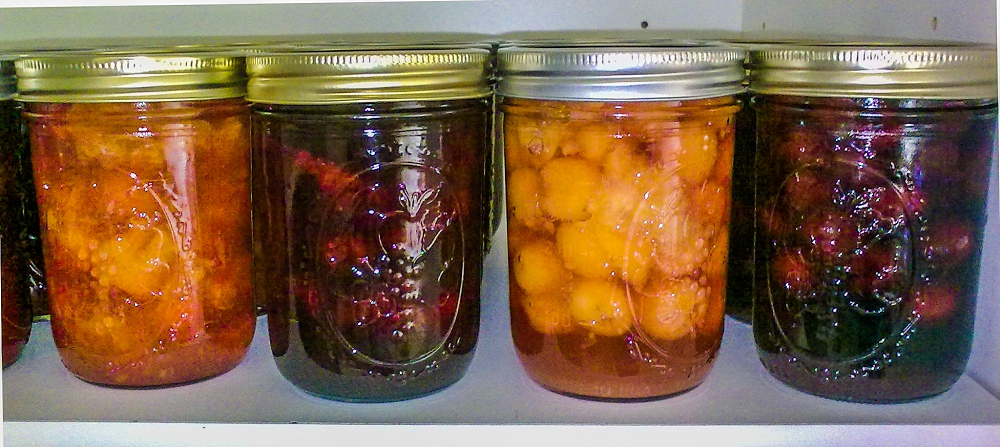
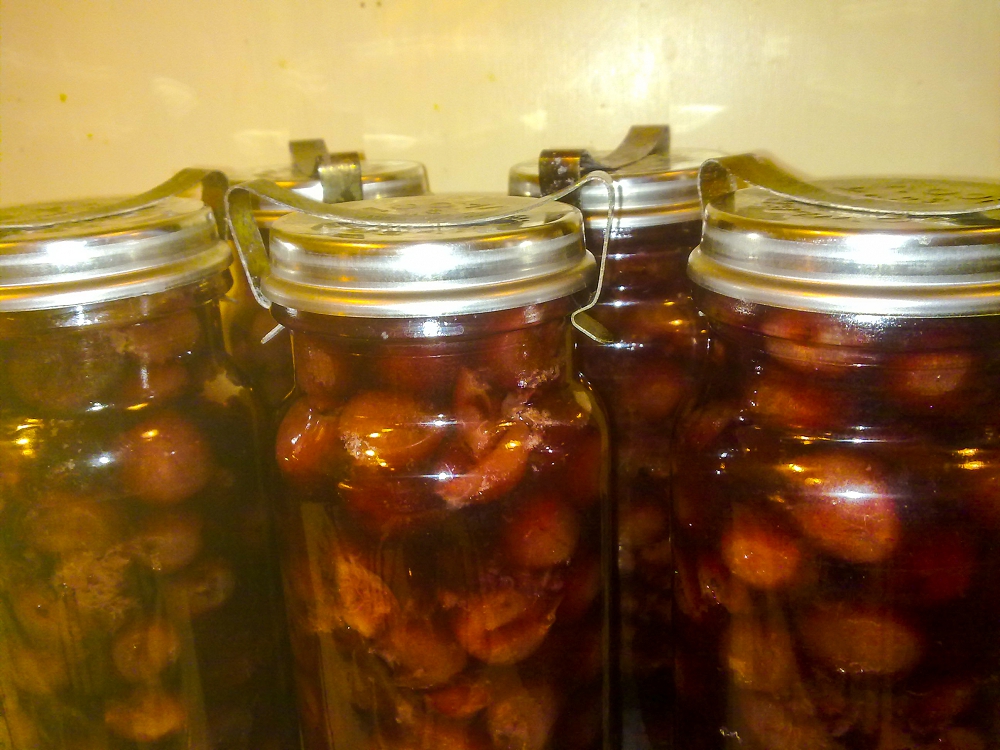
A member of our Grow Great Fruit family, Christine, got us inspired with this photo (below). It’s two types of cherry (white-fleshed Rainier and red-fleshed Lambert), preserved in two different ways.
The jars on the left are cherry conserve (like a cherry jam), and the two jars on the right are cherries in brandy. Aren’t they gorgeous? It’s so satisfying to see home-grown cherries prepared so beautifully.
What to do with too many cherries
Having a glut of cherries that need to be used quickly can put your ingenuity to the test. (However, it’s a very good problem to have.) This is a problem we had to deal with a few years ago, during the big summer floods.
Over that rainy summer, we had a group of three WWOOFers (Willing Workers on Organic Farms) staying with us. One of them was Laura, a very creative chef. Laura loved having access to so much fresh fruit and was keen to try as many different preserving techniques as possible.
It was perfect timing because we had rather a lot of rain-damaged cherries.
Drying cherries — two methods
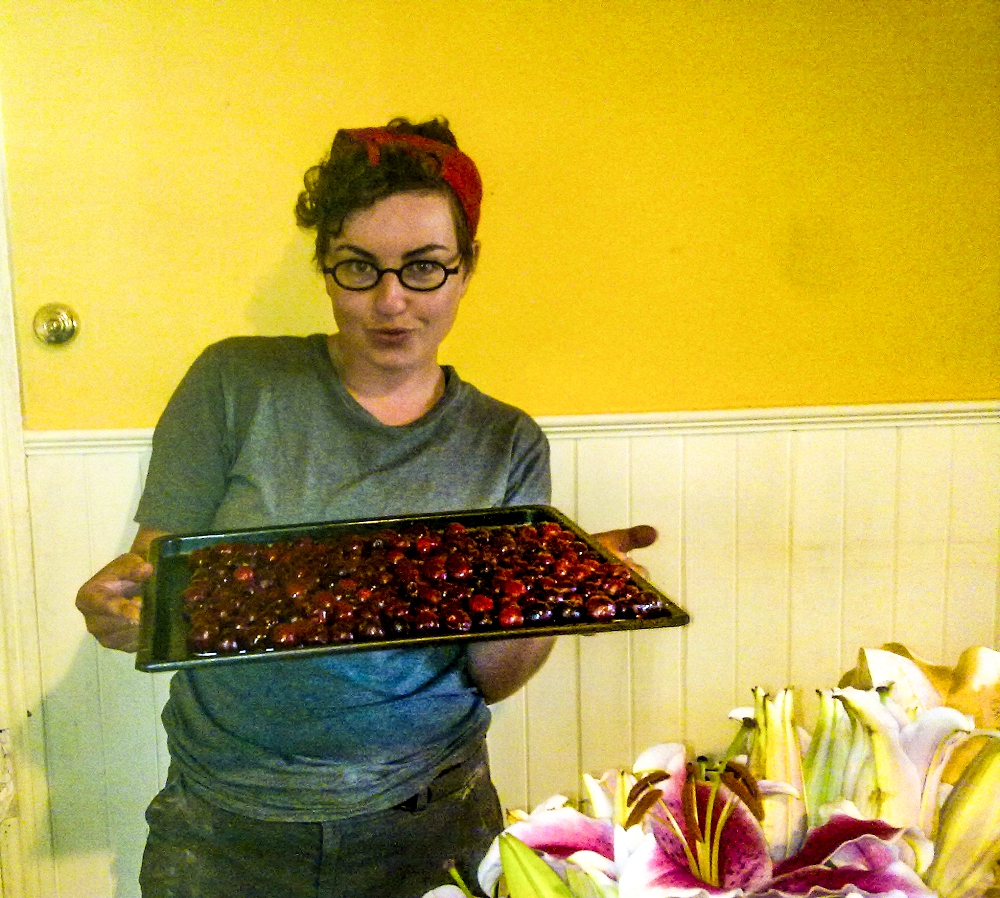
We started with modest ambitions of drying some cherries. To compare methods, we did two batches – one in the electric dehydrator and one in the oven.
If you have one, you can also dry fruit in a solar dehydrator, but they’re not compatible with rainy weather. If you don’t have one, making your own solar dehydrator is quite simple.
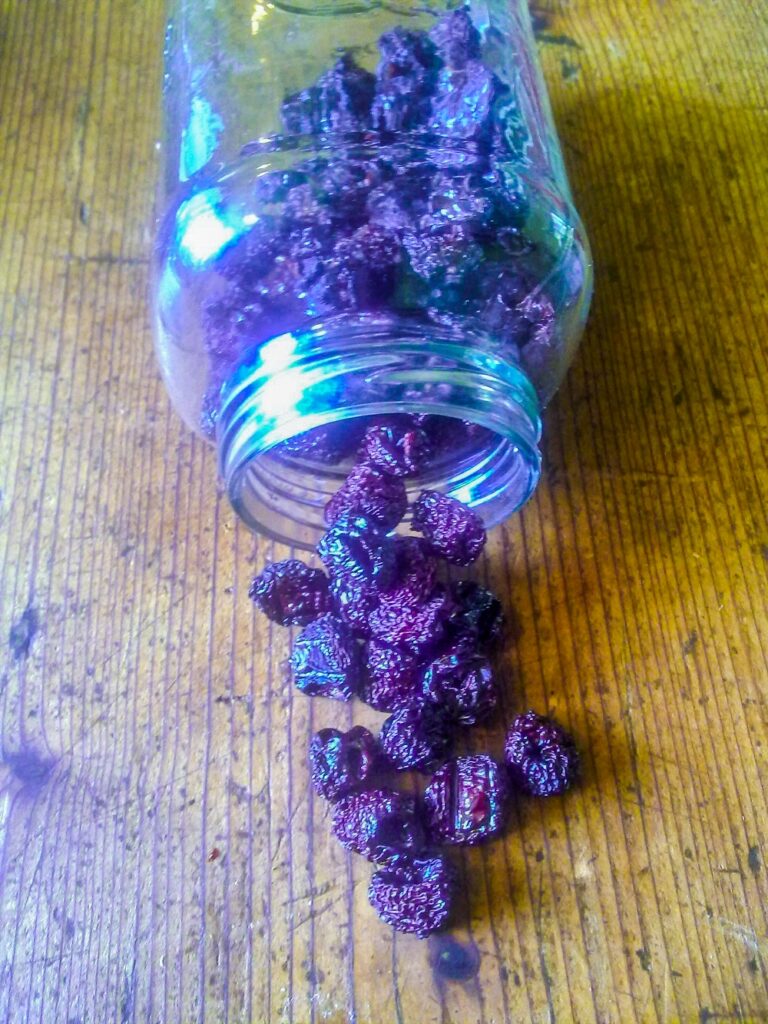
We decided that the dehydrator was easier than drying them in the oven. However, there wasn’t much difference in the end product. Here’s how they turned out.
We’ve bottled cherries (which our American visitors insisted on calling ‘canning’) plenty of times before. We normally use simple sugar syrup as the bottling liquid.
Laura wanted to try something different. She threw together a mix that included star anise, cinnamon, and cloves. When we tried them later, they were spicy and delicious, with the warm spices perfectly complementing the flavour of the cherries. This recipe has definitely entered our regular repertoire.
Baking with cherries
Then the baking started, with both dried cherries and fresh.
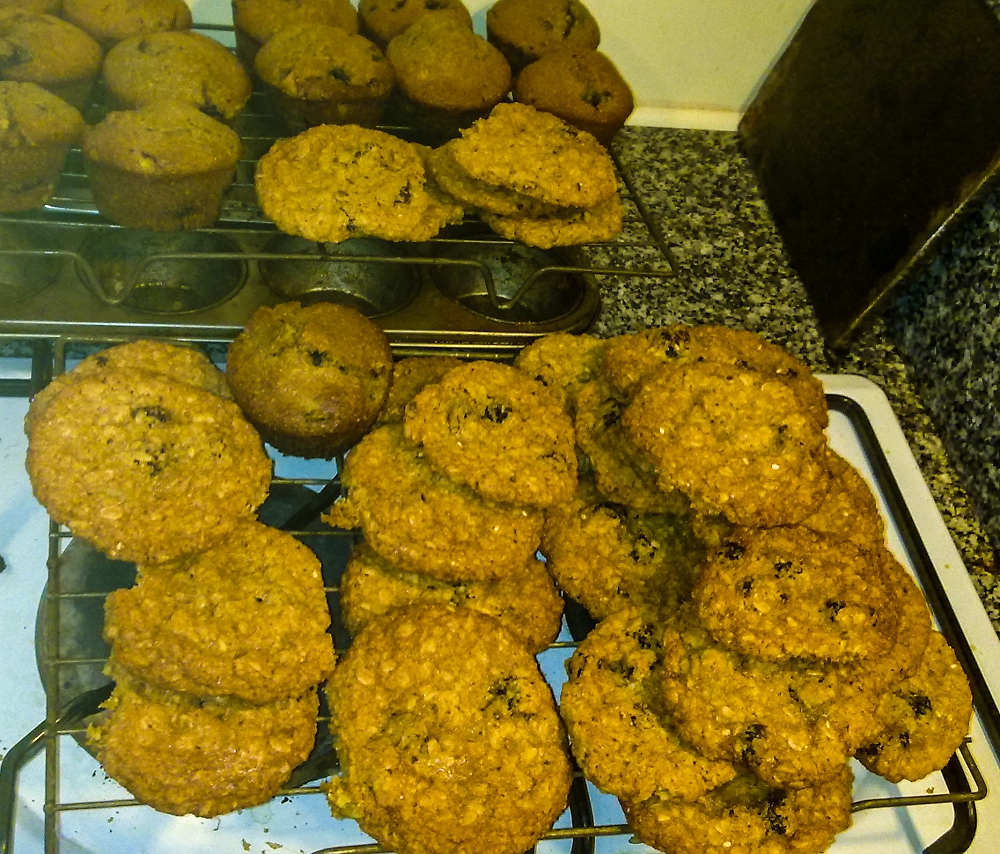
One of our favourite recipes to come out of the day was these dried cherry and oatmeal cookies. In Australia, we’d call them biscuits, but biscuits means scones in America.
To keep things simple, we named them in honour of our American guests.
Dried Cherry Cookies
1 1/4 cups butter
1 1/4 cups brown sugar
Medium egg
1 tspn vanilla essence
1 1/2 cup flour
3/4 tspn cinnamon
1/4 tspn nutmeg
1 tsp baking powder
2 1/2 cups rolled oats
1/2 cup chopped walnuts
1 cup dried cherries
Cream the butter and sugar. Add the egg and vanilla essence and mix well. In another bowl, mix the dry ingredients. Add to the butter mixture. Fold in the dried cherries and chopped walnuts. Put spoonfuls onto a greased baking tray and bake for 8-11 minutes in a moderate oven.
More cherry baking and desserts
Laura also invented two cherry-flavoured muffins: cherry and chocolate, and cherry, peach & coconut. She also tried an experimental recipe for cherry and peach scones.
By this stage of the day, we were getting pretty full of cherry goodness, but Laura hadn’t finished. Is it possible to eat too many cherry treats?
Hmmm, no.
Thoughts turned to dessert. Chef Laura got excited about making a cherry tarte tatin.
It started with sugar, dotted butter, and some fantastic Sam cherries in a frying pan. Cherries can be surprisingly bland when cooked, but Sam have a slightly tart tang to them, making them a more gourmet type of cherry. They are wonderful to cook with.
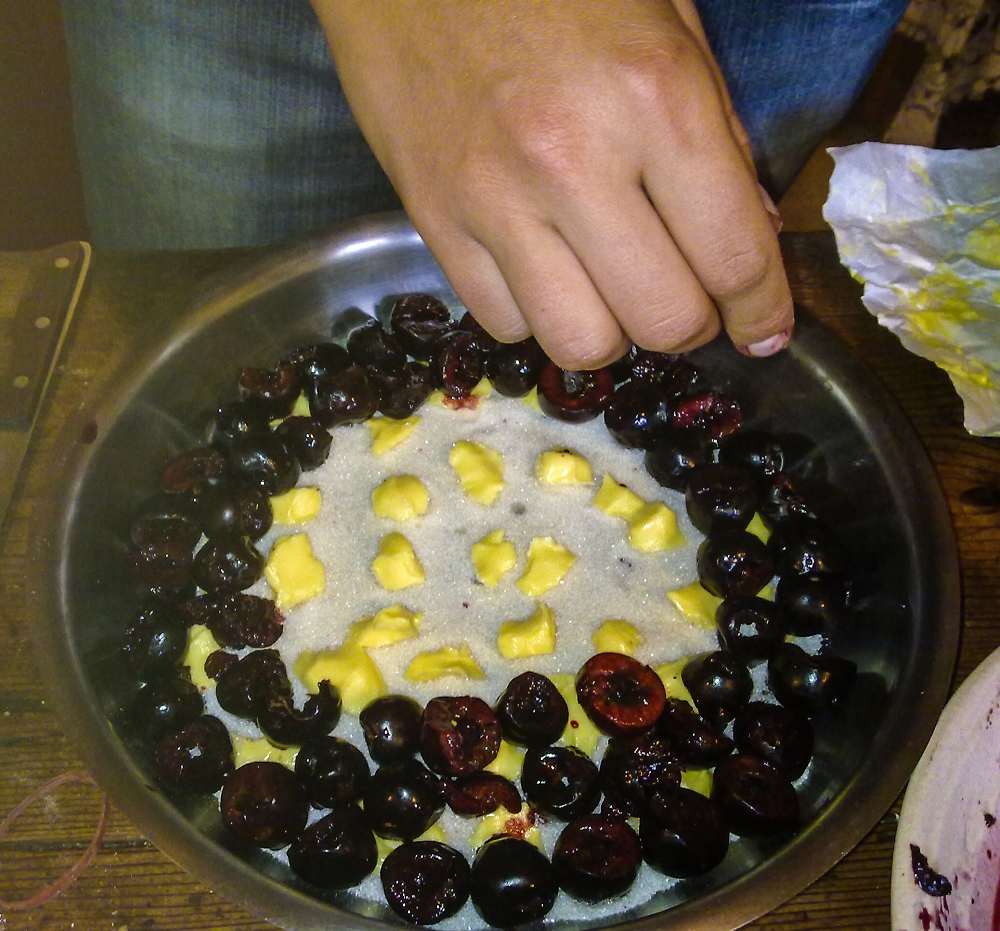
They simmered away until the liquid had reduced to a delicious syrupy consistency.
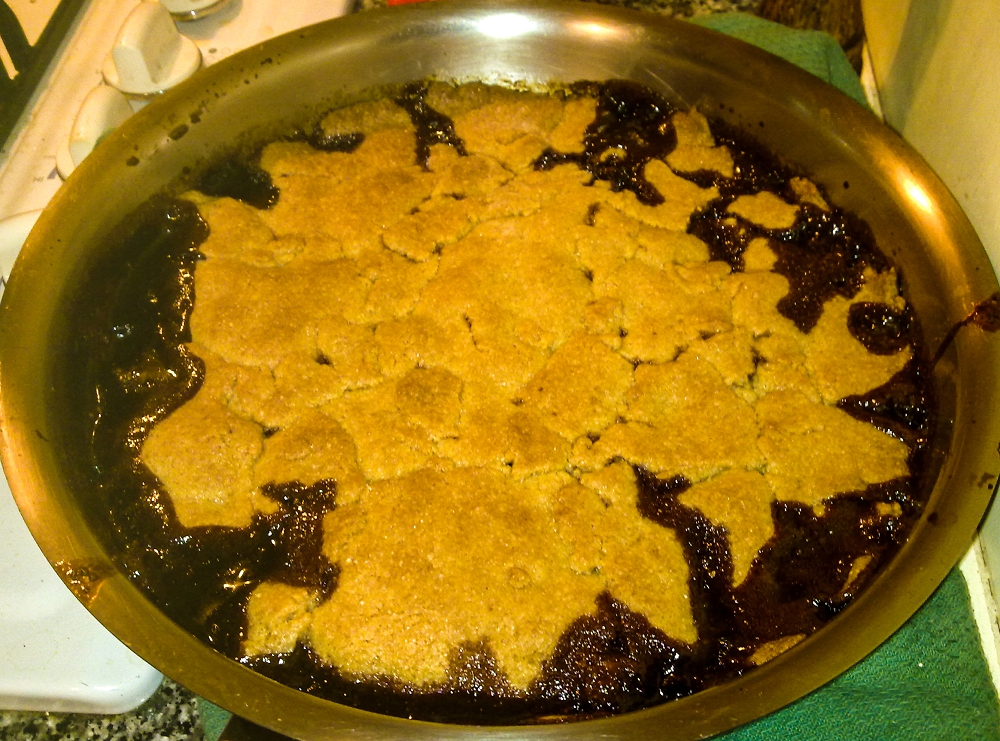
The pie dough then goes on top of the cherries and into the oven. Once cooked, the tarte is upturned on a plate and eaten with creme anglaise.
Oh yeah…..
For most people, that would have been enough. But we still had to have (as promised at the beginning of this blog) cherry pie.
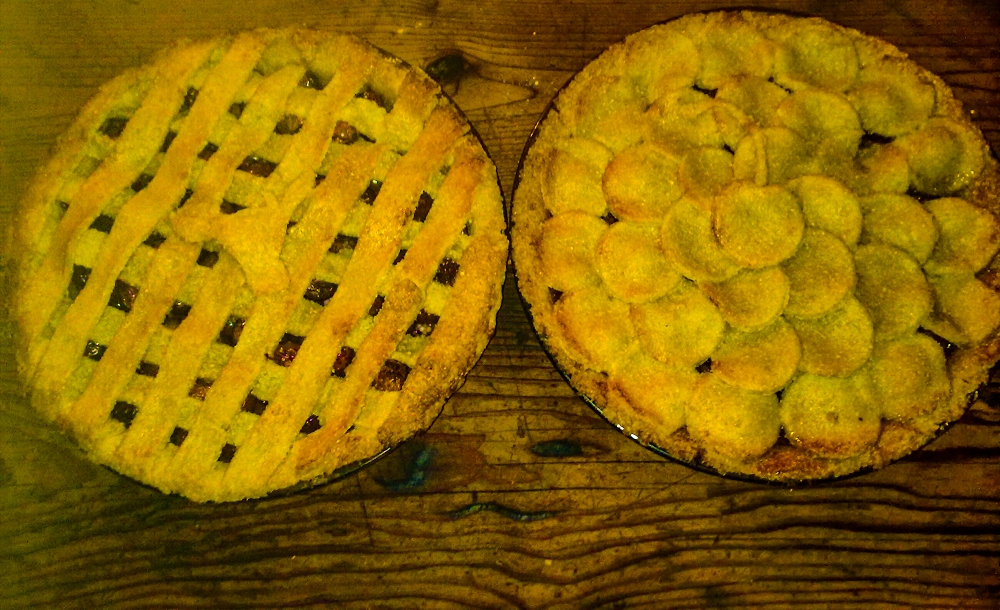
Two cherry pies, in fact.
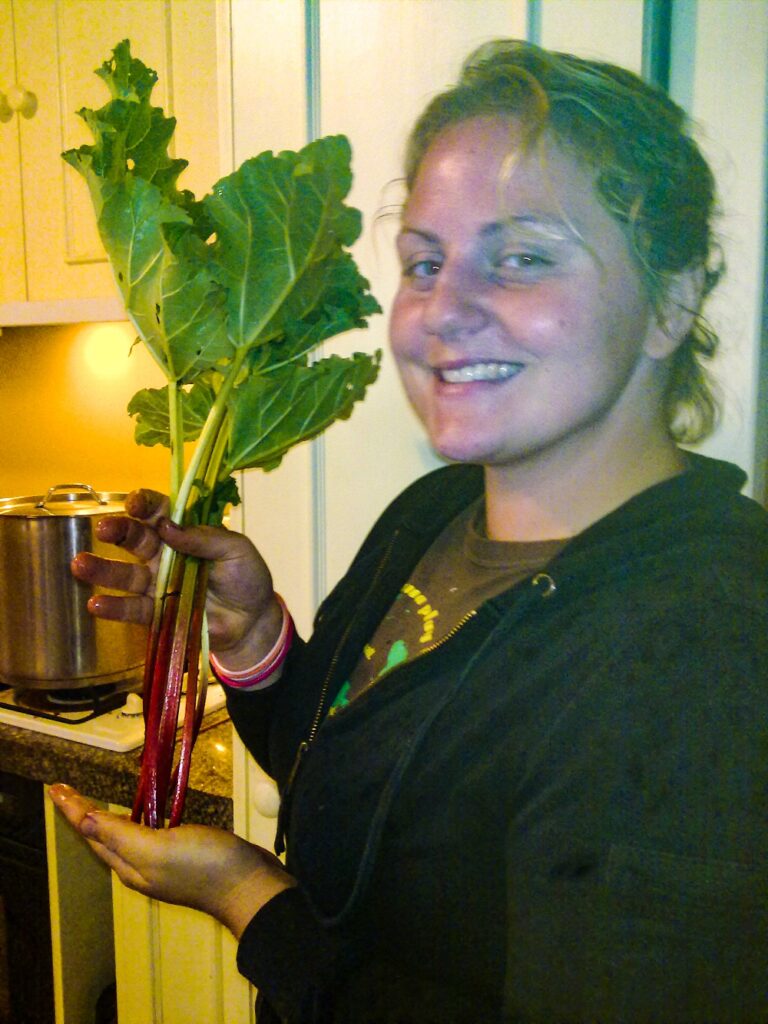
Melissa braved the elements to pick some rhubarb to make a rhubarb and cherry sauce to serve with the pies.
Kirsten and Laura got creative with some divine latticework (see the photo below). Note the cherry on top of one pie, and the goat on top of the other, in honour of our friends at Holy Goat cheese.
Are cherry trees good to grow at home for preserving?
Cherries are often overlooked as a fruit for preserving and baking. It might be because they ripen around Christmas time in Australia, when a lot of people might not have time to preserve.
Cherries are at the higher-value end of the fruit range. If you don’t grow your own, it can be very expensive to buy enough to make all these delicious cherry goodies.
For that reason (and many others), it’s worth considering planting a cherry tree.
Want to know more about growing your own cherries?
Excellent choice! Cherries are one of the most delicious fruits you can grow, and a single mature tree can easily yield 20-30kg. And with so many different ways of preserving and baking them, they’ve got to be one of the best fruit trees to include in your backyard. Here are some resources to help you grow a bountiful supply of cherries.
🍒 Cheeky Cherries Short Course
🍒 How to grow amazing cherries
🍒 Nine good reasons to grow cherries
🍒 Do cherry trees need thinning?
🍒 Spring checklist for fruit trees
Related Articles
How to grow your own dwarf fruit trees
To grow your own dwarf fruit trees, first, you have to grow a dwarfing rootstock. Here’s an easy method to create an endless supply.
Can you grow tropical fruit at home? Lessons from tropical Fruit World
Join us for a virtual tour of Tropical Fruit World where you can learn about hundreds of fruit varieties, all in one place!
Five ways to lead a more organic lifestyle
Five simple tips to help you live a more organic lifestyle and improve your health without breaking the bank.

Aw, glad to be of service! Funnily enough, I’m making cherry pie today too – they’ll both go into the freezer so that we can enjoy them in Winter!
Cherry pie check, but even better a pitted frozen batch for cherry clafoutis sometme when the weather cools enough to use the oven again!
I made a rhubarb and cherry pie this week!! So yum! 😀
The best cherries for pie are sour cherries (Morello or Kentish). If you haven’t had a cherry pie made from sour cherries you are missing out. That said, Morello cherry trees die easily from water logging and need more chill than sweet cherries but they are self-fertile. We have found that in our clay soil Kentish survives better than Morello but produces fewer cherries.
So right, Margaret – sour cherries are absolutely fabulous in a pie, and are a delight when bottled. We are definitely looking forward to when our sour cherries ripen up (Still a couple of weeks off here). Cherries certainly can be a bit fussier than other fruits, but worth it if you get them going and it sounds like you are getting some success now days, well done! Thanks for sharing your experience about Kentish vs Morello!
Jill – Grow Great Fruit team