Estimated reading time: 6 minutes
As you go about monitoring your trees and picking your fruit during the fruit season, you get to see the end result of the fruit thinning that was done in spring.
You’ll see where it worked, and where it didn’t. And if you didn’t thin the fruit from your trees, there’s a very good chance you’ll be able to notice the consequences of that decision!
Why is fruit thinning so important?
Pulling fruit off your trees (when you’re aiming to grow as much fruit as possible) seems like a weird and wrong thing to do, right?
But trust us, there are lots of good reasons for this annual practice in most fruit trees (except some smaller fruit like cherries).
One of the most important reasons is to encourage the tree to start making new fruit buds very early in the season. This will encourage the tree to have more fruit next year.
Unfortunately, you’re not going to know until next year whether it worked or not!
But other reasons for thinning are fairly obvious, like getting bigger fruit. You’ll be able to assess your results within weeks or months of doing the job.
First steps with thinning
The first thing to look at is the fruit itself.
Here’s a bunch of apricots that were missed in the thinning, and you can clearly see the outcome.
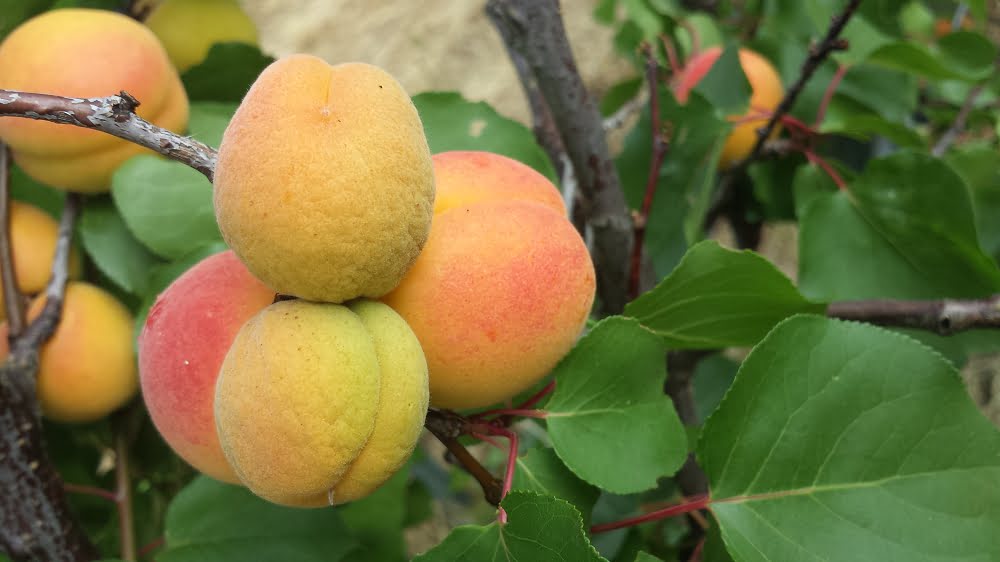
Out of this bunch of four, two apricots have grown normally. However, two are stunted, slightly shriveled, and not really edible. These are the ones that should have been removed when we were doing the thinning.
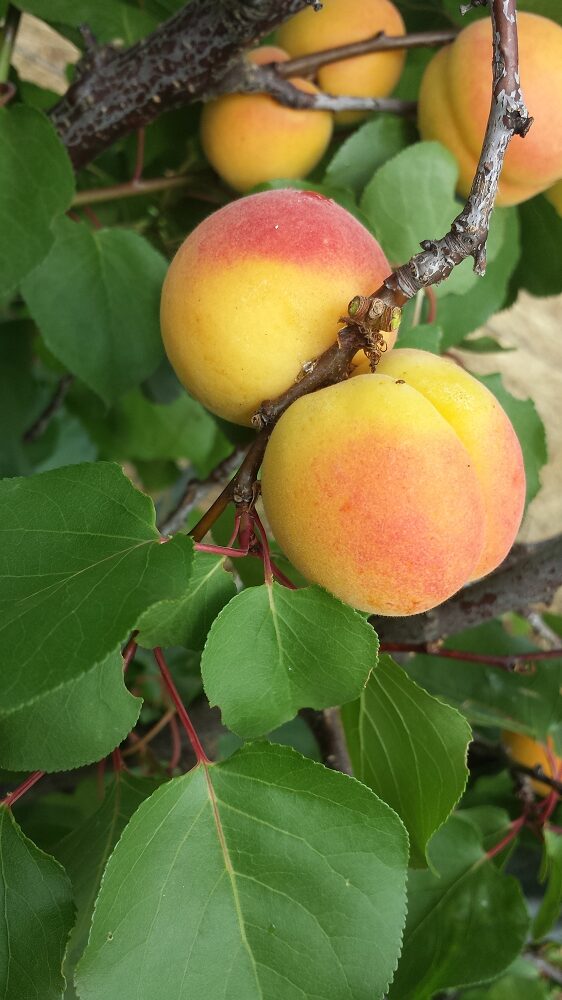
When they’re removed, you can see that we’re left with two reasonably sized, delicious-looking apricots. But…how much bigger could they have been?
The energy that the tree has put into the two discarded fruits could have been better used. It could have been growing just two pieces of fruit in the bunch to a larger size.
This is just one reason why it’s a good idea to do thinning early, hard, and thoroughly. You’re aiming to always maximise the ratio of usable, edible fruit to core/stone that the tree produces.
Other signs that your thinning might not have been good enough
It’s distressing to see broken laterals like this in your fruit tree.
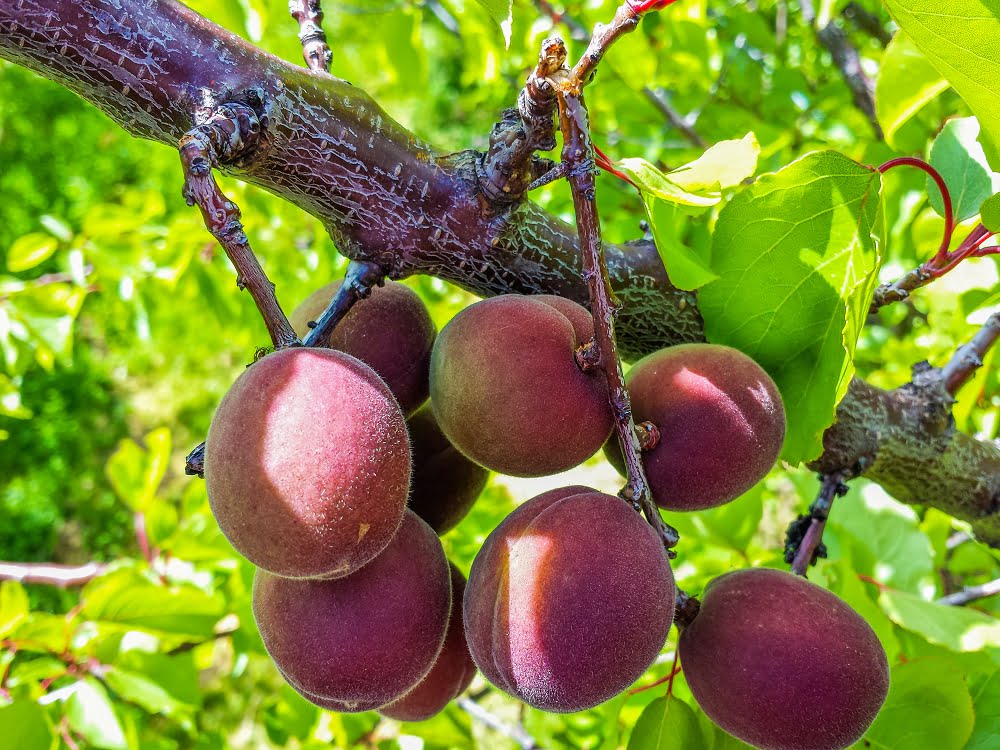
This is another problem caused by leaving too much fruit on a branch that isn’t big enough to carry the weight. Unfortunately, once the lateral is broken, you’ve lost an important fruit-bearing part of the tree. The fruit growing on that lateral is usually wasted as well.
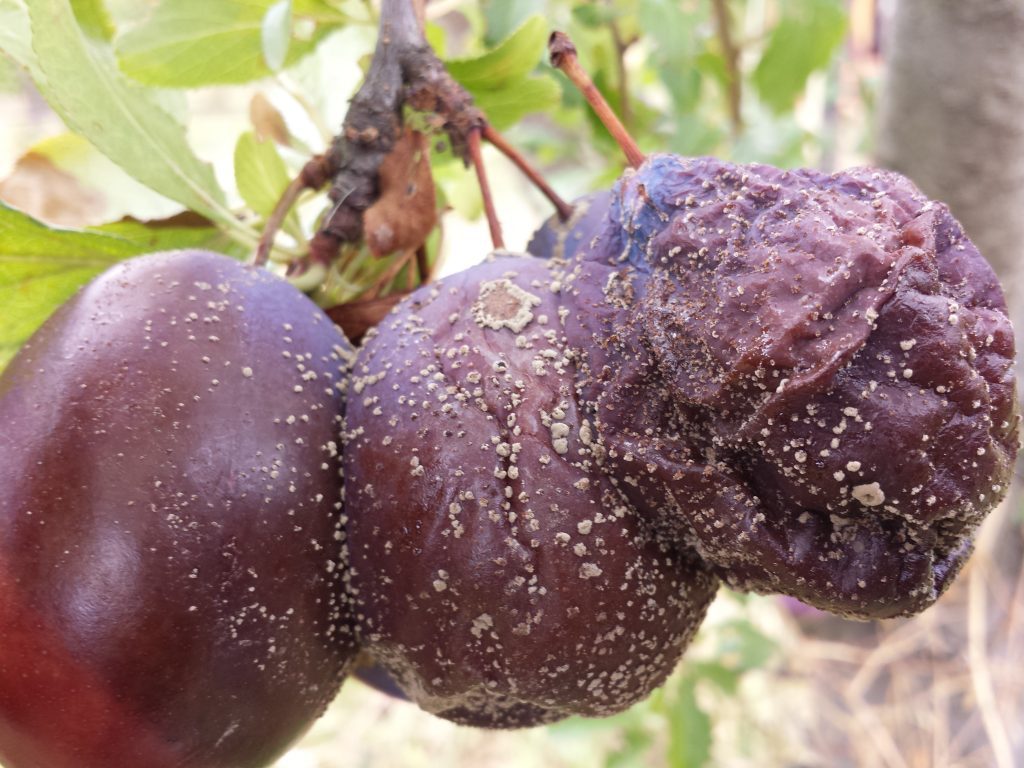
Thinning out bunches of fruit to leave them hanging as singles can also be an important way to help prevent damage from pests and diseases. If you didn’t thin your fruit, keep an eye out for:
- Earwigs or other insects hanging out in bunches of fruit
- Insects that have made their home between two pieces of fruit
- Diseases like brown rot that have spread between fruits
Overcoming the fear of thinning
Thinning has so many benefits for your tree and your crop, but a lot of people are scared to do it for fear of taking off too much fruit, too little, or just generally getting it wrong.
Our handy Fruit Thinning Chart will guide you through figuring out exactly how much fruit to take off every tree.
Having put all your care and attention into growing and pruning the tree, it’s then such a pity to damage the tree just by leaving more fruit on any one branch or lateral than it can carry.
Sorry, tree…
Need more help? Check out our other thinning resources
Still unsure how to go about fruit thinning? Knowing how much fruit to remove can be tricky, whether you’re a fruit-growing novice or an experienced gardener. We have plenty of resources to help you delve deeper into this tricky topic.
🍐 Fruit tree thinning short course (Includes charts to calculate how much fruit to remove from each tree)
🍐 How to get started with fruit thinning
🍐 Use fruit thinning to protect your tree
🍐 The essential guide to thinning grapes
🍐 Do cherry trees need thinning?
🍐 While you’re thinning, prevent disease
Related Articles
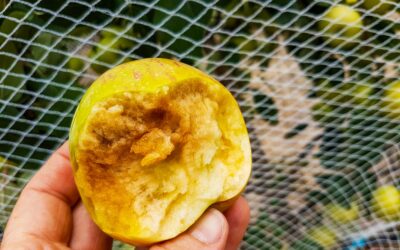
Why are my apples brown inside?
Internal browning of apples is more common in heatwaves, and some varieties are more prone to this distressing condition than others.
5 tips for picking fruit at the right time
Picking fruit at the right stage of tree-ripeness is the key to eating fruit that tastes as good as your childhood memories.
A simple guide to picking fruit the right way
Make the most of your year’s hard work by picking and storing your fruit correctly using these simple tips.
Thanks for your article about fruit thinking. Is it too late to do this now in late Spring?
Hi Judy, It’s not too late to be thinning, but it does depend a bit what it is that you are thinning. For any early crop (ie, harvest before Christmas), it’s getting a bit late amnd you’ll be thinning off a lot of your crop. Anything later will still benefit.