Estimated reading time: 7 minutes
Fruit picked perfectly at the right time can create beautiful memories.
Do you have a childhood memory of eating fruit, ripe from the tree? Perhaps at your grandma’s house or a house where you used to live as a kid. Or somewhere you visited during your summer holidays.
Why picking fruit at the right time really matters
Your special fruit memory might be a dish your Mum made every summer. It could be bottled apricots eaten in the middle of winter.
After talking to literally thousands of people about fruit, we’ve heard so many of these stories that we know it’s almost a universal shared memory.
It’s one of the things we’ve always loved about offering pick-your-own at our farm. When we see kids picking fruit from the trees, we know they’re busily making those special fruity memories.
Why fruit doesn’t taste as good as it used to
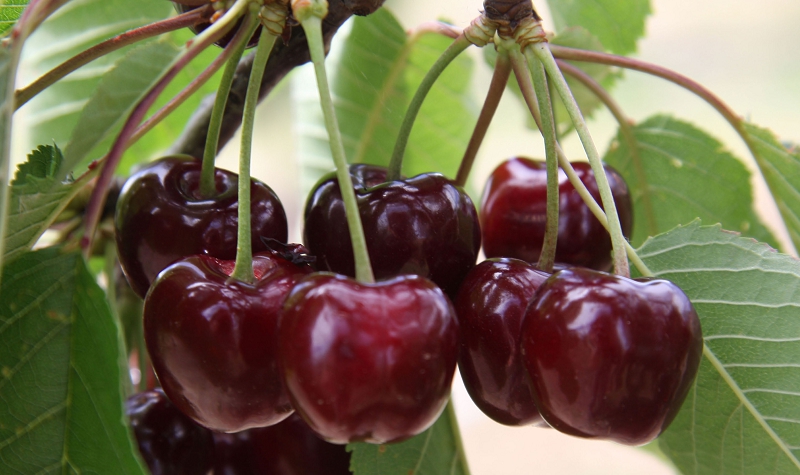
But these days, the common lament we hear is that “fruit just doesn’t taste like it used to”. The variation is “you can’t buy good fruit at a supermarket”.
People’s expectations of being able to buy fruit that tastes as good as their childhood memories are almost nil.
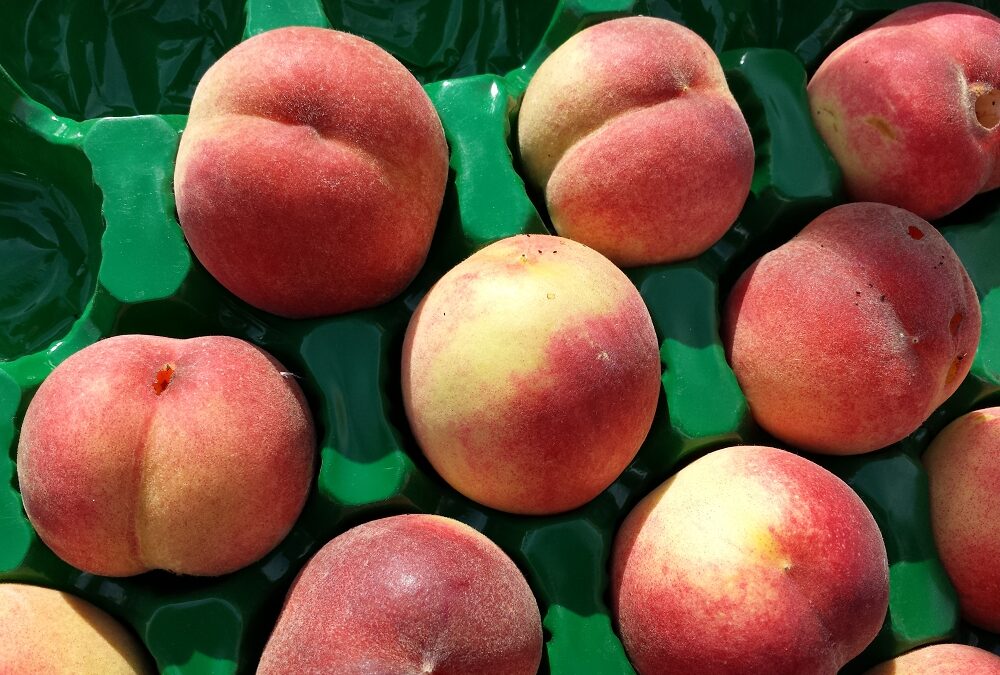
The main reason is that most fruit isn’t tree-ripened. It’s picked before it’s fully ripe so that it can reach the supermarket without getting bruised.
Unfortunately, that means sacrificing flavour.
A desire for fruit that actually tastes of something is just one of the reasons why so many people are starting to grow their own.
Knowing the right time to pick
One of the things home growers want to know is how to tell when the right time is to pick fruit.
Coincidentally, this is one of the biggest challenges of an orchardist’s job. It’s something we have put a lot of energy and thought into over the years.
As commercial fruit growers, our aim is to get fruit to our customers in absolutely perfect condition. It should be just ready to eat, ripe, and delicious.
Truthfully, those things can be very hard to achieve simultaneously.
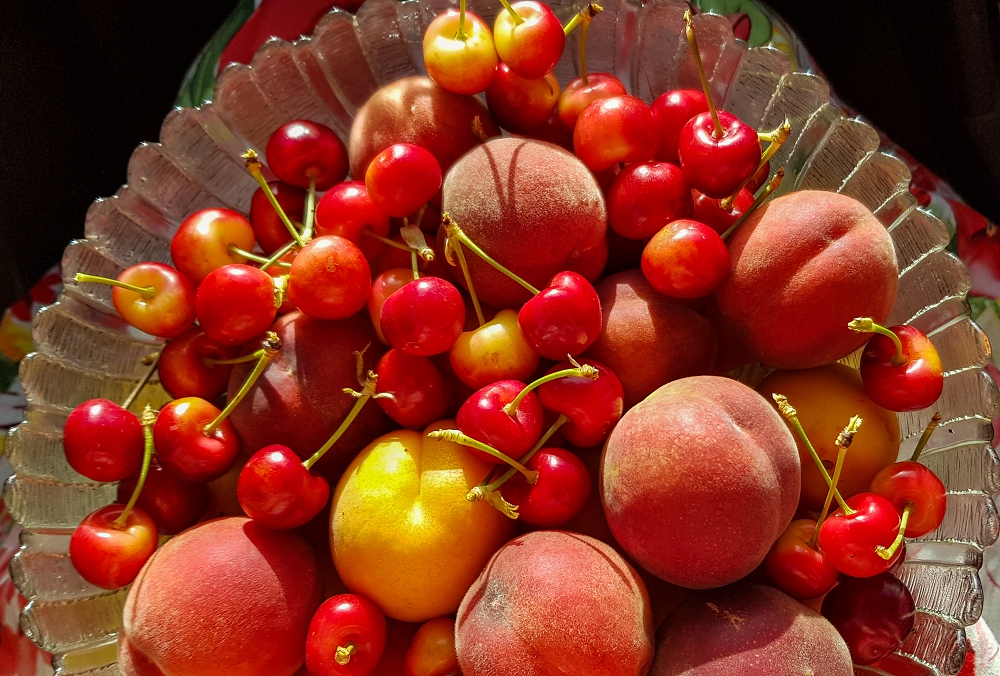
When you’re growing your own, you have the huge advantage of not having to get your fruit to market. You can afford to let the difficult decision of when to pick fall more on the side of ripening the fruit on the tree. That way it becomes more flavourful, juicy, sweet, and delicious.
If it has a few bruises from being over-ripe when you pick, it doesn’t really matter. You have no one to please but yourself, and anyway, you’re probably going to eat it within a day or two.
But even in your home garden, knowing what you’re planning to do with the fruit you pick will help you decide when to pick it. Actually, this is quite an important part of getting the most out of your fruit trees.
Common fruit-picking mistakes
Pick too green (before the fruit has reached maturity)
- the fruit won’t ripen off the tree
- it may have only reached 50% of its potential size
- under-ripe fruit will never taste as good as tree-ripened.
Pick over-ripe
- you risk bruising the fruit
- much shorter storage time
- higher chance of post-harvest rots
- the fruit may go floury
- rapidly starts losing its nutrient value after picking
- doesn’t preserve as well.
So how do you tell the perfect time to pick each piece of fruit?
This is actually quite a science, and there are many specific indicators and even tests you can do to really figure this out.
To further complicate things, picking technique can vary wildly between different types of fruit and even between different varieties.
Our top 5 tips for picking fruit at the right time
There are lots of simple indicators that will help you to get it right without getting too scientific about it. Here are our top 5 tips:
1. Look for at least one piece of fruit that’s definitely ripe.
You can judge whether a tree’s crop has reached maturity if at least one piece of fruit is ripe. This might be because it’s fallen from the tree due to ripeness. You may be able to judge this by eating one. You need to sacrifice some fruit to make this decision.
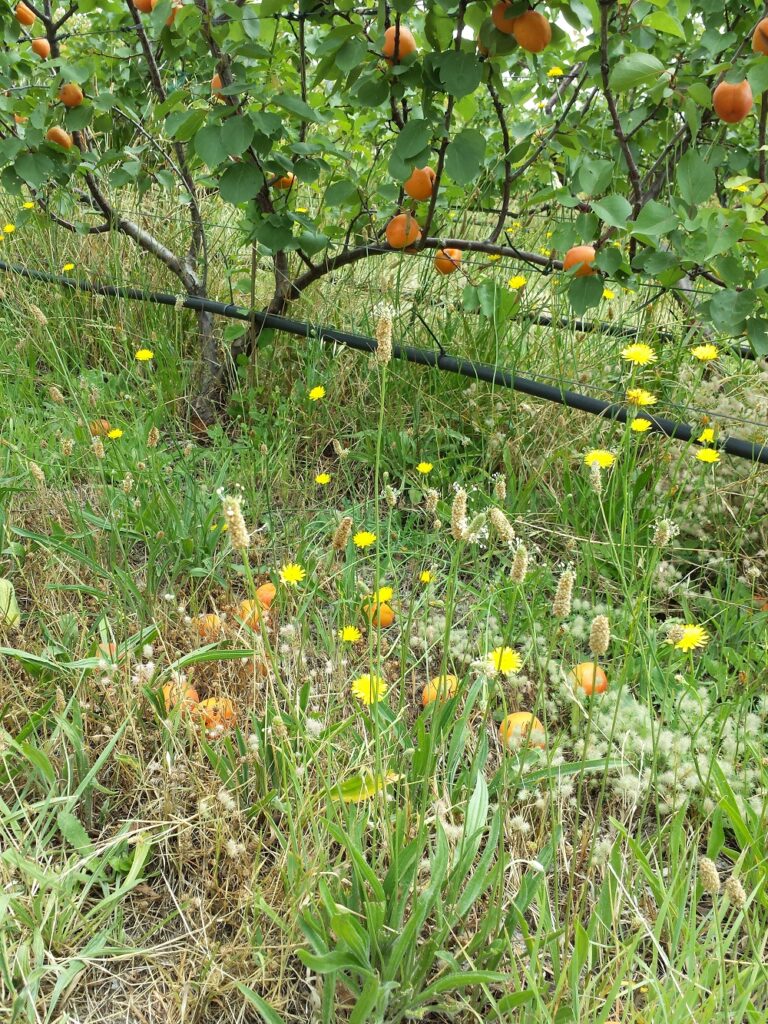
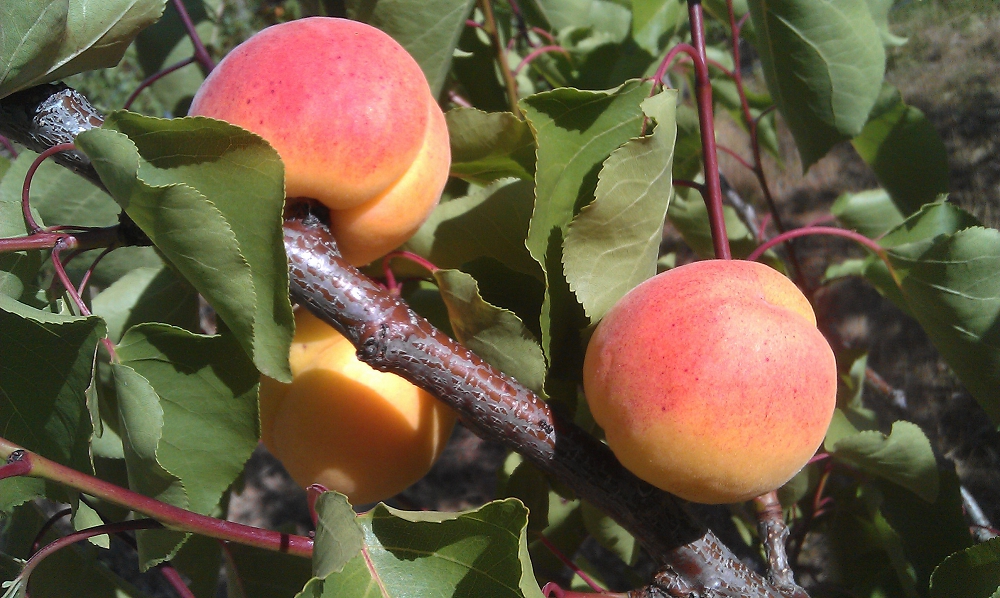
2. Fruit colour is actually a very poor guide.
Fruit will often start to colour weeks or months before it’s ripe. Look instead at the background colour. This will be persistently green until it starts to change to yellow, white, or cream (depending on the fruit type) as the fruit ripens.
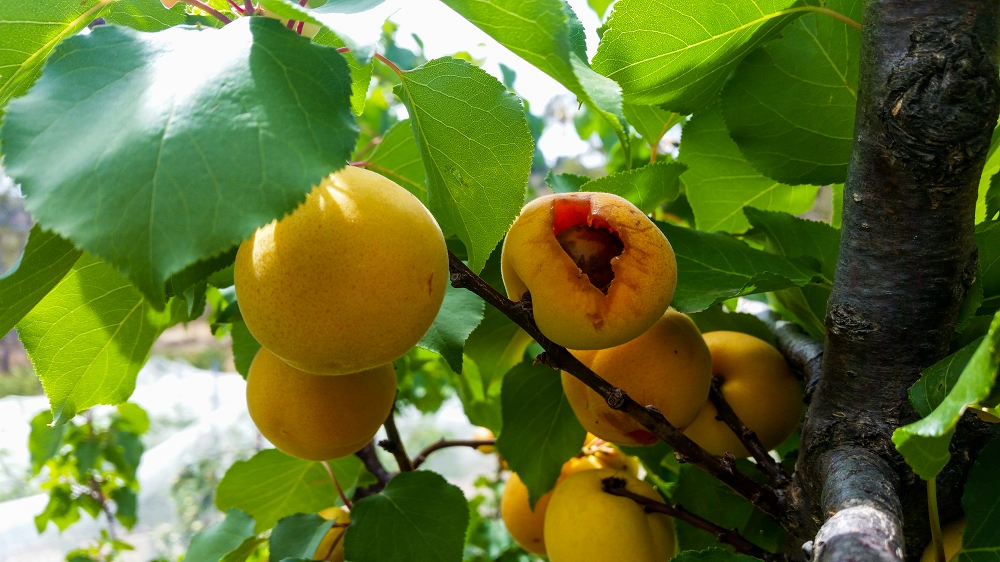
3. Are birds starting to get interested in the fruit?
This is a good sign that it will be ready soon. However, (annoyingly) some birds will attack fruit even when it’s still completely green, so use caution with this one.
4. Taste!
Again, this one involves sacrificing a piece of fruit to test. This is an excellent way to start linking the way a variety tastes with the way it looks at different stages of ripeness.
5. Keep a diary
Our last (and most important) tip … start to make a note of when you pick each variety each year. Also, make a little note of whether you got it right or not!
Would you like to learn more about planning your home orchard for fruit self-sufficiency?
While it’s important to get the technical aspects of fruit growing right, it’s even more important to plan your garden with your goals in mind. We have lots of resources to help you plan a long harvest, grow the right varieties, have a continuous supply of fruit in your garden, and avoid gluts!
🌳📝 Fruit Tree Action Plan. This three-part live training series will help you take the “bad luck” out of your fruit growing by harnessing the power of knowing what jobs to do, and when to do them.
🌳📝 Choosing the right fruit tree to plant
🌳📝 Saving heritage fruit trees by planting them
🌳📝 Before you plant a fruit tree, do these 5 steps
🌳📝 Grow a Year’s Supply of Fruit short course
🌳📝 Home Orchard Design short course
🌳📝 Growing Fruit Trees in Pots
🌳📝 Comprehensive Guide to Fruit Ripening Dates
🌳📝 Fruit Tree Pollination Partners
Related Articles

Are heritage nectarines worth the bother?
Heritage nectarines such as Goldmine are thin-skinned and can be hard to grow, but will reward you with amazing flavour.
Why are my apples brown inside?
Internal browning of apples is more common in heatwaves, and some varieties are more prone to this distressing condition than others.
Did you get the thinning right?
Assess how good your thinning efforts in spring were by checking the fruit quality and the health of your trees.
What should I do when fruit on the tree seem to be at differing stages of ripeness? Following you advice I have just eaten the most magnificent Moorpark apricot but others of the tree still seem to me to be not quite ready. Do I pick them all now, wait a couple of days and then pick or ‘colour pick’ like I used to have to as a cherry picker?
If you have the option it is definitely good to do a colour pick, picking over 2-3 sessions. Fruit picked too early won’t ripen properly so it is definitely worth waiting if you can. It can differ by variety – some are more prone to ripen all at once, some ripen over a couple of weeks.
Jill – Grow Great Fruit team
How long should apples be in the frig after picking ?
Hi Ediwna, apples can store well in the fridge for weeks after picking, depending on variety. Granny Smith will store for mnay weeks, something like Golden Delicious or Jonathan will only be good for a couple of weeks – just keep an eye on them.