Estimated reading time: 4 minutes
Mid-spring is the right time of year to start thinning your apricots, peaches, nectarines, and plums.
The stone fruit has finished flowering and is ready to start thinning way before the apples and pears. In fact, when we start thinning apricots, the apples are often still flowering!
Understanding fruit thinning
Fruit thinning is a simple but important technique for making sure your trees don’t have too much fruit. In fact, it’s one of the 10 steps to ultimate fruit tree care, so we reckon it’s quite important!.
However, it can be hard to figure out how much fruit to pull off. There are a lot of variables, like the age of the tree, the amount of fruit on the tree when you start, and the size of the fruit when it’s ripe.
Plus, pulling the fruit off the tree is a hard thing to do from an emotional point of view! (That’s why we’ve created a very handy chart to make sense of all the variables.)
Thinning is also a great chance to do some more good work in your fruit trees.

Cleaning up the crop while you’re thinning
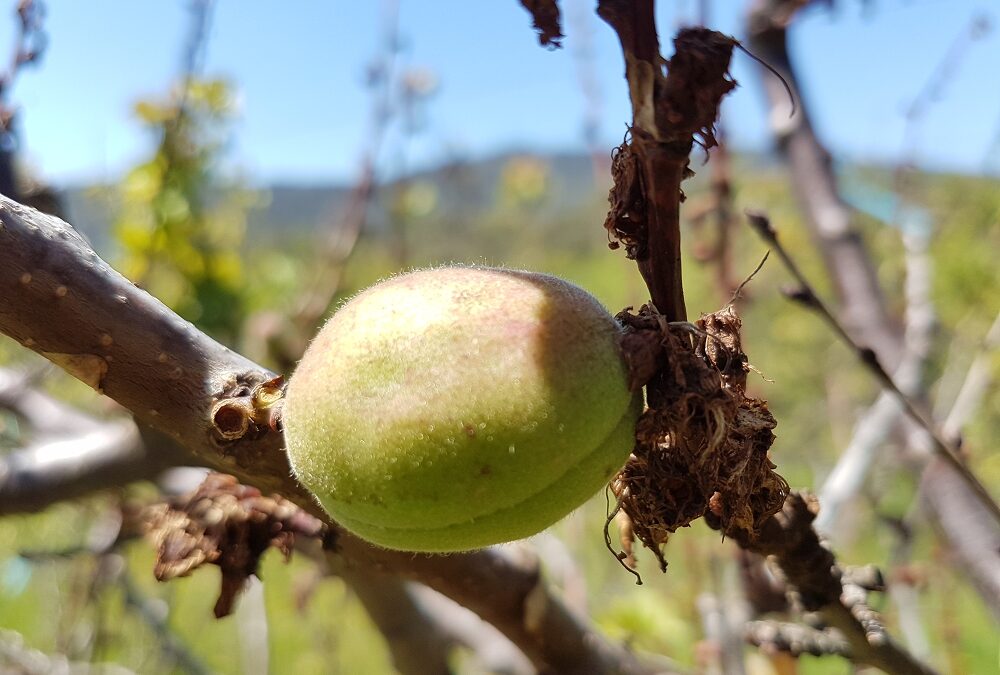
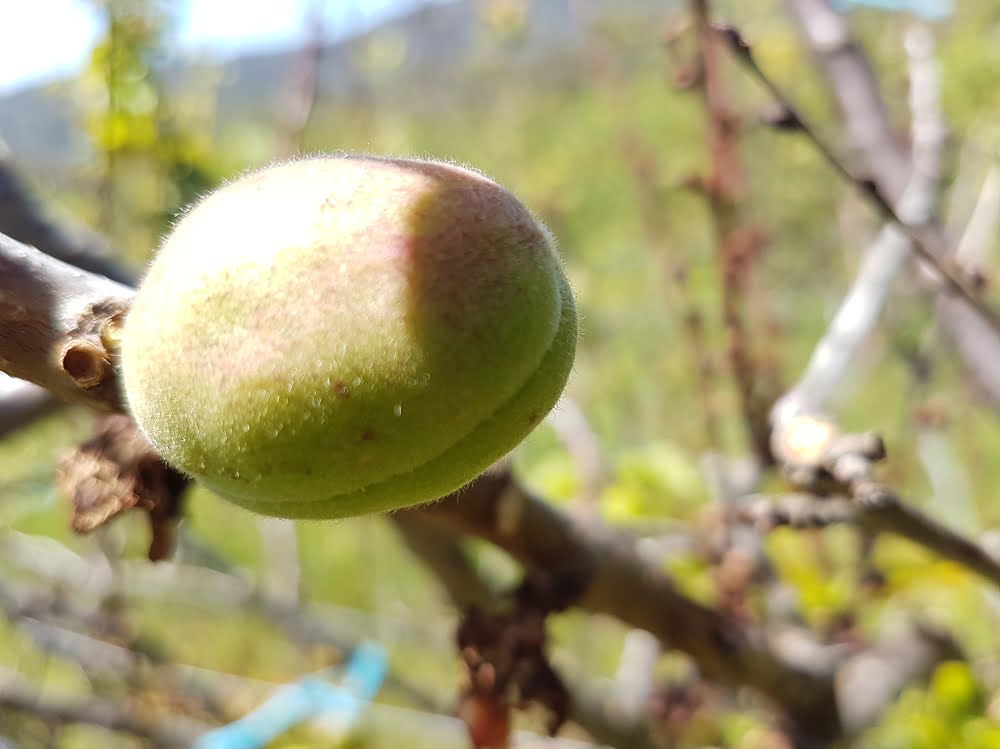
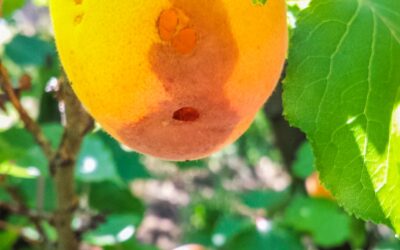
Thinning time is also just a great time to get out among your fruit trees. It gives you a chance to notice things like the situation you can see in the photo at the top of the blog.
There’s no thinning to do here. There’s only one apricot at this site, and it has plenty of room to grow during the season.
But notice how the diseased flowers and shoots are touching the fruit?
It’s hard to see, but the apricot is growing from the branch on the left-hand side of the photo. You’ll notice that it’s touching a diseased part of another branch on the right-hand side that is covered with dead flowers. Those flowers are infected with a fungal disease called Blossom blight.
Simple hygiene techniques to keep your fruit tree healthy
The disease that causes Blossom blight in flowers also causes Brown rot in fruit later in the season. Left alone, this piece of fruit is very likely to develop Brown rot at the spot where the diseased flowers are touching.
If you notice this situation, it’s super important that you remove the diseased twigs.
You can either prune them out (it’s always a great idea to keep your secateurs in your pocket while you’re thinning) or just remove them with your fingers.
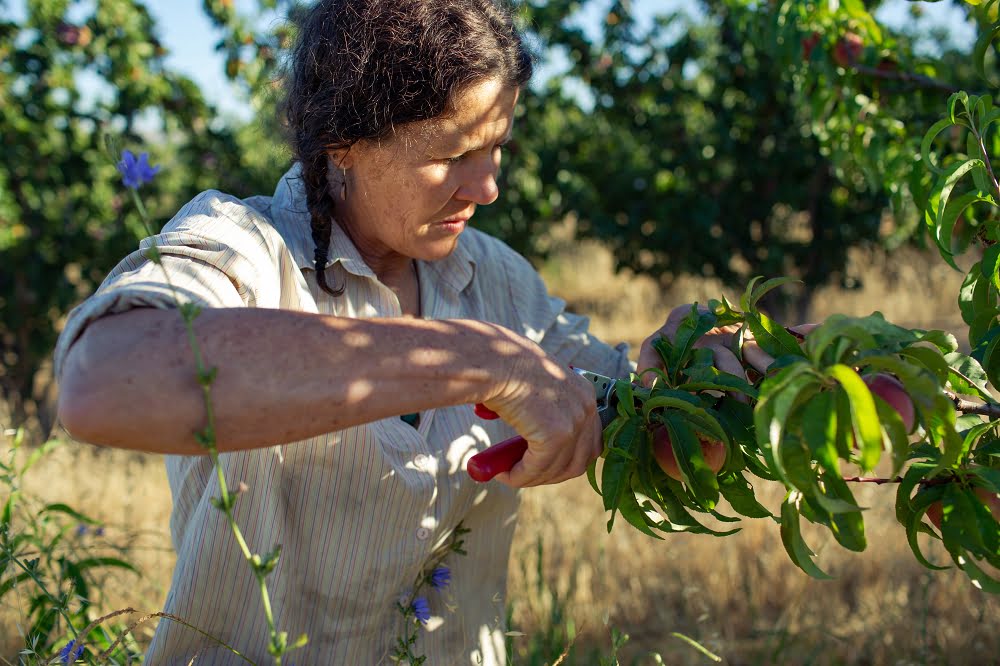
Photo credit: Biomi photo
Doing fruit thinning at the right time
Depending on your climate, most peach, nectarine, and plum varieties will have finished flowering by mid-spring. Then you can see whether or not they’re going to have a good crop and get the thinning underway.
Thinning is a crucial job in the lifecycle of your fruit tree. But it’s also a quiet and reflective time to spend a dedicated half-hour or so with your tree and have a really good look at what’s going on.
Enjoy!
Related Articles
Does fruit love rain?
Rain can be both good and bad for fruit, depending on the context. We share the 6 main pros and cons of rain for fruit growers.
Brown rot treatment for your fruit trees
Brown rot can quickly ruin the fruit on your fruit trees. Learn how to prevent it, and what to do if you have it.
It’s about to rain—how should I protect my fruit?
Learn how to protect your fruit trees from rain damage with these handy tips (some of them are a bit surprising).