
Estimated reading time: 6 minutes
How do you know if your fruit trees are water-stressed?
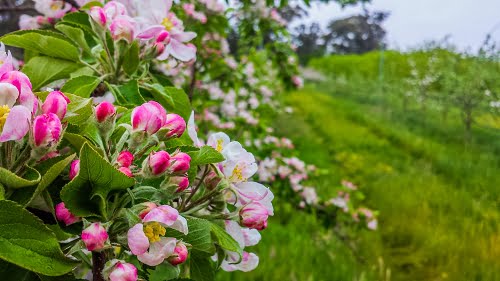
In spring, it can be hard to tell, but it’s a crucial time to make sure your trees DON’T dry out, particularly if they’re still flowering.
Why is water stress a problem for fruit trees?
In the early stages of fruit formation, it goes through a process called cell division. The number of cells in the fruit determines how big the fruit can become. If it doesn’t have enough water, too few cells will form, and your fruit is destined to remain small.
Once this has happened, then it doesn’t matter how much water your trees get later in the season. You can’t correct this problem because the cell division phase is well and truly over.
Sadly, you’ll be sentenced to a year of small fruit.

Learning about water stress the hard way
We learned this the hard way during the millennial drought.
In our district here in central Victoria, there’s usually enough winter rainfall to ensure that there’s plenty of water in the soil in spring. Under normal conditions, our fruit trees never get water-stressed at this time.
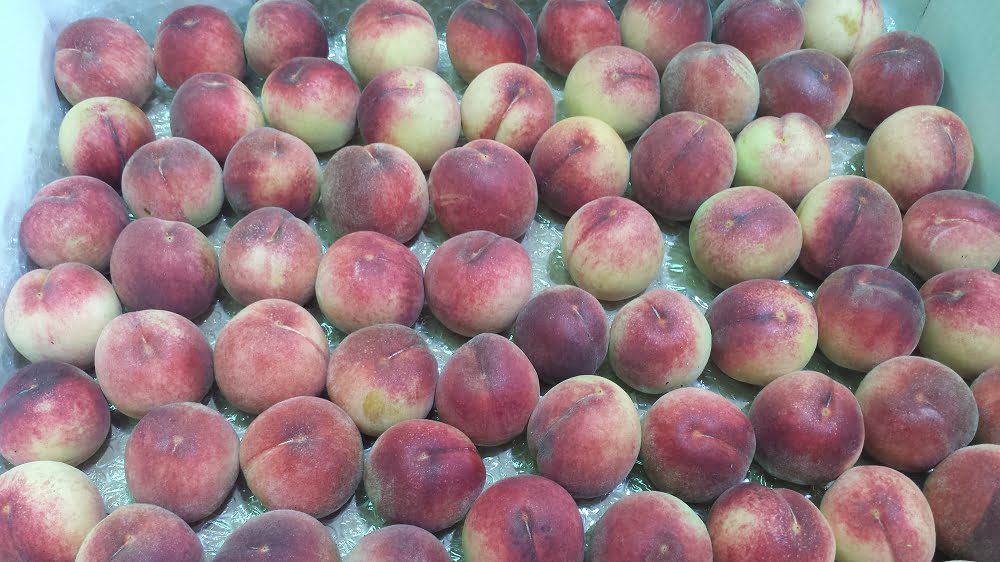
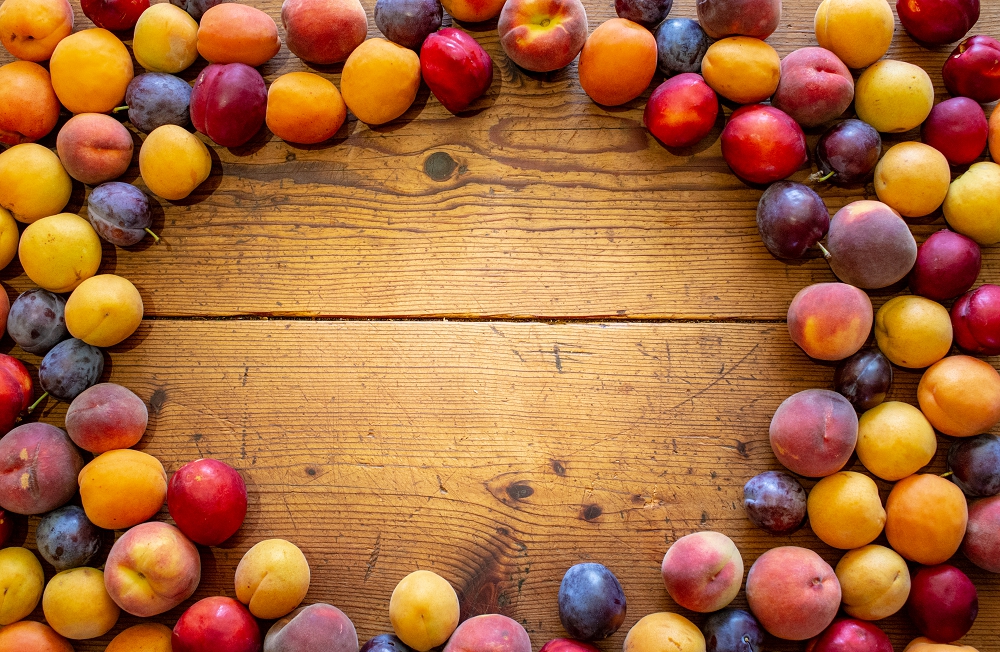
However, after one particularly dry winter during the drought, we had to endure a year of tiny fruit (see the peaches below – urgh!). After that experience, we quickly learned that we had to start watering the trees much earlier than usual.
It’s now one of the conditions we recommend all home growers keep an eye on as you come out of winter each year.
Avoiding water stress for fruit trees is very important in hot conditions
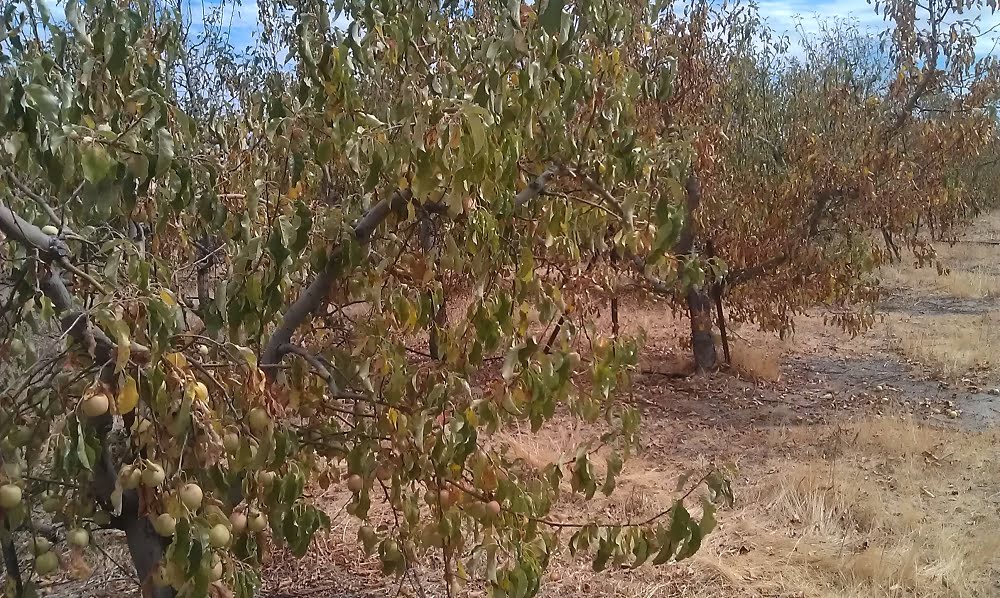
Heat waves are another time when it’s really important to monitor your fruit trees for water stress. You can see an extreme example of some really dry trees below.
We’ve always had heat waves here in Australia, but their frequency and severity seem to be increasing. There’s not much we can do about that (apart from trying to slow down climate change).
However, we can make sure our trees are adequately irrigated, particularly during a heat wave, to minimise the stress on the tree.
Two quick ways to check soil moisture levels
The first and easiest way to check whether your trees need water is the ‘boot test’ – kick the soil under the tree with your boot, and if you see dust, the tree needs watering!
The second way is going up one level in sophistication. Dig a hole a few cm deep near the trunk of the tree with a shovel. The soil should feel cool and moist. If it looks and feels hot and dry, and is very hard to dig into, it’s too dry.
Of course, there are also many more degrees of sophistication with moisture monitoring equipment. In most cases, this extra expense is not necessary.
There are also various apps available to help with this (see information about SoilMapp here), and information on the Bureau of Meteorology website.
How to protect your fruit trees from water stress
The most sustainable long-term way to protect your trees from inadequate water is to continually improve the health and quality of your soil.
It really is amazing how much more water you can store in your soil by increasing the amount of organic matter it holds.
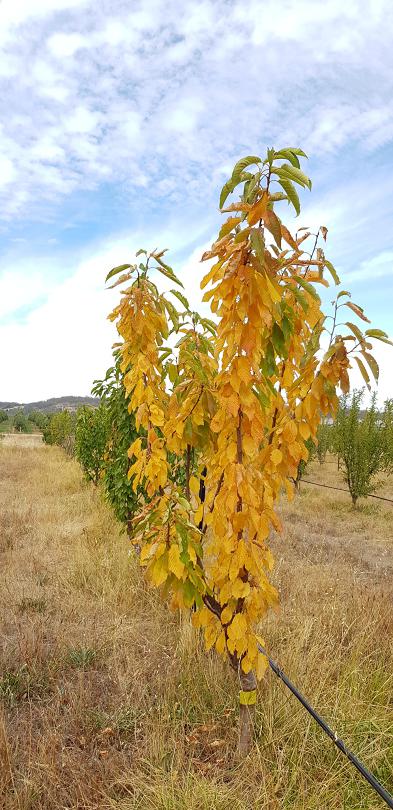
And finally, take the time to check your irrigation system regularly.
A quick 5-minute check every couple of weeks can prevent this situation (above), where a blocked dripper was only discovered when the leaves turned yellow and started to fall off.
Poor tree!
More resources about watering fruit trees
Do you want to know more about water and fruit trees? There’s so much to know about using water wisely, making sure your tree gets enough (but not too much), and managing water in a drought. At the other end of the scale, floods can also severely impact your fruit trees. Luckily, we can help you with resources to cover the entire spectrum.
💦 Water for Fruit – Our irrigation ebook, designed to demystify watering for fruit trees. Learn how to set up an efficient system that works.
💦 How to Grow Fruit in a Drought – Learn from our experience of how we managed to grow a commercial crop of fruit every year throughout a 10-year drought.
💦 Smart Irrigation for Fruit Trees short course
💦 Creating water security for your fruit trees
💦 How much water is enough for fruit trees?
💦 Winter and water for fruit trees – understanding the impact of a wet winter will help you to plan for summer.
Related Articles
Can fruit trees survive a fire? (What we found out)
Natural disasters like fire and flood can have devastating impacts on farmers and home-fruit growers alike. Here’s one farmer’s story.

Can fruit trees reduce your stress levels?
In a tense, crisis-filled world, fruit trees, gardens, and nature provide the perfect (and proven) way to reduce stress levels.

The organic food pathway to glowing good health
Organic food is better for your health, your garden, and the environment, so it makes sense to learn how to grow your own.


Thank you for your experience and wisdom.
Is there a problem with too much water and how do I recognise this?
Many thanks.
Jan
Hi Jan,
Overwatering can definitely be a problem, and the signs are usually very similar to being drought-stricken. Water-logging can occur much more rapidly though, so it’s worth keeping an eye out for how water is moving through your soil. Meg – Grow Great Fruit team.