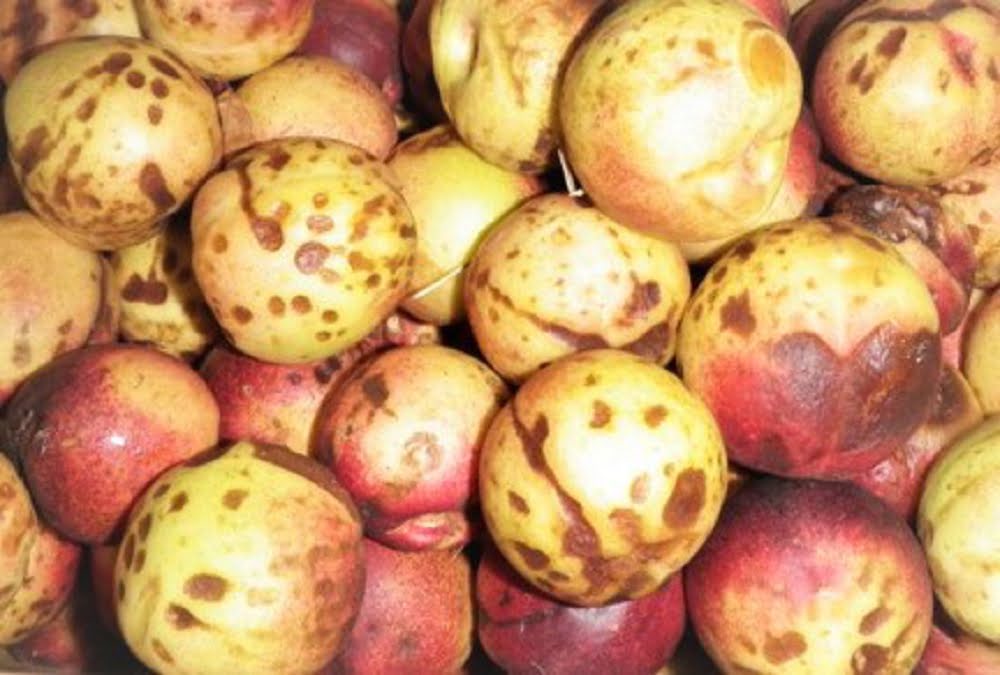
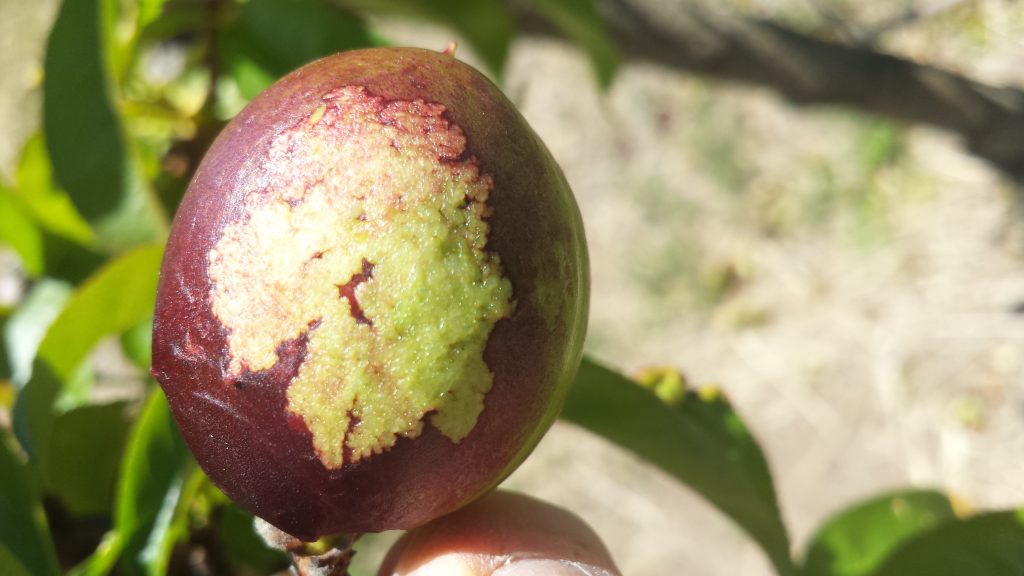
Have you grown any nectarines that look like this?
Not very pretty, is it? This is the Goldmine nectarine, and sadly, they have a tendency to get marks on their skin.
Wish we could tell you that they only do it if they get rained on when they’re almost ripe, but we know from bitter experience that rain is just as likely to mark them even if they’re not ripe. They also hate it if the weather conditions are not perfect. Or if you look at them the wrong way 🙄.
Yes, like many heritage varieties, they’re a bit fussy!
Why is heritage fruit hard to grow?
Heritage varieties often have thin skin, and this is particularly true for our much-loved Goldmine nectarines.
This means they tend to mark very easily. It’s one of the reasons that many heritage varieties are no longer grown commercially.
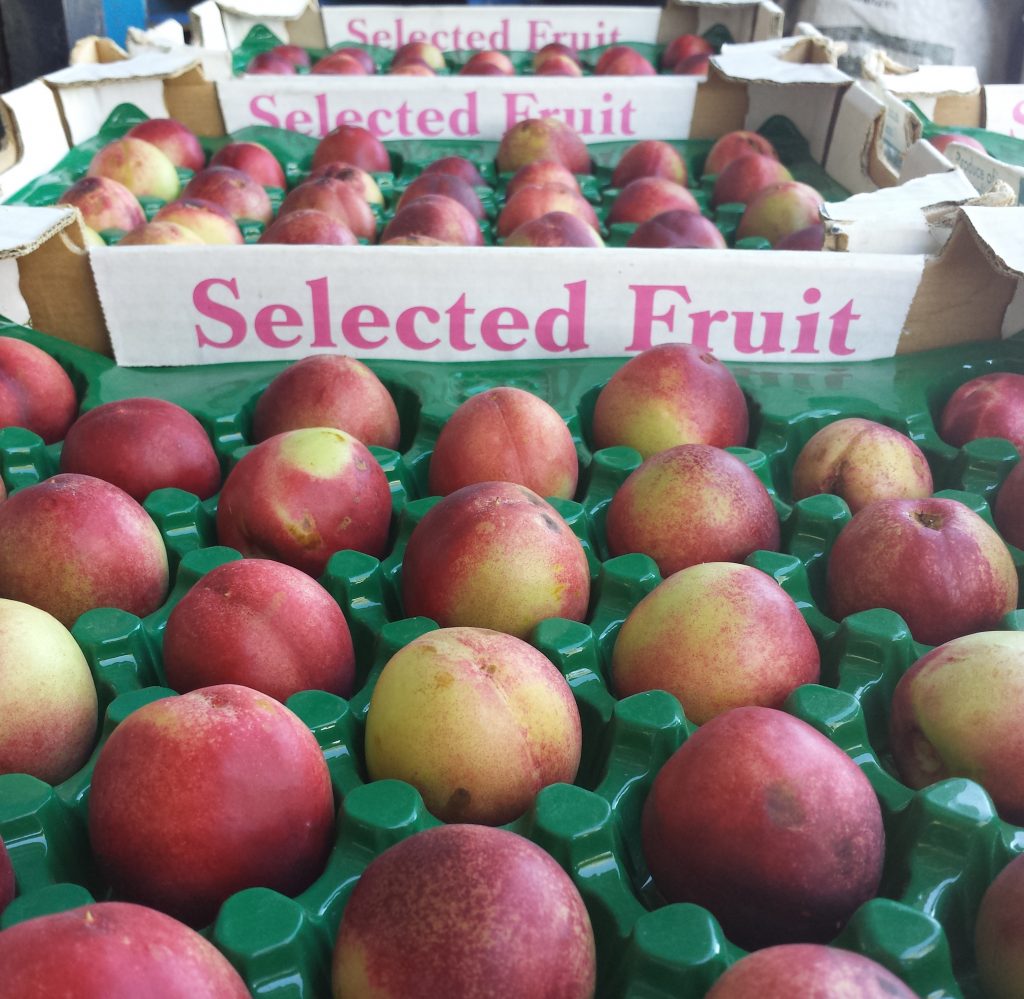
When we pick heritage varieties like Goldmine to sell at markets, they’re hand-picked and placed into individual cups in cardboard trays, as you can see below. We carefully place each nectarine to sit on the stem end, because placing them on the rounded side results in instant bruising.
We then put the trays into the coolroom and let the fruit cool down before we sort it into individual grades. We transport the fruit to market in the cardboard trays, and then carefully decant it into paper bags for the customer to take home.
At every stage, we handle the fruit very gently to minimise bruising, which is much slower than handling green fruit in bulk.
Why heritage fruit is hard to buy
Commercial fruit is picked into bulk bins, then put over a grader in the packing shed, packed into boxes, and then transported by truck to market.
Even if grower tries to manage each stage of the process carefully, some bruising is inevitable with heritage varieties.
In bulk-handling systems (i.e., the vast majority of the food system), thin-skinned varieties are just not robust enough to get to market in good condition.
Is it worth growing heritage varieties?
These fragile fruits are also prone to other problems. For example, Leaf curl on your nectarine trees usually just affects the leaves.
But Goldmine are so sensitive that Leaf curl damage can even show up on the skin of the fruit, as you can see below.
If skin marks are severe enough, they can crack and become the site for an infection to start. More commonly, though, they’re literally just skin deep and don’t affect the quality of the fruit underneath.
Heritage fruit varieties are perfect for your back yard!
Despite the problems with heritage varieties, they still deserve a place in your garden. They might be a pain to get to market in good condition, but the home gardener has a huge advantage.
You get to tree-ripen the fruit and eat it when it’s perfect.
There’s a pretty good chance that they’ll have some skin marks and not look as pretty and blemish-free as we expect modern fruit to look. But it’s worth it because most heritage varieties are absolutely delicious!
We no longer have any Goldmine trees in our orchard because the trees were burnt in the fire we had a few years ago. But they were too good to let go, so we still grow and sell the trees in Carr’s Fruit Tree Nursery.
Despite all the difficulties, we love them and frequently recommend them for home orchards.
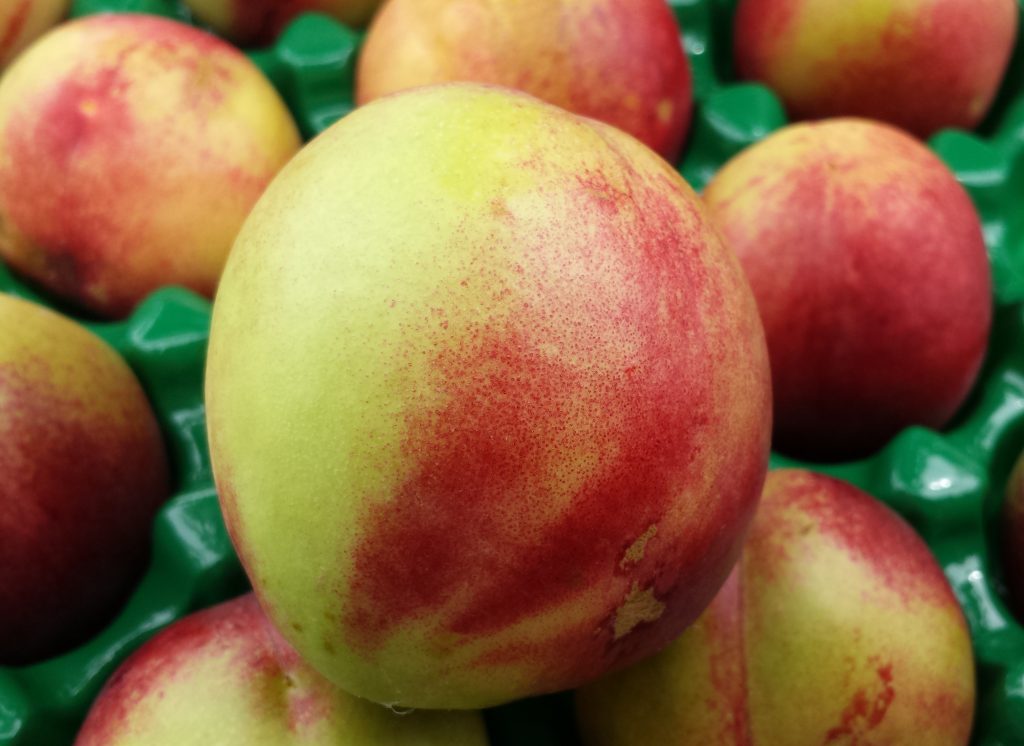
If you can tend the tree carefully, protect the fruit, and then pick it when it’s beautifully ripe and ready to eat, you can end up with a result as perfect as these beauties!
Looking after your trees properly can help
It’s quite hard to find Goldmine trees these days (and almost impossible to buy the fruit) because they’re very unfashionable.
But if you have space for a tree in your garden and can track one down (and you have time to look after it properly), it will reward you with something special and unusual that you can’t get anywhere else.
Looking after your nectarines carefully is key. Nectarines and peaches are closely related and require the same care, like controlling Leaf curl, preventing Brown rot, and protecting them from pests like birds and earwigs.
Care and attention to detail at the right time will give you the best possible chance of getting some decent fruit from those heritage beauties.
The verdict? Fiddly, but definitely worth the bother.

I have a Goldmine and love it . It always bears well and so the losses aren’t a problem. At the moment I have the opposite problem as I’m struggling to deal with all the nectarines. As you say they don’t travel well so even giving them away is tricky. I’ve bottled lots, stewed lots and last week I made jam. Not my favourite jam but I was running out of storage space. I also discovered that my ducks love the soft bruised discards. Not so much the chooks surprisingly. Definitely worth having and netting.
Yes, they’re a beautiful nectarine aren’t they Dora? Sounds like you’ve been very creative in dealing with your glut!
What would cause Nectarines to go mouldy on the tree ,
Even before they are ripe
They can get a few different fungal diseases Jan, but the most common one is Brown rot. Have a look at the “Keep Your Fruit Trees Free from Disease” short course (https://growgreatfruit.com/product-category/pests-and-diseases/) for details about the disease and how to control it.