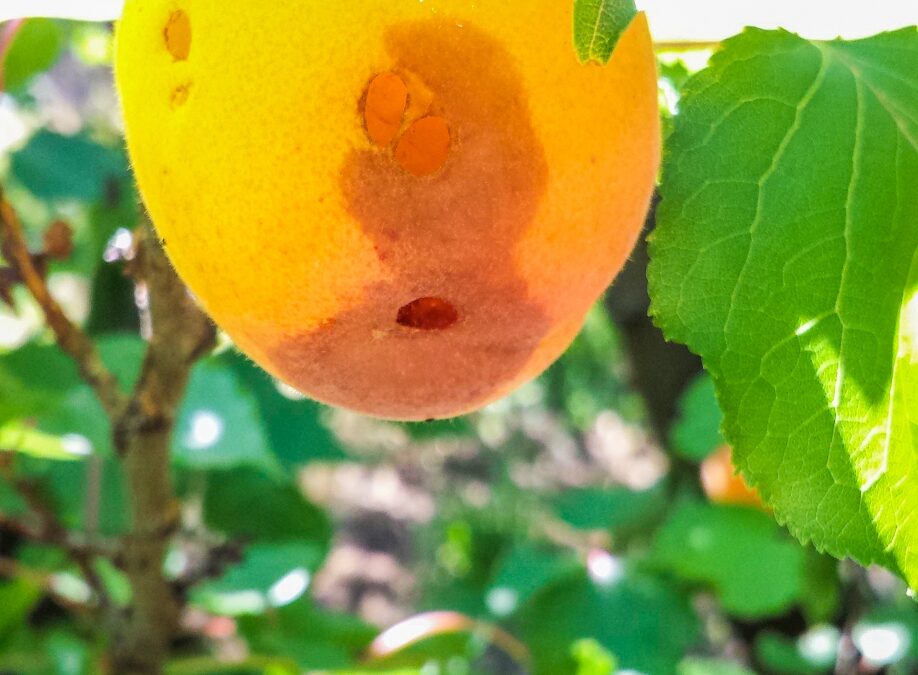
Brown rot treatment is essential knowledge for any fruit tree grower, particularly after rain.
If you’ve noticed brown, rotting spots spreading across your precious apricots, peaches, nectarines, plums, or cherries, you’re dealing with one of the most common fungal diseases in stone fruit.
Want to know the good news?
Effective brown rot treatment is possible, even if the infection has already started.
Estimated reading time: 8 minutes
Understanding the link between brown rot and the weather
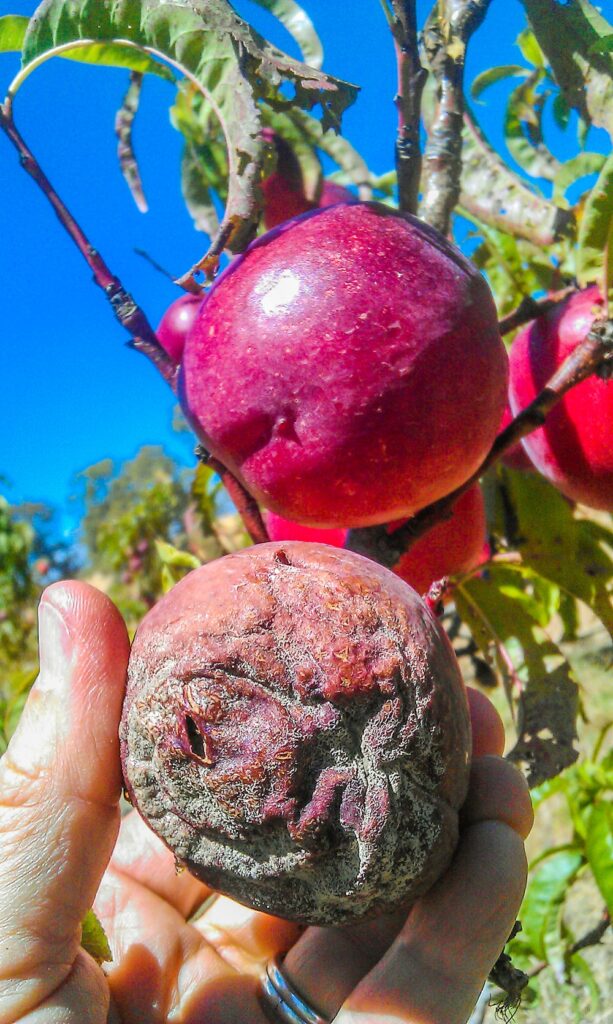
Before diving into brown rot treatment options, it’s helpful to understand what you’re dealing with. Brown rot is a fungal disease that thrives in warm, moist conditions. Some years you’ll see it everywhere, and other years your fruit will be pristine. The difference? Weather.
Fungal diseases like (and in fact, need) moist conditions to thrive. Even though gardeners often welcome rain to water the garden, dry weather is great for growing fruit!
Warm, rainy weather is such a risk to fruit growers that the Bureau of Meteorology even issues brown rot warnings. This is to let growers know that moist, warm conditions are on the way.
It’s a handy service to remind you to put your preventive measures in place.
Is it too late for brown rot treatment once I’ve got it in my fruit tree?
Luckily, the answer is no!
Some fungal diseases are untreatable once you have them. Leaf curl in peaches and nectarines is a classic example. But others, like brown rot, are definitely worth treating to stop them from spreading and getting worse.
The main solution is to use a “cover spray” of an allowable organic fungicide. We prefer sulphur, because it’s one of the least harmful, it’s relatively easy to use, and (if you use the right type) it can be very effective.
Why do insects and brown rot go together?
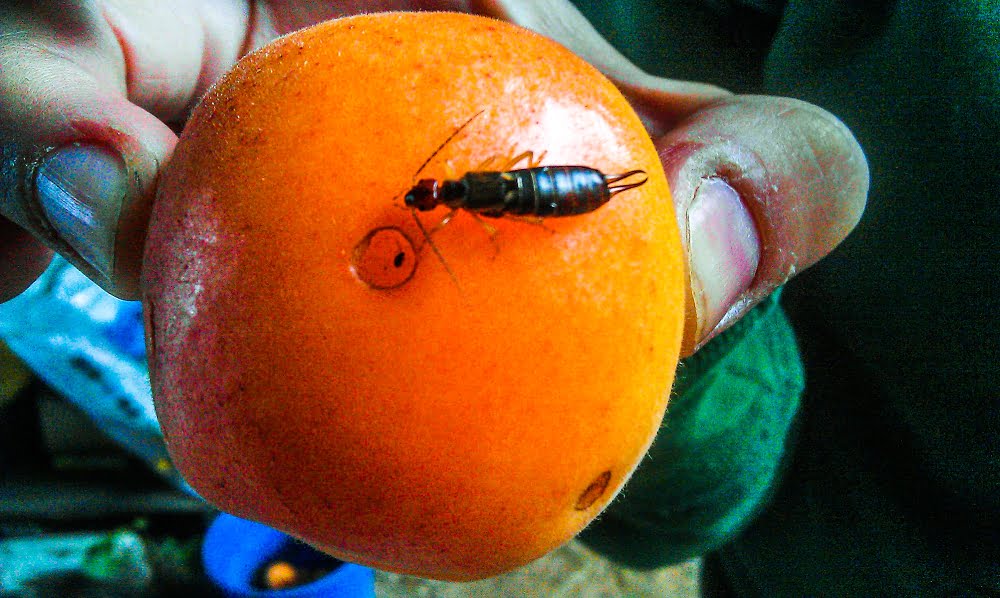
Notice how the brown rot often starts around a hole, as you can see in the photo above?
The holes might be caused by any number of insect pests. Some of the main culprits are a tiny pest called Carpophilus beetle, garden weevils, or in this case, earwigs.
How do we know? Because earwigs classically leave tell-tale round holes in fruit that you can see in the photo.
Insects aren’t always the source of the disease. Brown rot spores may already be in the tree because it’s the same disease that causes Blossom blight in spring.
Blossom blight not only infects flowers but can also infect the wood in the tree. If you had blossom blight, there’s an increased chance your fruit may also get Brown rot.
However, insects can also spread the disease around. They carry brown rot spores with them and infect the fruit when they eat it.
The combination of a small hole in the fruit and a bit of rain can lead to a bit of a brown rot outbreak in your fruit tree.
If you’re noticing insects on your fruit trees, then this becomes the first step in your brown rot treatment. We’ve got some good resources on identifying good and bad insects, and what to do about them.
Help with managing insects
- Pest and disease masterclass
- Should you worry about insects in your fruit trees?
- Ebook – Common fruit tree pests
Why hygiene is really important in your treatment regime
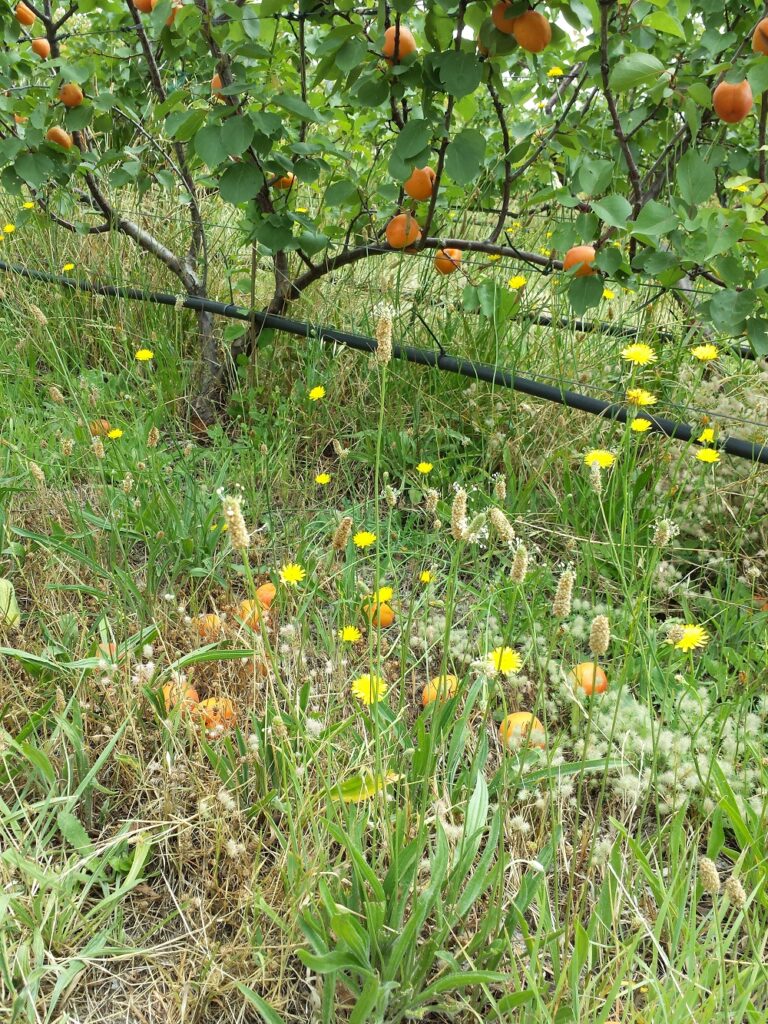
A lot of fruit that’s been infected with brown rot tends to fall to the ground. That’s why hygiene is important in your brown rot treatment approach.
The infection can rapidly get worse until the fruit is completely covered by rot. This creates a lovely reservoir of spores on the ground, which can splash up and infect any healthy fruit that remains on the tree.
Therefore, be sure to clean up any fallen fruit from the ground. If they’re not too far gone, you should be able to cut out the rotten part and eat or cook the fruit.
If they’re not good enough to eat, they can safely go in the compost, or animals like goats or chooks will love to eat them. This will help stop the spread of the disease this season. It will also help keep the tree disease-free next year.
It’s essential to remove any rotten fruit that you see in the tree, to stop the disease from spreading from one piece of fruit to another. Pieces of fruit that are touching are particularly vulnerable.
Active brown rot treatment for fruit trees
Once you’ve got brown rot in your trees, acting quickly can stop the spread and save much of your harvest.
What is the most effective brown rot treatment?
The main solution for active brown rot treatment is a “cover spray” of an allowable organic fungicide, as mentioned above. We prefer sulphur for several reasons:
- It’s one of the least harmful fungicides available
- It’s relatively easy to use
- When you use the right type, it’s highly effective against brown rot
Apply sulphur sprays as soon as you notice the first signs of infection, and reapply according to label directions, especially after rain. The key to successful brown rot treatment with fungicides is thorough coverage and timing.
Combining treatment strategies
The most successful brown rot treatment program combines multiple approaches:
- Immediate hygiene: Remove all infected fruit from the tree and ground
- Fungicide application: Spray remaining healthy fruit with sulphur
- Monitoring: Check trees daily for new infections
- Reapplication: Spray again after rain or according to product directions
- Insect control: Address any pest problems to prevent new infection sites
Your brown rot treatment questions answered
Q: Can I eat fruit after brown rot treatment with sulphur? Yes, but follow the withholding period on the product label (usually just a few days for sulphur).
Q: Will brown rot treatment work in very wet weather? Treatment is more challenging in wet conditions, but combining fungicides with excellent hygiene still makes a significant difference.
Q: Do I need brown rot treatment every year? It depends on your climate and weather patterns. In wet regions, annual preventive treatment is wise. In dry climates, you may only need treatment in rainy years.
Q: Is organic brown rot treatment as effective as conventional fungicides? When applied correctly and combined with good cultural practices, organic treatments like sulphur are highly effective.
How to prevent brown rot from developing in the first place?
Preventing brown rot, like all fruit tree disease management, relies on the 8 principles of disease prevention:
- Love your soil
- Prevention is easier than cure
- Protect the predators
- Encourage variety in your garden
- Hygiene, hygiene, hygiene
- Maintain your trees
- Monitor your trees regularly
- Plan your fruit tree garden.
How do you apply these principles to Brown rot? Luckily, you have a big “toolbox” of preventive measures. It starts with pruning your tree correctly to allow for good airflow, which helps the fruit dry quickly in wet weather.
Next comes proper fruit thinning. If the fruit is not touching each other as it’s growing, it’s much harder for the disease to spread. Preventive spraying is also key, especially in wet years.
Lastly, garden hygiene is your friend. Removing infected fruit, cutting out infected wood, and preventing crawling insects from biting the fruit will all help.
More helpful resources
Do you want to learn more about how to keep your fruit trees healthy and free from disease? We can help — we have lots of resources, because this is one of the areas that gives the most grief to home fruit growers.
🪰 Guide to fruit tree diseases
🪰 Guide to stone fruit diseases
Join our Organic Pest & Disease Control for Fruit Trees Webinar
Understand the “big three” disease types and how to treat them. One hour of learning to identify and treat pests and diseases in your fruit trees.
Related Articles
Should you worry about bugs on fruit trees?
Should you be worried about the bugs on your fruit trees? Learn how to protect your fruit trees without upsetting nature.
Five ways to lead a more organic lifestyle
Five simple tips to help you live a more organic lifestyle and improve your health without breaking the bank.
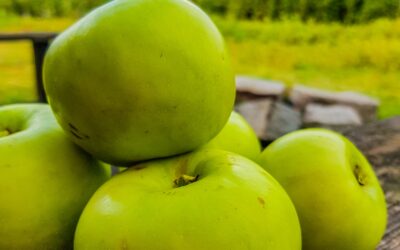
Hands up – who loves Bramley apples?
Bramley apples are a magnificent cooking apple from England which deserve a place in many Australian gardens.
Thank you for sharing.
Our pleasure @Keven, glad you found it useful. Cheers, Katie and Hugh
My dwarf peach tree had leaf curl. My nectarine also had it for many years and the fruits have worms so had not had nectarine for years. For the first time, this year the cherries had worm in them. What is causing this? Ive had many small flies in the backyard and not sure if these are fruit flies.
I also have chickens and I have traps for the flies.
What is the most effective method to treat this? Until now I have stayed away from spraying but may have to do that next season.
Thank you
Hi Norma, that sounds pretty terrible, but don’t give up! Each of these problems is fixable, you just need specific information so you can take the right action at the right time. Leaf curl is usually preventable if you spray at the right time – the trick is that the right time can be different for different varieties. Fruit fly – it’s important to make sure you have the right traps out for them, and you get a positive ID on the worms to make sure what you’re dealing with. We have different short courses that will help with each course, but we really recommend you do our webinar on pests and diseases – https://growgreatfruit.com/pest-and-disease-webinar/, and take up our trial offer to try out the GGF program. We can definitely help!