Estimated reading time: 7 minutes
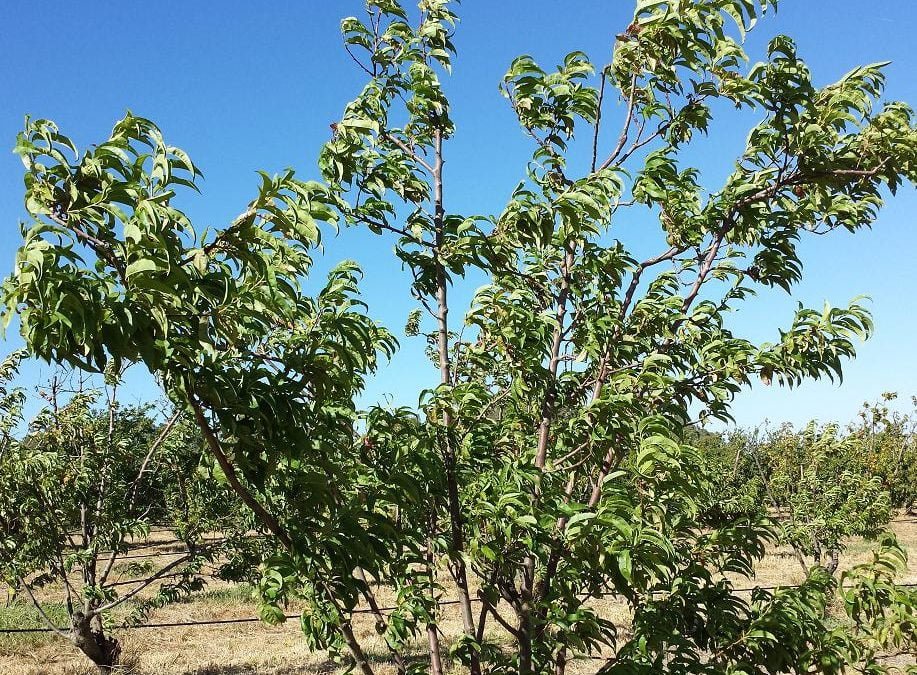
The wind has a bit of a bad reputation when it comes to fruit trees. It’s often the first thing people blame when they find fruit on the ground after a blustery day.
But in many cases, it’s only the ripe or over-ripe fruit that gets knocked off. That fruit was already close to ready and only loosely attached, so a decent puff of wind is sometimes all it takes.
Does wind really knock fruit off trees?
Healthy fruit that’s still developing usually hangs on trees incredibly well — even in surprisingly wild weather. A good, strong stem and a healthy tree can withstand much more wind than most people expect.
Where wind really becomes a factor is when the fruit isn’t in great condition to begin with. Anything that was already likely to fall — because it’s stressed, damaged, or not properly attached — is much more vulnerable when the weather turns gusty.
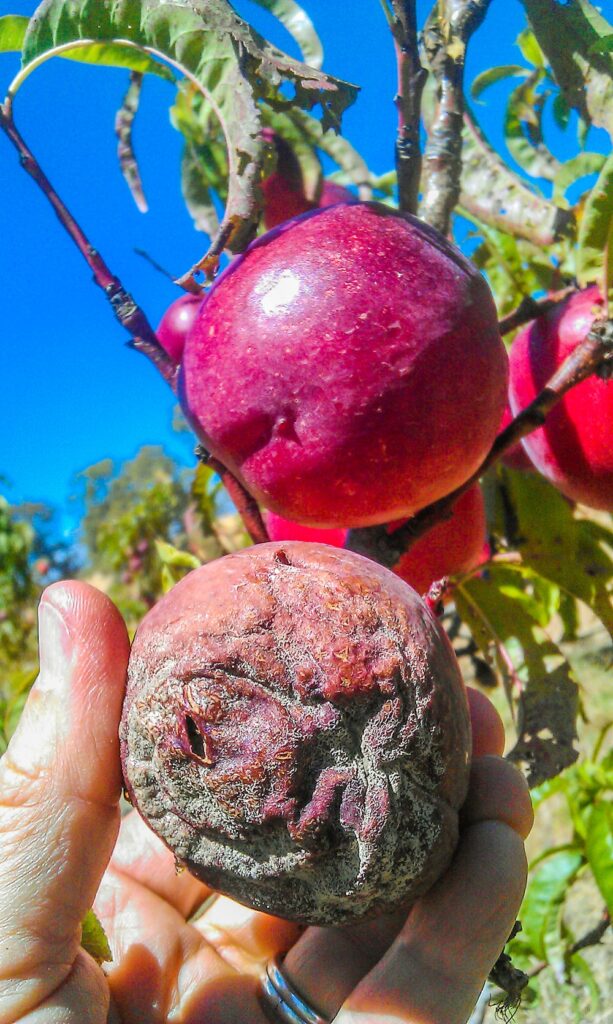
This can apply to fruit that’s infected with diseases like Brown rot or pests like Queensland Fruit Fly.
How to protect ripe fruit from the wind
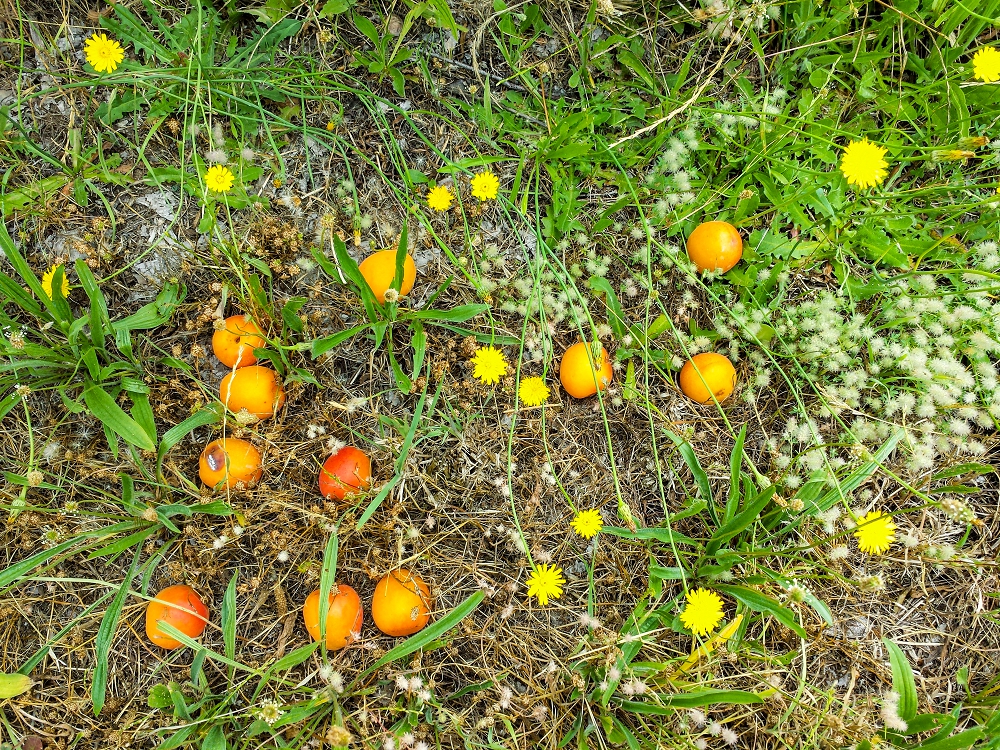
It’s quite annoying if the fruit you were about to pick in a couple of days hits the deck. Falling to the ground never improves the quality of fruit! It often splits when it falls or gets speared on a piece of grass or a stick.
Even if it survives intact, it can rapidly become full of ants and other critters. It also creates more work! It’s very important to pick up all the fruit that drops to the ground to prevent pests and diseases.
The key to protecting your fruit is to pick it before it can fall. But at the same time, you don’t want to pick it too early. Ideally, every piece of fruit would be picked when it’s perfectly ripe, but not overripe.
That means it’s a very good idea to monitor your trees often when it’s getting close to the time you expect to pick the fruit, and to do whatever possible to protect your fruit before bad weather hits.

Each tree may need picking more than once
Lots of varieties need picking multiple times. To give you a guide, we pick some varieties up to four times over a few weeks. We pick just the ripest fruit each time.
So it’s worth casting your eye over your tree every day or two and picking just those pieces of fruit that are ripe. That way, you’ve got a good chance of getting them before the wind does.
Advantages of the wind for your fruit trees
Wind does have its advantages, though, and it’s worth remembering that it can play a really helpful role in keeping your trees healthy. This is especially true during rainy periods, when a good breeze helps the tree dry out much more quickly than it would on a still, damp day.
The dreaded Brown Rot fungal disease can only get established when the conditions are just right — and unfortunately, that usually means prolonged wetness at the right temperature. If your trees stay wet for long enough, the spores have the perfect opportunity to infect the fruit.
If the wind helps your trees dry faster, it shortens that crucial window for infection. In that situation, the wind is definitely on your side, helping to protect your crop.
Planning to use the wind as a force for good
If you’re planning to plant fruit trees or are making changes to your garden, take the wind into account. Try to choose (or create) a microclimate that will allow good air movement around and through your trees.
Make sure your fruit trees are pruned in an open shape. This allows the wind to easily get in the middle and dry the tree (and fruit) quickly after rain.
If you’re planting windbreaks, avoid creating a completely still environment for your fruit trees.
Picking fruit at the right time
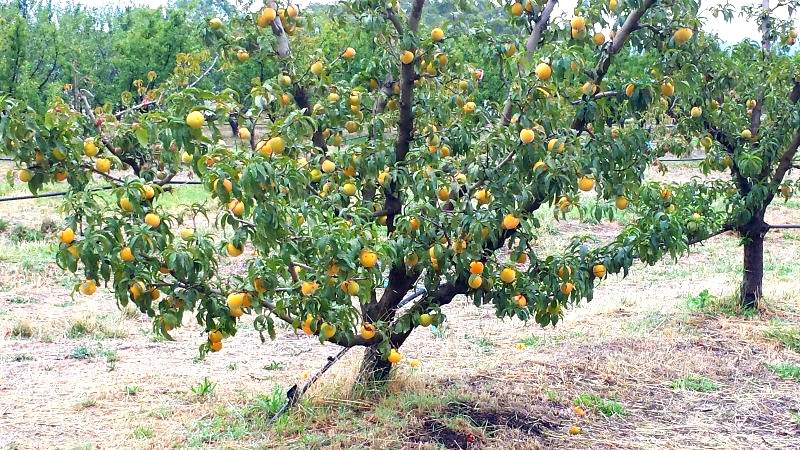
Choosing the right time to pick your fruit can be tricky. One of the mistakes new growers often make is picking fruit too green or too ripe.
- If it’s too green, it doesn’t taste very good, and won’t ripen off the tree.
- If it’s too ripe, it’s much more likely to end up hitting the deck.
- Over-ripe fruit can also lose flavour and texture, and it doesn’t store nearly as well.
However, it’s not that hard once you know what to look for. Luckily each type of fruit has a bunch (pun intended) of indicators telling you the right time to pick.
Good record-keeping is also essential. Creating a fruit tree diary and keeping track of the dates that you picked each variety helps you pick at the right time each year.
Managed properly, the wind can actually be your friend instead of your enemy!
More resources about protecting your fruit trees from the elements
Want to know more about how to protect your fruit trees from rain, hail, storms — and all the other bad things that can happen to them?
Good plan! You’re more likely to get a good harvest from your trees each year if you’ve put a bit of thought and planning into the best ways to protect them.
🌦️ Drainage, flooding, and fruit trees — build resilience with good drainage and a flood recovery plan.
🌦️ Home orchard design — Plan your fruit tree plantings for long-term success.
🌦️ Water for fruit: Efficient fruit tree irrigation
🌦️ A secret weapon to protect fruit from extreme weather
🌦️ Growing fruit in wild weather
🌦️ It’s about to rain – how should I protect my fruit?
Related Articles
Can fruit trees survive a fire? (What we found out)
Natural disasters like fire and flood can have devastating impacts on farmers and home-fruit growers alike. Here’s one farmer’s story.

What home fruit growers can learn from farmers
Backyard growers can learn a lot about growing food from farmers’ experience and insights into the highs and lows.
How (and why) to eat local food
The best local food is home-grown, right? But if you can’t grow everything, we give you tips for sourcing food that’s grown close to home.

Hi i also have an old apple in a wind prone plain. only recently obtained property and have been gently trying to prune back without overdoing it with this old gal. not pruned for last 30 years at a guess. so watering and fertilizing and pruning has seen a bumper crop but wind was something i didnt factor in and now the laden branches have come to grief. one of two main branches has been 3/4 sheered off and is now dangling while holding on for dear life. do i surgically remove half this tree at this time (record high temps in central vic) or let her limp to a cooler clime before extraction.many thanks and kind regards paula
Hi Paula, what a pity for you, after all your hard work. The solution is probably in fruit thinning – did you do that this season? We recommend never leaving more fruit on any branch or lateral than it can bear the weight of – for this exact reason. If the broken branches are still attached you can try reattaching them – try to match up the split as tightly as possible, and then bandage/splint or do whatever you need to do to hold them together and see if the branch will re-heal. They often will, but if the wound is too big then best to remove it completely to reduce the risk of further tearing. No problem doing it in the heat, it will just help the wound to heal.
I started my orchard of 18 trees in Aug 22. This year it was looking like I was finally going to get some fruit. Lots of little spurs and fruitlets. Then the spring winds hit and I didn’t get out to the orchard for a week or two, but when I did, nearly all the fruitlets were gone. Some had been bitten in half – probably birds? And the rest – no sign of them. I wondered if it was the wind. Could the trees have dried out too much in the wind and drop their fruit? Birds? Any clues?
Oh that is frustrating Carmen! What type of trees had the fruit?
There are a lot of reasons that can cause fruit loss! Some of the little fruits you have seen fall off are likely to have been the un-pollinated flowers, which will develop some way, and then fall off. Do you have all the right pollinators nearby? Your trees are still relatively young and so more prone to fruit loss and lower crop loads – it may be a better year next year. The wind itself wouldn’t cause otherwise healthy fruits to fall but it will knock them off if the tree is stressed in some other way and was already preparing to drop fruit. Some causes include lack of water, nutrients, extended heat waves or harsh summer pruning while in fruit.
As to the bite damage – it can be hard to tell what creature has eaten the fruit – birds will tend to leave triangular marks or diamond shaped marks. It is also possible that mice, rats or possums have taken the fruit – they are more likely to have tidied up after themselves without leaving the fruit on the ground. Once you figure out what is causing the damage then you can take steps to prevent them getting to the fruit!
Good luck, hope next year is the year you get your first fruit!
Jill – Grow Great Fruit team
We find many small apples on the ground early in the fruit cycle. They are usually about the size of a chickens egg or smaller. Totally green and intact. This applies to most of our apple trees whether they’re full of fruit (which I did thin out) or if the tree has only a handful of apples.
What’s causing them to fall off? And what do I do about it ?
Some of the flowers that aren’t pollinated will develop some way into fruit and then fall off the tree – some of them do reach quite a size although getting to the size of a chicken egg would be quite uncommon! There are a lot of other things that can cause the tree to drop pollinated fruit prematurely – such as a nutrient imbalance, lack of water, extreme leaf damage, extended hot weather, or a heavy crop load (but it sounds like we can rule that one out as you are on top of the thinning). Good luck with your detective work – definitely write back if you need more help.
Jill – Grow Great Fruit Team