Estimated reading time: 6 minutes
One of the biggest planning mistakes we see people make at harvest time is picking their fruit tree at the wrong time.
The most common mistake is to pick the fruit too early, before it’s ready. The second most common mistake is to pick it too late!
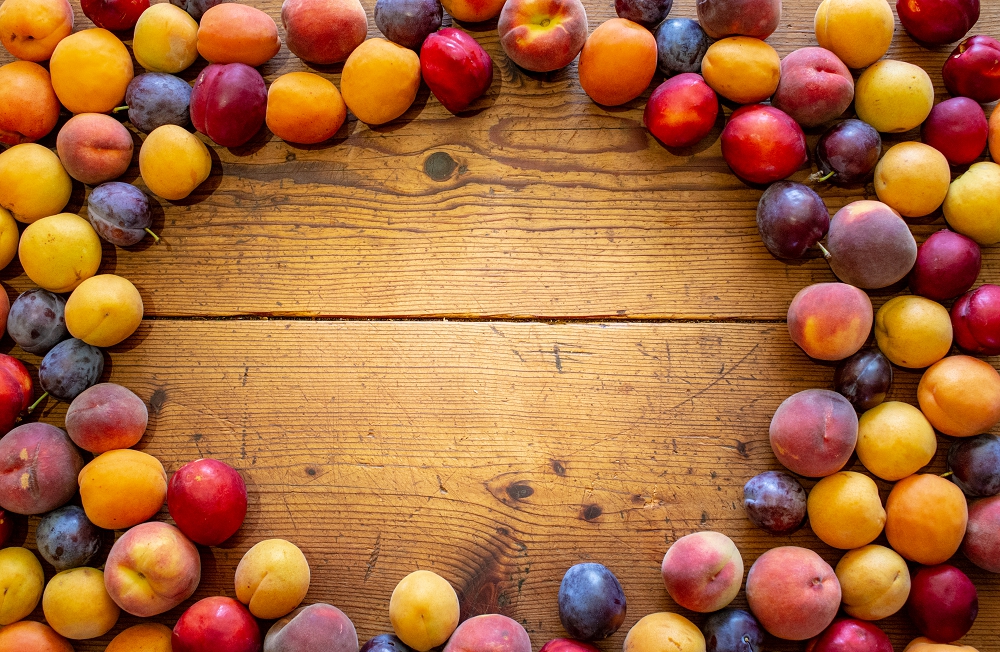
A fruit-picking diary is one of the simple planning tools we recommend to help you pick perfect, delicious, tree-ripened fruit every single time.
When should you pick your fruit?
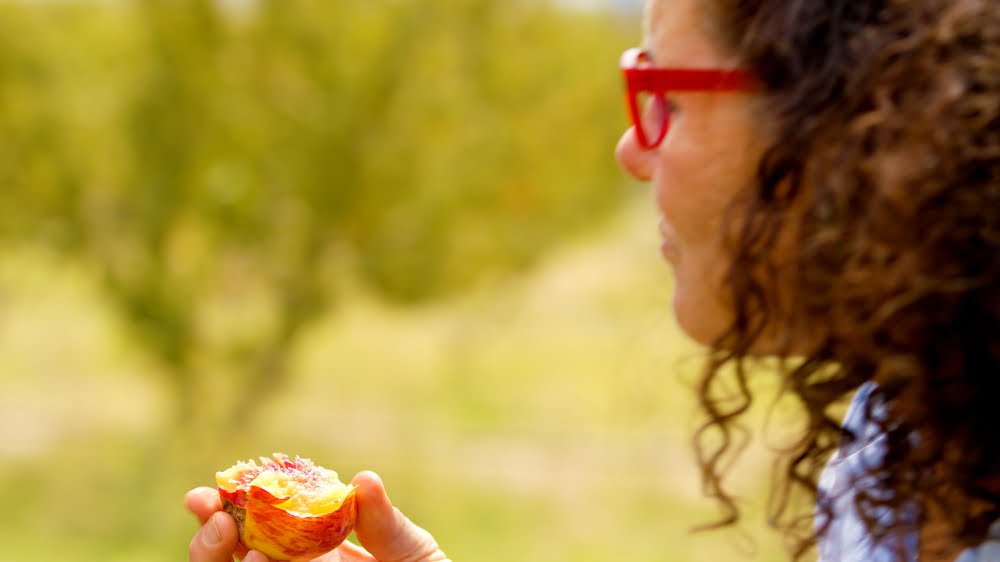
Picking fruit too early is a bit of a tragedy. Fruit tastes SO much better when allowed to fully ripen on the tree — don’t you agree?
Do you have any strong fruit memories from your childhood? They usually involve the incredible flavour of eating fruit which has been properly ripened on the tree.
Eating fruit that tastes amazing is quite rare today – unless you grow your own!
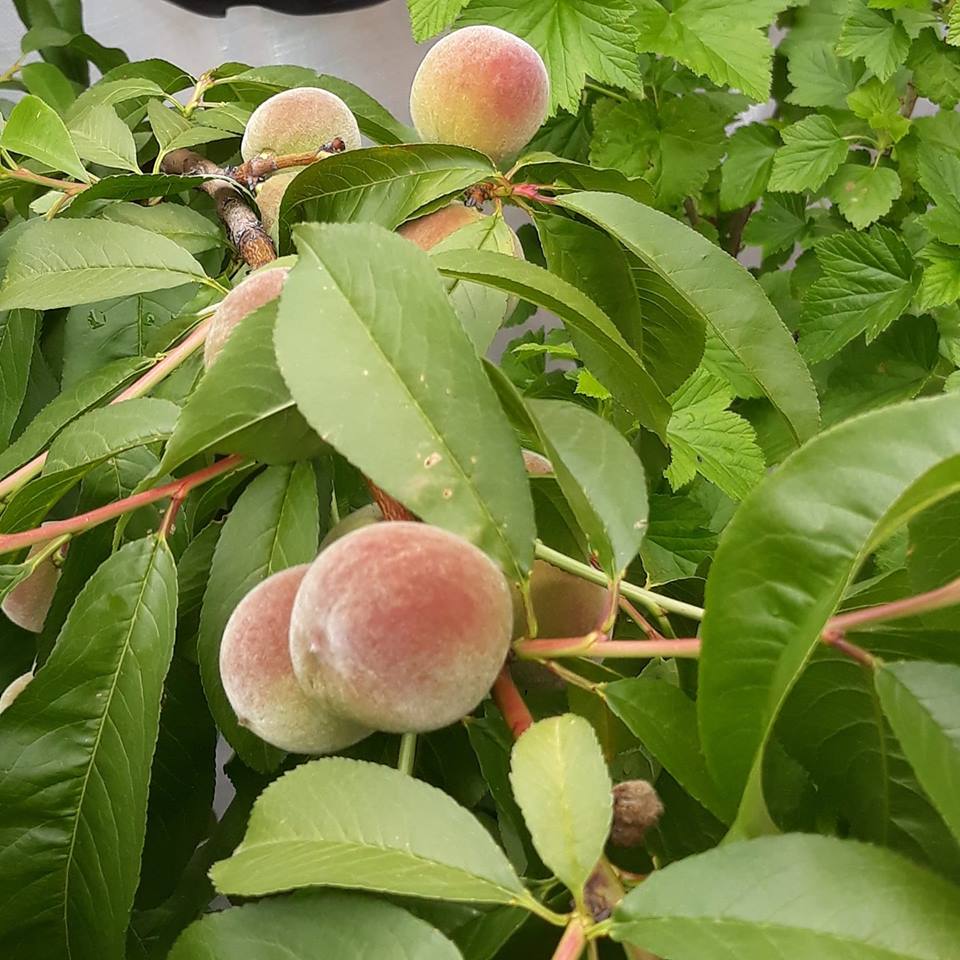
The fruit tree ripening dilemma
Picking fruit at the right time might seem like the simplest thing, but it can be tricky to get the timing perfectly right.
In waiting for the perfect amount of “tree-ripeness” it’s surprisingly easy to leave the fruit too long and let it get too ripe.
Apricots are a good case in point. If they’re too ripe when you pick them, it’s easy to damage them. Let us show you what we mean.
How to pick fruit properly
Ideally, when you pick your apricots, they’ll come away with the stem intact, like this…
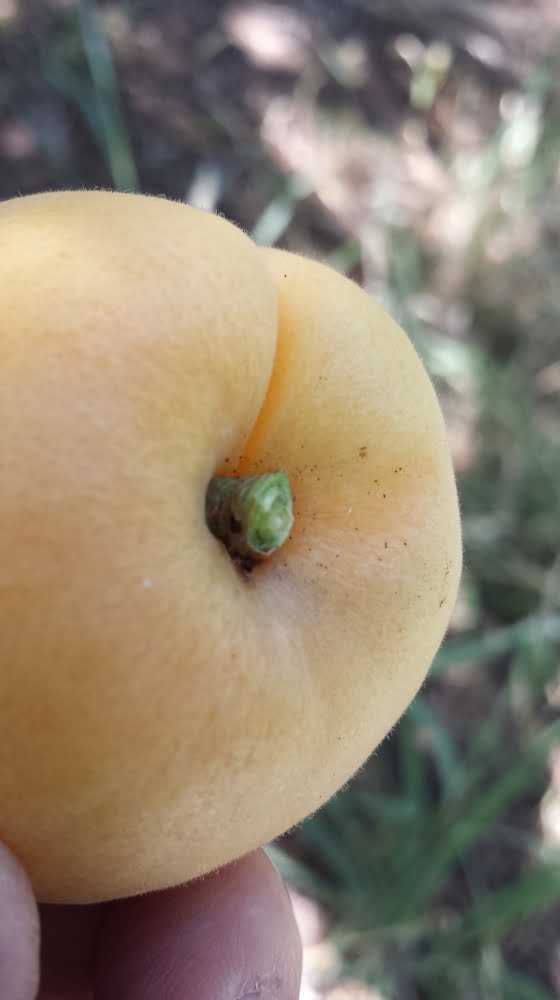
Even if you pick them with no stem, if they’re at the right stage of ripeness, they’ll end up with a neat little scar where the fruit has pulled off the stem, like this…
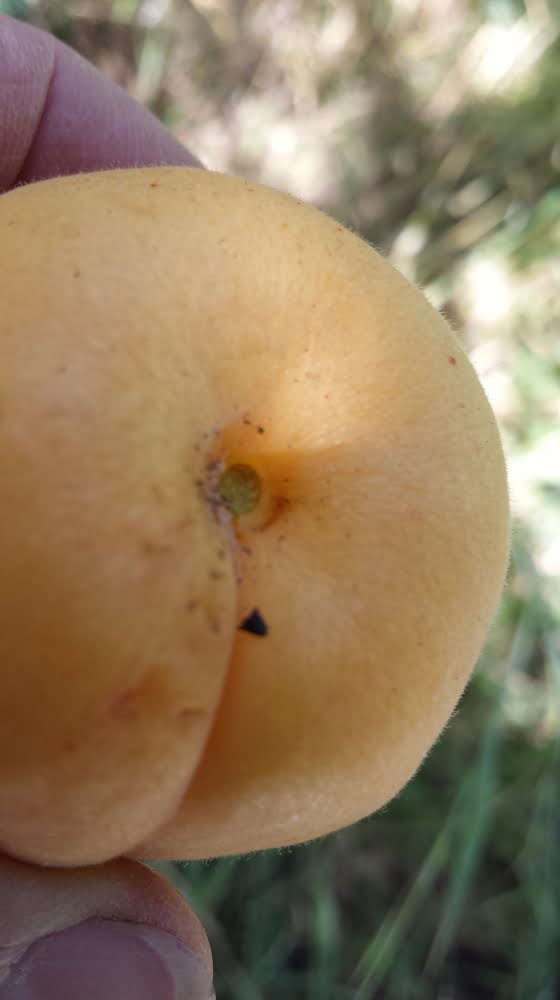
One of the risks of letting fruit get too ripe is that you’re more likely to get a picking injury at the stem end, as you can see in the following photo. The fruit has been torn slightly where it’s been pulled away from the stem when it’s been picked.
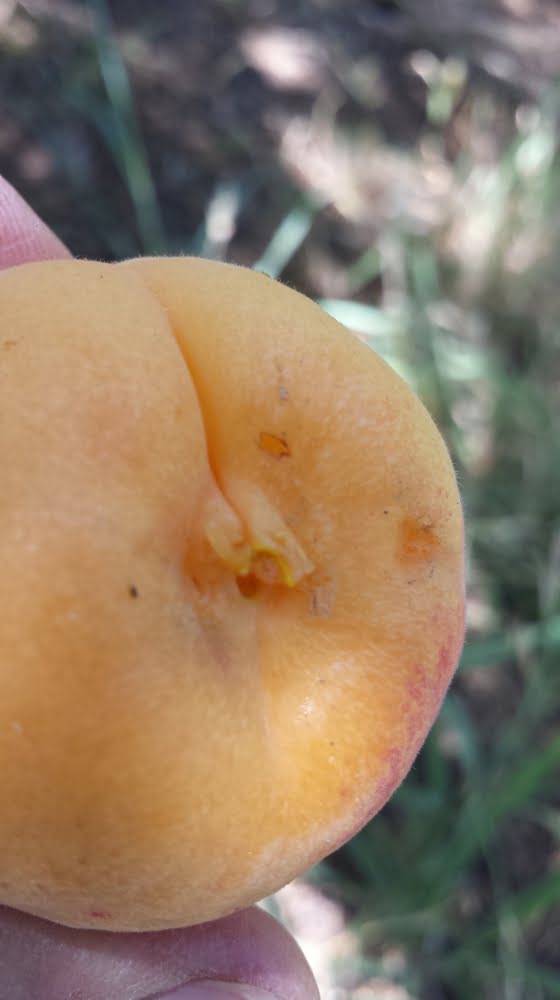
Unfortunately, this instantly downgrades the fruit a little bit. It will probably ripen too quickly after it’s picked and won’t keep as long. Damaged fruit is also likely to soften quickly or go mushy at the scar site.
The injury can also make the fruit vulnerable to post-harvest fungal disease, particularly if you’re growing organically (and we hope you are!).
What’s the problem with picking fruit at the wrong time?
Injured fruit is much more likely to develop Brown rot. This is even more likely if you’ve had a rainy season before the fruit was picked. Lots of rain means there is likely to be more brown rot spores on the fruit tree and the fruit.
If your fruit is a bit overripe when you pick it, use it as quickly as possible.
Otherwise, get it into the fridge to keep it in good condition. We put all fruit straight into the coolroom as soon as it’s picked to get the heat out of it.
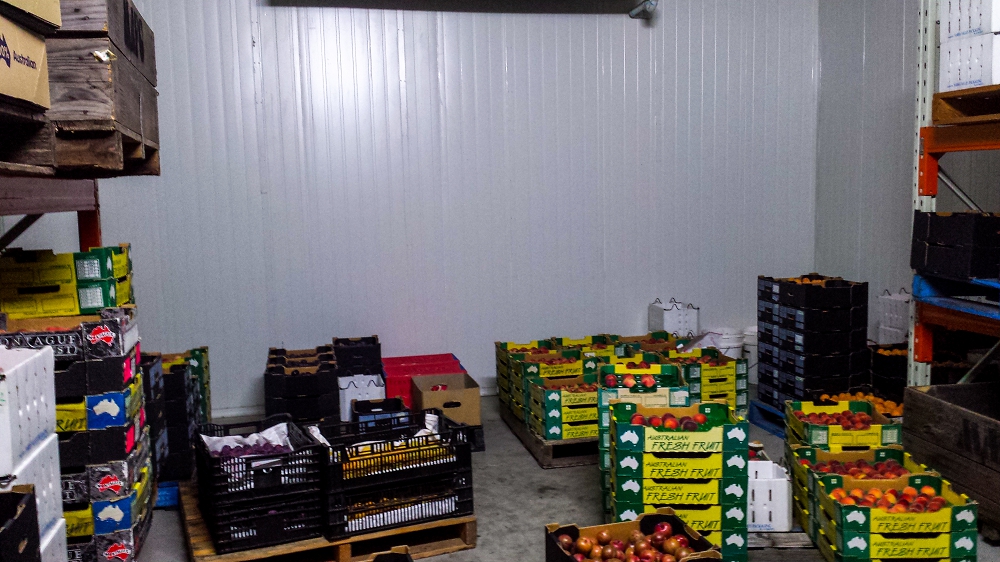
You probably don’t have access to a coolroom, and possibly not enough room in the fridge for extra fruit either!
Some of our Grow Great Fruit members get around this problem by having a second fridge just for their summer harvest.
Alternatively, make room in your regular fridge to cool the fruit as soon as it’s picked. Once it’s cool, remove it from the fridge and store it in the coolest place in your house.
The main thing is to try to avoid picking injuries when you harvest.
The “Goldilocks” secret to picking fruit at the right time
So, what’s the secret? How do you choose the exact right time to pick your fruit when it’s ripe enough … but not too ripe?
It’s quite simple. The key is to create—and then use—a personalised fruit tree diary. Just follow these easy steps:
- Use a special book that you keep from year to year (an exercise book will do) or create a spreadsheet on your computer.
- List all the fruit varieties in your garden.
- Write down the dates that you pick each variety each year, and add notes about whether you got the timing right.
- As your list develops over the years, add another column that is your master list of “earliest ever dates” that you’ve picked for each variety.
- Each week throughout the fruit season, check the master list to see which of your fruit trees have ripened this week in previous years.
- Now you’ll know which trees to look at that week, and then every few days until the fruit is ready to harvest.
Knowing the right date is just the beginning
Apart from dates, there are many other indicators of when your fruit is ripe that you should learn about. Colour, texture, flavour, and feel all play a role.
Many fruit types also have simple fruit-ripening tests you can do at home if you want to get a bit more precise. It also pays to learn correct picking techniques and “best practice” storage methods.
Nail all three, and you’ll make the most of your precious fruit.
Related Articles

Should you worry about bugs on fruit trees?
Should you be worried about the bugs on your fruit trees? Learn how to protect your fruit trees without upsetting nature.
Five ways to lead a more organic lifestyle
Five simple tips to help you live a more organic lifestyle and improve your health without breaking the bank.
Hands up – who loves Bramley apples?
Bramley apples are a magnificent cooking apple from England which deserve a place in many Australian gardens.