Estimated reading time: 5 minutes
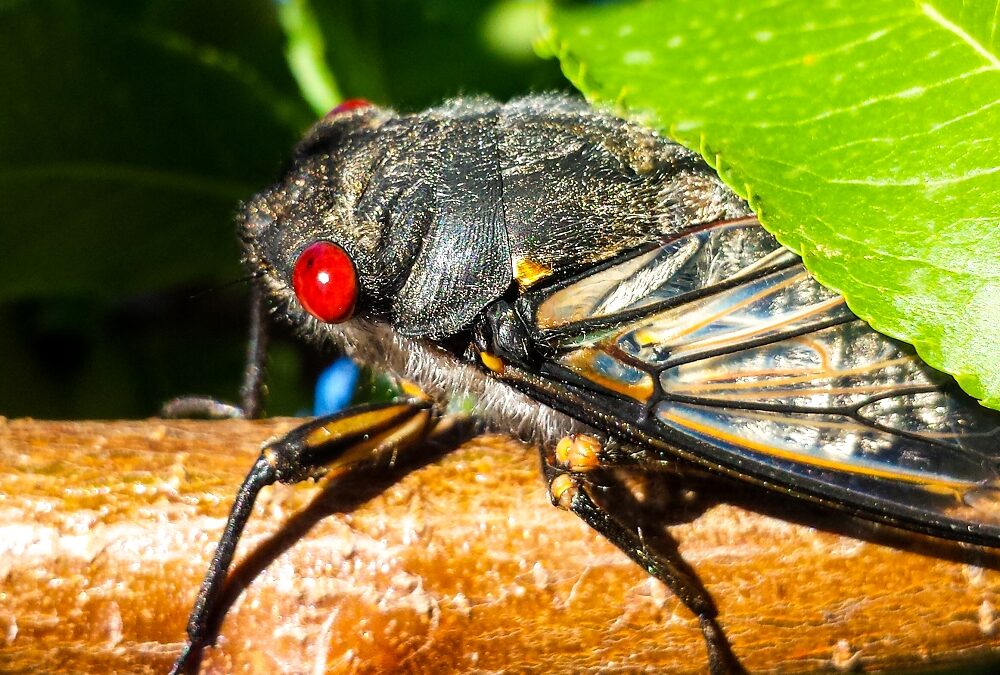
Insects in fruit trees cause a lot of concern for gardeners. Almost every week, one of our Grow Great Fruit members gets in touch saying something along the lines of “Help, there’s a bug on my fruit tree!”
Back before we learned how to grow fruit organically, whenever we saw insects in fruit trees, we took a different approach. We treated them mostly with fear and suspicion, and we aimed to eradicate them, mainly with terrible toxic sprays.
It might be hard to believe, but this is the standard way most farmers are taught how to grow food. These days, we take a different approach.
How insects help your fruit trees (and garden)
Before we learned about organic growing, we didn’t understand just how much damage we were doing by killing insects. In fact, learning to appreciate insects was an important part of our journey to a truly organic mindset.
There are literally hundreds of thousands of different fruit tree insects you might see. If you’re also seeing damage on your trees, it’s easy to be suspicious of them all, but that’s not fair to the insects!
Identifying a specific fruit tree insect can be difficult, whether you’re an enthusiastic gardener or a commercial orchardist like us. We’re fruit growers, not entomologists! (Though we very much enjoy Dr. Manu Saunders’ entertaining insect blog.)
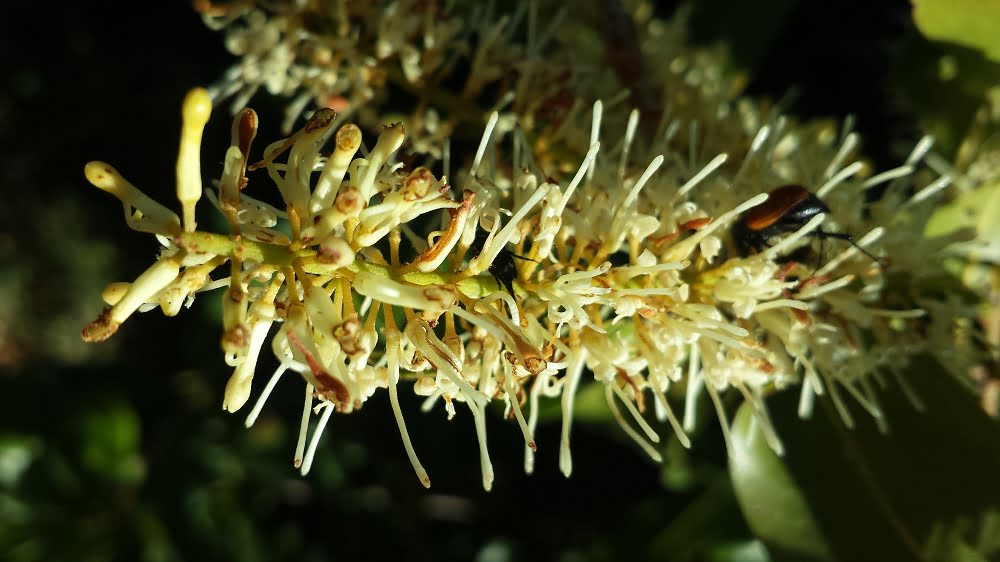
Once you start looking, you realise that there are insects everywhere.
The photo above is a close-up of a macadamia flower from our macadamia tree. If you look closely, three different insects are hiding in there. (Admittedly, the one in the middle is very hard to see!)
But just because you spot an insect on your tree, does that mean you have a problem? Sometimes they can cause damage, but more often, they’re providing your fruit tree with benefits.
Sometimes, they might even be doing both.
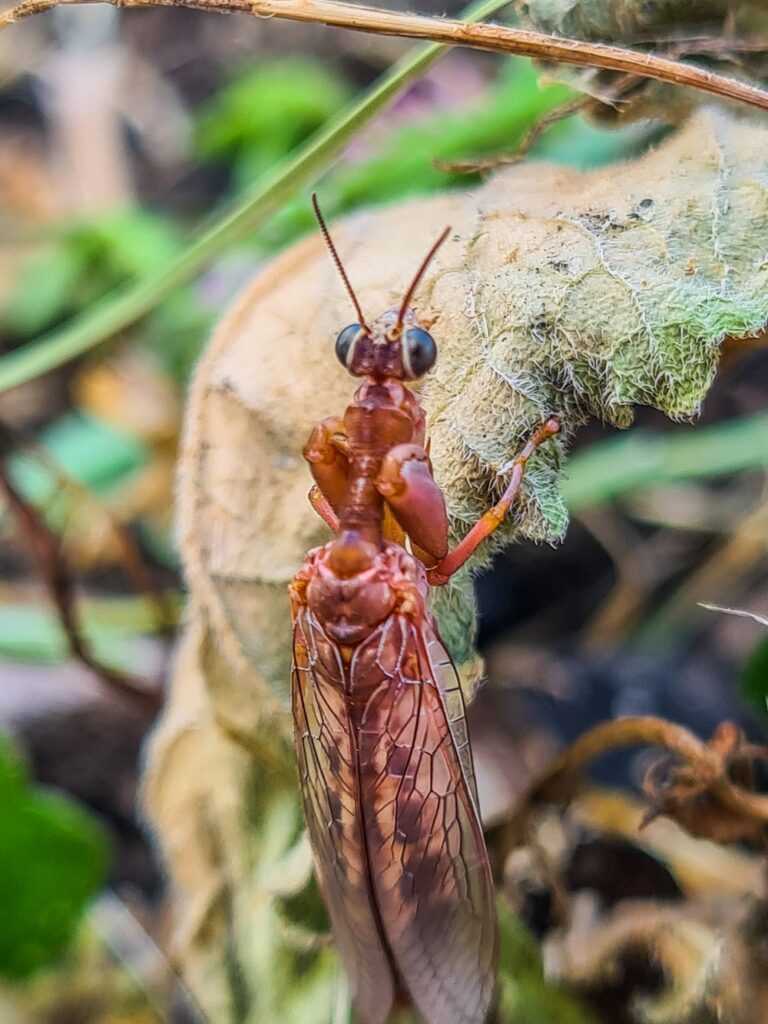
When should you be worried?
We use one key factor as our guide to how we respond to any insects in the orchard. Do we have evidence that they’re damaging either the fruit or the trees?
We reckon it’s very important to learn how to really look at your fruit trees. Learning to diagnose your fruit tree is a great antidote to the knee-jerk reaction lots of gardeners have when they see a bug on their trees.
If your monitoring shows that yes, the insects are doing damage, then the next step is to try to identify them.
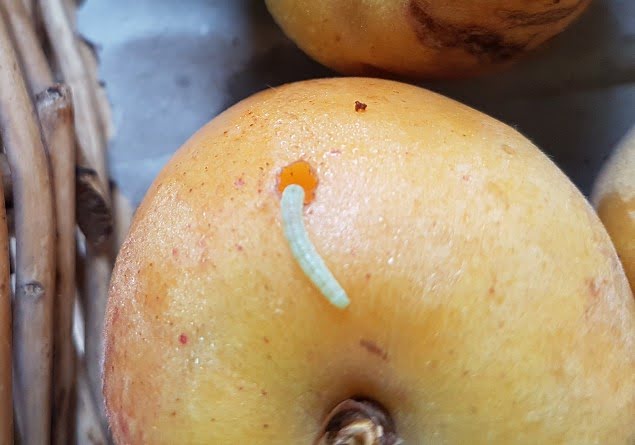
Responding to problem insects in fruit trees
If insects in fruit trees are damaging your fruit, you need to get to know your enemy! Learn as much about the insect as possible, especially its life cycle. Look for a weak point where you can interfere in such a way as to stop the damage from occurring.
We take this approach because it would be a huge challenge to try to learn about every insect in the garden. They have very complex interactions. Some are pests, some are predators, and some are both!
The complexity goes beyond just the insects. They also interact with birds, plants, and even the microbes in the soil in complex ways that you’ll probably never fully understand.
What we’ve noticed over many years is that as long as there is lots of diversity in the garden, populations tend to keep each other in check and become more balanced over time.

Biodiversity is the gardener’s friend
As long as you encourage LOTS of biodiversity, and take measures to protect your fruit from insects in fruit trees without interfering with nature too much, you’ll usually manage to live in harmony with all the critters in your garden.
This is much preferable to the “scorched earth” approach of killing everything that moves. And honestly, it’s very easy to do more harm than good once you start killing things in the garden!
More helpful resources
Key steps to growing great fruit webinar (free)

Related Articles
Should you worry about bugs on fruit trees?
Should you be worried about the bugs on your fruit trees? Learn how to protect your fruit trees without upsetting nature.
Five ways to lead a more organic lifestyle
Five simple tips to help you live a more organic lifestyle and improve your health without breaking the bank.
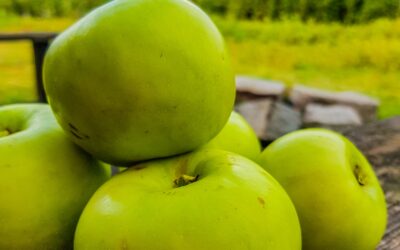
Hands up – who loves Bramley apples?
Bramley apples are a magnificent cooking apple from England which deserve a place in many Australian gardens.
There’s heaps of apps online to help identify these insects- and there is also the opportunity to send your insect photo to a panel of experts that can help with ID and integrated pest management ideas if it’s a pest of concern. Check out extensionaus.com.au
I’d like to add to report any pests of exotic status to Ag Vic and the reporting of Queensland Fruit Fly to the relevant local organisation in place to co-ordinate a response in the region. Area wide management does not need to use broad spectrum chemicals, and we are all in a better place (less reliant on chemistry) if QFF can be detected early and not allowed to spread too far!
Thx for your post Bronwyn.
Have been inundated with Fungus Gnats in my hothouse. Thousands and thousands of them everywhere. . Never seen them before or even knew they existed!
Glad to have the site you mentioned . Thanks . Elle
Thanks for the suggestion for reporting QFF and exotic pests Bron, and just a reminder for anyone in our region that there’s a QFF Emergency Outbreak Plan that advises where and how to report any QFF sightings (here’s the link to read the Plan: https://growgreatfruit.com/mydocs/HVFF-EOP-final.pdf?goal=0_8547c8e0ae-7a0213bc39-76022005&mc_cid=7a0213bc39&mc_eid=45407f83d0). But of course most of the insects most people will see in their gardens are harmless and part of the highly biodiverse environment we want to be encouraging. (And a word of caution re integrated pest management recommendations, as they often include chemical treatments that can inadvertantly do more harm than good).
So are you saying peach and plum aphids and cherry slugs are to be left alone?
No Honeysuckle, we’re just trying to shift people’s mindset away from seeing an insect = trying to kill the insect, to monitoring their trees and fruit for damage, and if they see damage, then taking steps the right steps to prevent the damage as much as possible. So there’s lots of steps you can take to prevent too much damage happening. Have a look at our free pest and disease webinar – https://growgreatfruit.com/pest-and-disease-webinar/
FRUIT TREE NETTING
Once fruit starts developing do you recommend 2mm or 9mm netting to cover fruit trees?
Hi Deb, good question. If you’re in Victoria, regulations are changing in 2021 to outlaw net with holes larger than 5mm (for backyard growers, not farmers). Other than that, depends on whether you have fruit fly – then you need fruit fly net. Other than that, it doesn’t really matter, whatever you can easily get.