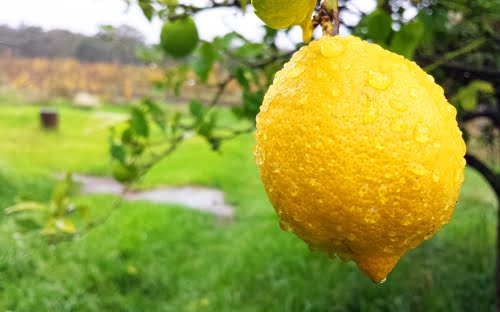
As a fruit grower, lying in bed listening to rain on the roof can bring up a wide range of emotions, from joy to despair!
In the typically dry summers where we live (and in much of Australia), most people welcome rain when it comes. So it never seems appropriate for us to worry out loud about the damage it can do to fruit.
But we do worry at times because even though rain can be a blessing, it can also definitely be a curse.
So the question of whether rain is good for fruit is complicated. It depends on lots of different variables, so let’s break it down a bit.
Trees like rain better than irrigation water — up to a point!
As a gardener, you’ve probably noticed how “perky” your garden looks just after rain.
One of the reasons (apart from the leaves being cleaner) is that the rain carries dissolved nitrogen, which is easily absorbed by the plants, giving them a nutritional boost.
Too much rain, however, and the soil can become waterlogged, particularly if you have low levels of organic matter or poor drainage.
This creates anaerobic conditions, which stop the plants’ roots from being able to take up nitrogen!
The other advantages of trees getting their water from rainfall (rather than irrigation) are:
- That the entire root system gets water (rather than just at the point of water delivery), and
- If you’ve been keeping your garden on rations due to dry conditions, they just love the chance to get their fill of water for a change!
Rain can trigger fungal disease in fruit trees
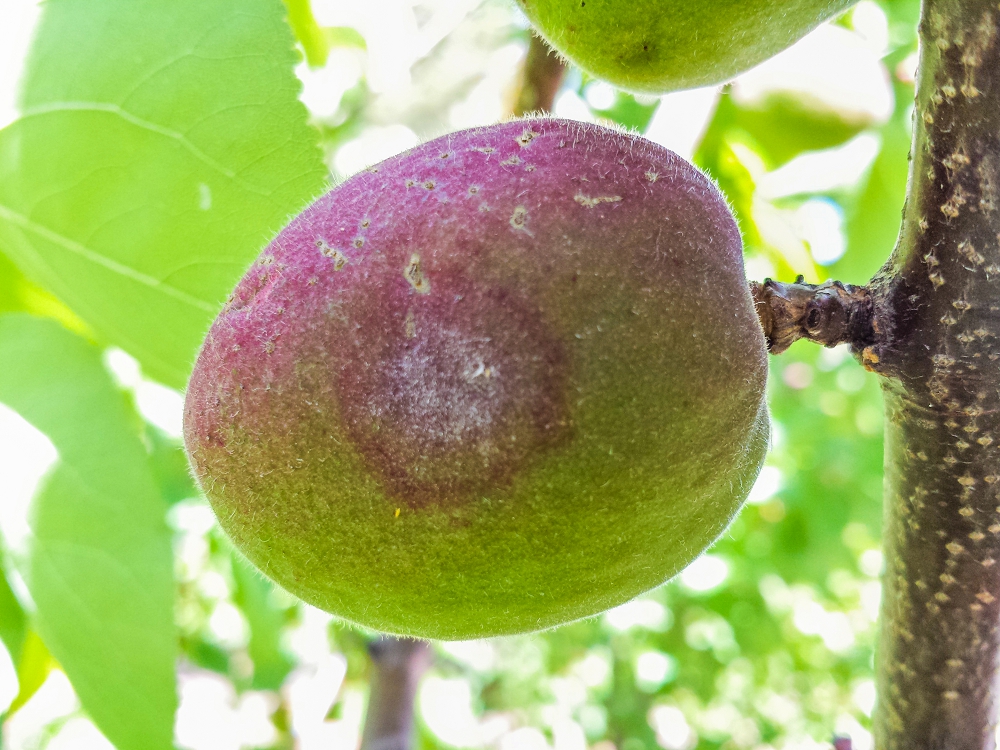
One of the biggest pest and disease risks in an organic garden (or farm) is fungal disease. Nearly all fungal diseases are triggered by wet conditions (at the right temperature).
In general terms, the more rain, the more fungal disease.
This risk is highest at the beginning of the season (i.e., at flowering time in spring). It then gradually decreases as the season progresses.
During autumn, if the summer has been generally dry and there is not much fungal disease around, the risk of a new fungal outbreak is relatively low.
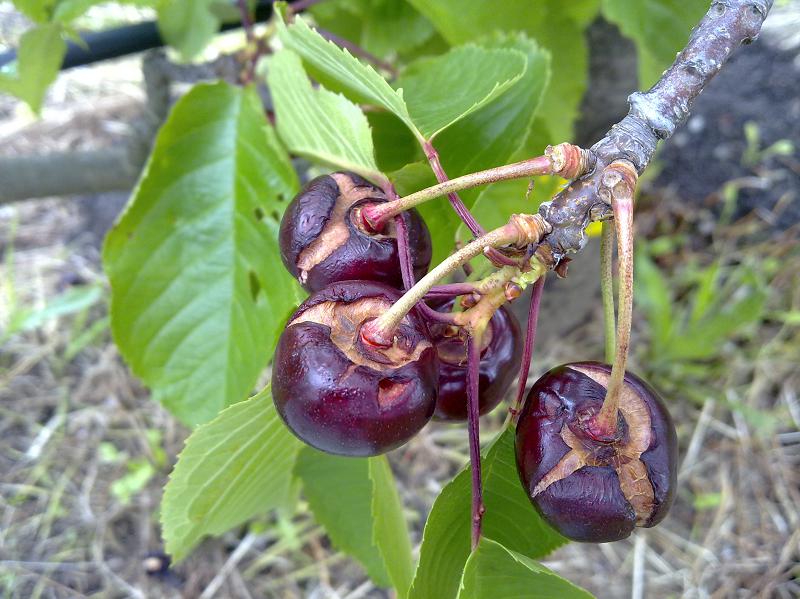
Rain can cause physical damage to fruit.
This is very specific to the type (and even variety) of fruit. For example, cherries are particularly vulnerable to splitting from the rain, and some varieties of apricots also split easily.
Hardier fruits like apples and pears, however, rarely experience physical damage from rain.
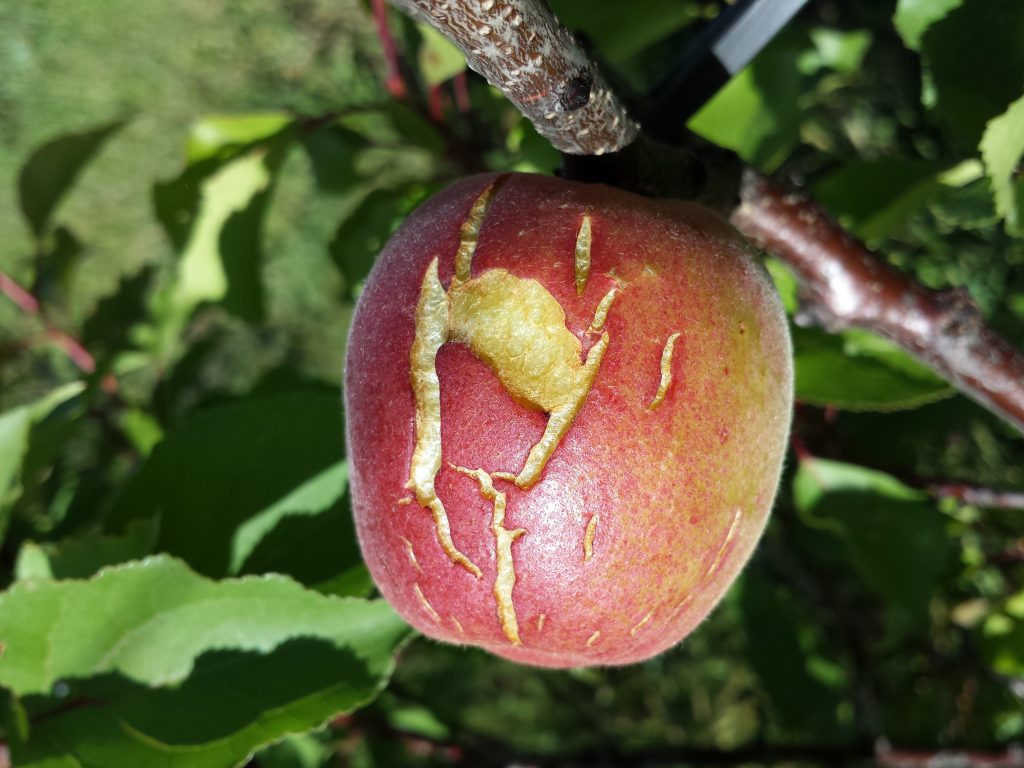
“Hard” rain can damage all fruit.
Storms that bring rain often also bring hail, and that can be completely devastating to all fruit.
Hailstorms are very random and localised, so it’s pretty much the luck of the draw with this one. If you live in a hail-prone area, netting can be your saviour.
All fruit types are vulnerable to hail damage, including apples, pears, plums, and quinces.
Rain is good for the landscape.
When you’re trying to grow food in a low-rainfall area (as we are), the general impact of rain (as long as there’s not too much, or too quickly) is generally FABULOUS!
It fills water storages, keeps the bush alive, helps to sustain our farming communities, and helps backyard fruit growers maintain their food security.
We love it….except…. when there’s too much!
If rain becomes flooding and the soil becomes saturated for too long, it can lead to ALL sorts of problems! Anaerobic soil conditions, trees dying, waterborne soil disease, nutrient leaching, dams breaking their banks, and the list goes on. We’ve seen it before when the drought broke in 2010/11.
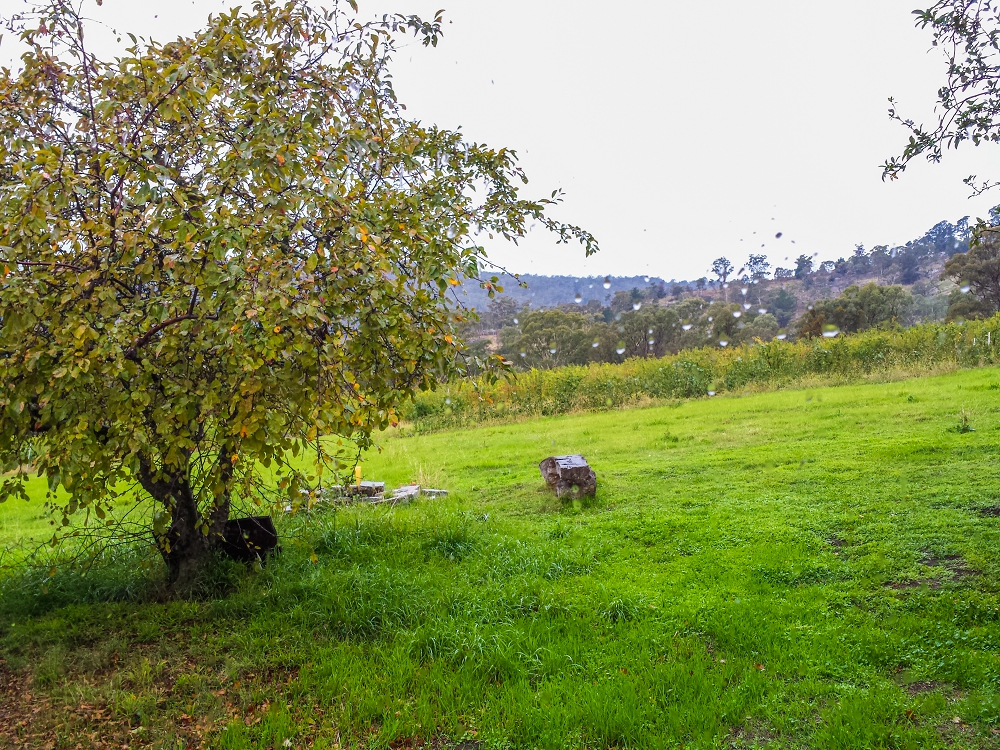
Rain is good for mental health.
It’s a generalisation, of course, but very often rain can be a huge relief. This is especially true for serious gardeners and farmers, especially if it comes after a dry spell.
Though, as you can probably see from our list, it totally depends on the amount of rain and the context!
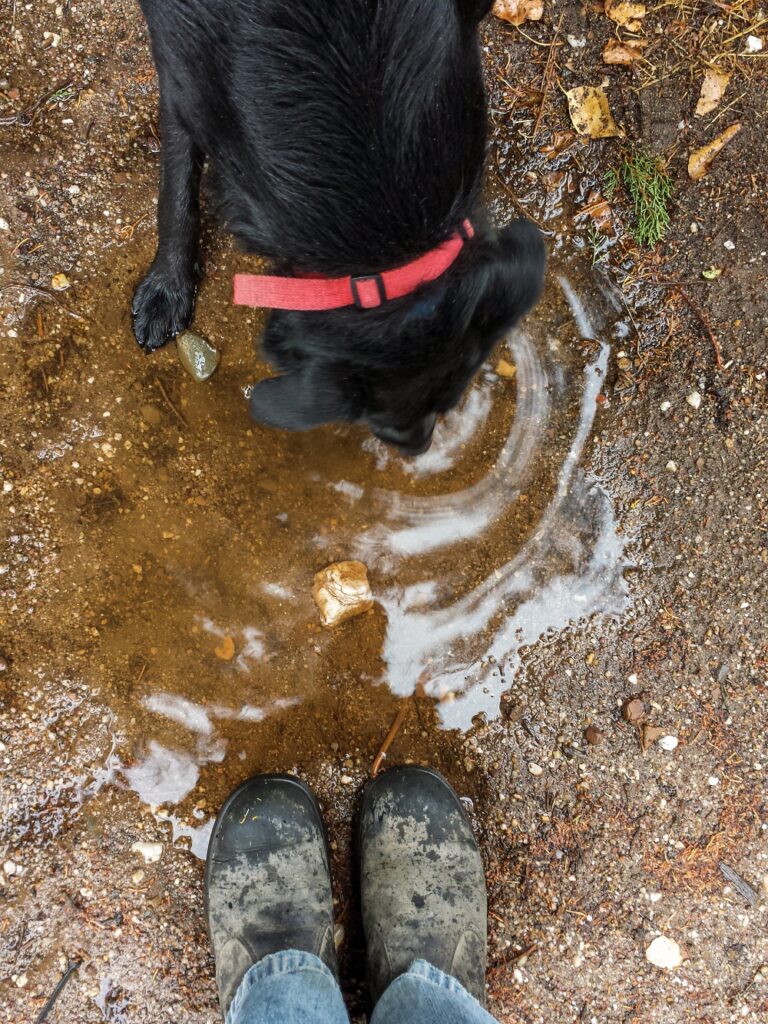
The best place to store water is in the soil
Regardless of the timing of rain within the fruit season, it’s important to make sure your soil can act as a big “water storage tank” when it rains.
The best way to do this is by building healthy soil, which is good for both water storage and drainage in your soil.
But there’s also a range of useful techniques like swales and keyline that can make a huge difference to how well your soil will store rainfall.
Want to learn more about rain, water, and fruit trees?
This is a topic we highly recommend all fruit tree lovers come to terms with. Fruit trees have an intimate relationship with water, and understanding how they interact will help you get the best results in all weather conditions.
🌧️ It’s about to rain – how should I protect my fruit?
🌧️ Water for fruit: efficient fruit tree irrigation
🌧️ Brown rot treatment for your fruit trees
🌧️ Smart irrigation for fruit trees
🌧️ Two quick ways to tell if your fruit tree is water-stressed
🌧️ How to grow fruit in a drought
🌧️ A secret weapon to protect fruit from extreme weather
🌧️ Make the most of rainfall: how to store water in your soil
Related Articles
Can fruit trees survive a fire? (What we found out)
Natural disasters like fire and flood can have devastating impacts on farmers and home-fruit growers alike. Here’s one farmer’s story.

What home fruit growers can learn from farmers
Backyard growers can learn a lot about growing food from farmers’ experience and insights into the highs and lows.
How (and why) to eat local food
The best local food is home-grown, right? But if you can’t grow everything, we give you tips for sourcing food that’s grown close to home.

I was planning on building a greenhouse but have since decided against it, prefering a different location. I now have a large structure with a plastic roof and wire mesh sides (should be good to keep out birds). I have planted a apple tree inside. Question is, should I replace the plastic roof with wire thus allowing rain in to the leaves or will the apple benefit from no rain on the branches thus reducing risk of fungal growth?
Andrew. Our experience with fruit trees inside a hot house with plastic roof is mixed. We have to tun irrigation through there as the rain doesn’t penetrate in that far. or. One has to just stand and water them. It’s also a lot hotter in there under a plastic roof in very hot weather. Not ideal.
Ours doesn’t have plastic sides down. They’re always rolled up. ( it’s inside a large fully wired area ) no birds!
Hi Andrew, depends on your climate. If you usually have wet summers and black spot is a regular problem in your apples (like in Tassie) they’d probably benefit from the plastic roof, but it won’t give you as much benefit if you’re in a more arid environment – and on the flip side, there’s nothing like rain on a fruit tree to give it a real boost, so it’s usually better for it to get the rain. if it was a cherry it would be a no-brainer to leave the plastic roof in place to protect the cherries from cracking!