Canker on fruit trees fall into the broad category of “gummosis”, and are often seen with dieback.
There are quite a few potential causes canker on fruits, and it may be a sign that your tree has a fungal disease called Phytophthora, which is sometimes called root rot disease. However, cankers can also be caused by many other diseases. So let’s start with finding out a bit more about cankers.
Estimated reading time: 6 minutes
What causes canker on fruit trees?
First, let’s check out what a canker on fruit trees actually look like. The word conjures up all sorts of nasty images of disease.
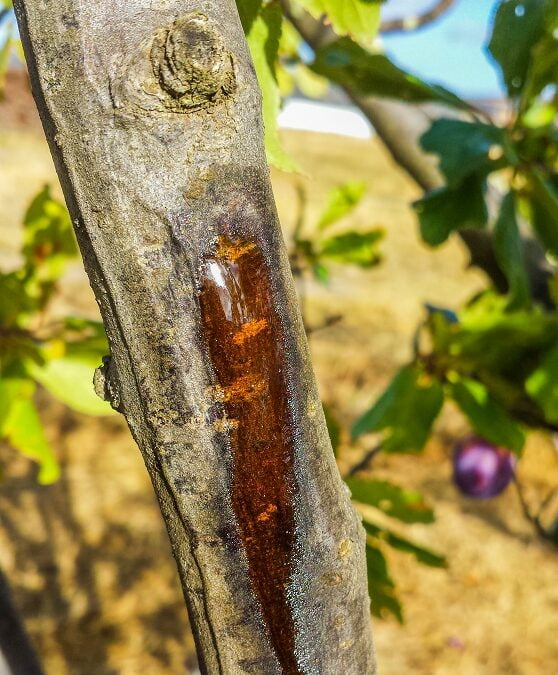
The example in the photo at the top of the blog of a fruit tree with sap on the bark is pretty typical. A canker is often just a blob of gum or resin (which is actually the tree’s sap) on the bark.
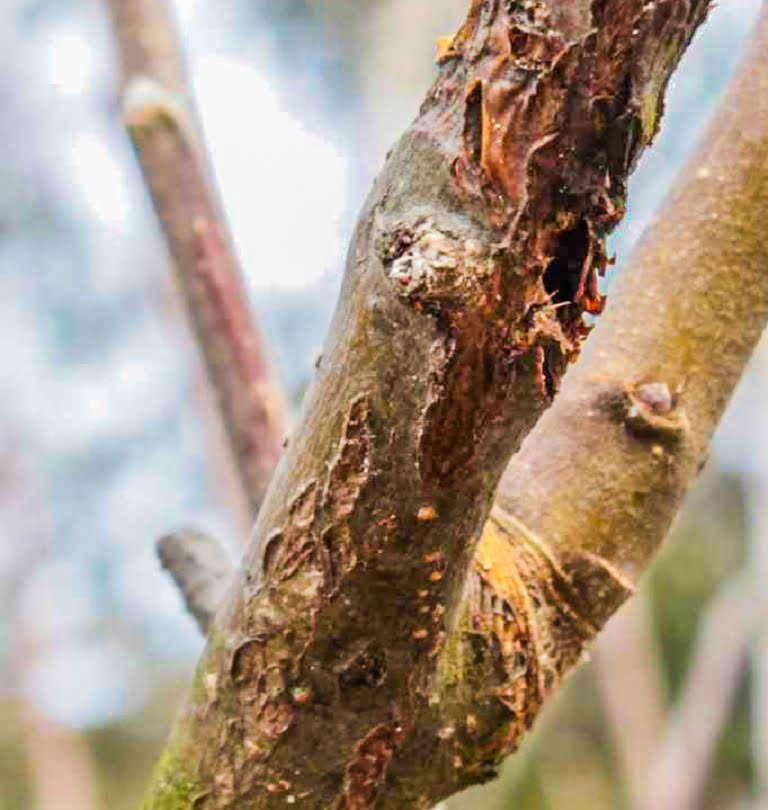
The word is also used to describe “sores” in the bark of the tree, where the bark may have lifted, look diseased, or be cracked. Cankers will often have both sap and damaged bark together.
How to diagnose the cause of canker on fruit trees
It can be very tricky to pin down the cause of a canker on a fruit trees. Two of the most common causes in fruit trees are Phytophthora and Bacterial canker. The symptoms can look very similar.
Canker on fruit trees can also be caused by diseases like Blossom blight, or even by physical damage.
There are a few signs that your fruit tree might be infected with Phytophthora:
- Phytophthora cankers will smell sickly sweet if the infection is caused by P. cinnamomi (one of the three different species that cause root rot). Bacterial canker, on the other hand, smells sour;
- Cankers caused by Phytophthora are more likely to occur in summer, and Bacterial cankers are more active in winter;
- Phytophthora lesions start at the base of the tree and move upwards. Bacterial cankers appear at the top and move down the tree.
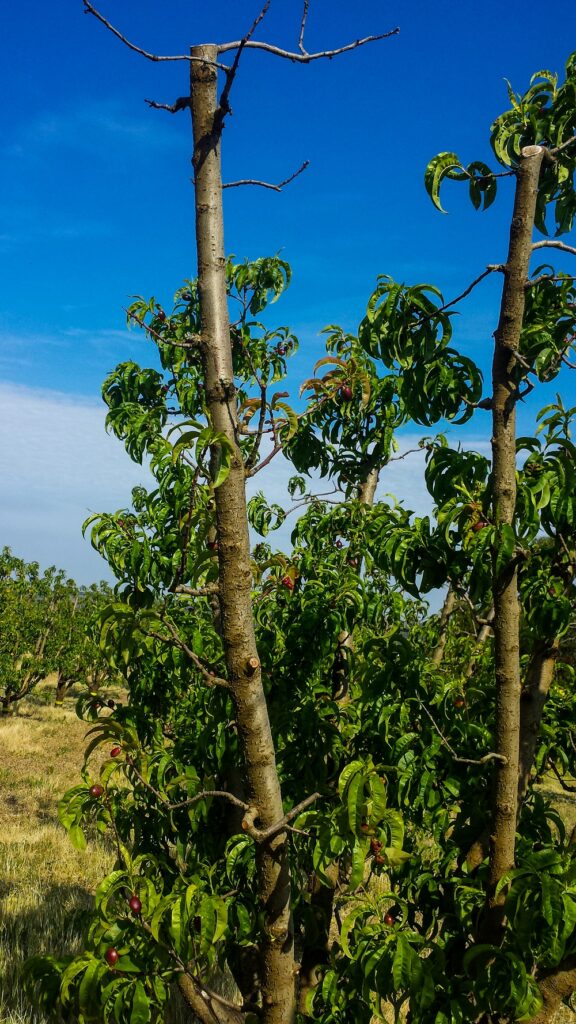
Though Phytophthora attacks the roots, another symptom that can help identify it is dieback of limbs. This may start at the top of the tree, or on any of the branches.
Treatment for canker on fruit trees when Phytophthora is the cause?
Phytophthora is responsible for a lot of canker on fruit trees, and even tree deaths. But fear not, in many cases it’s perfectly beatable.
Of course, the answer is in the soil!
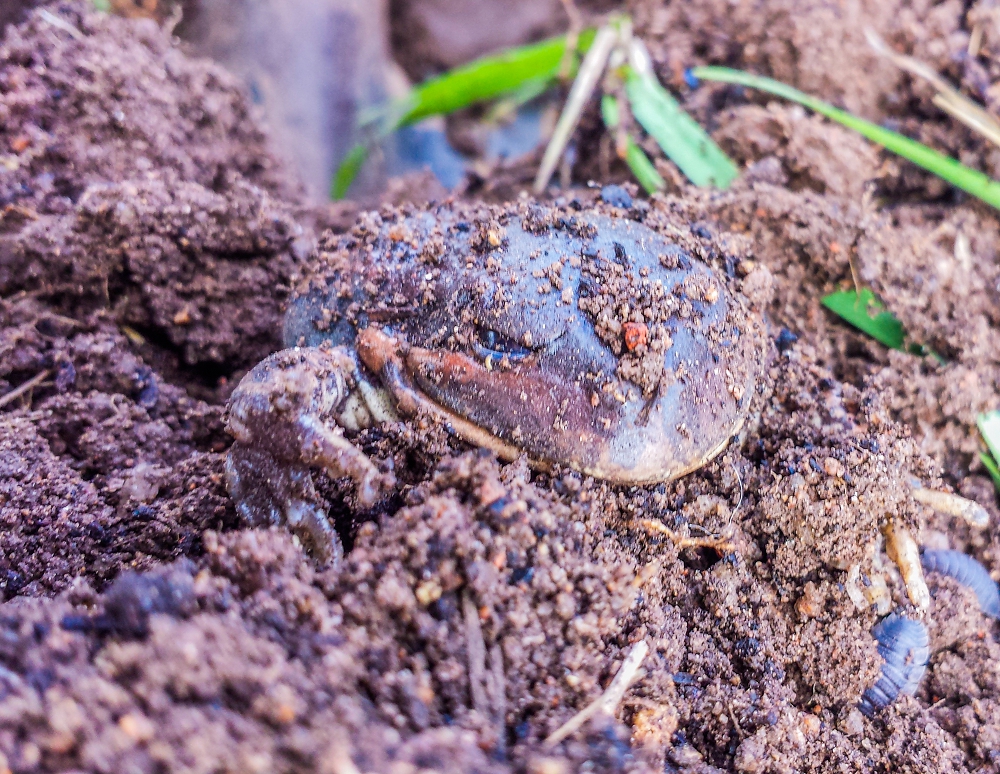
Phythopthora is a fungus that lives in the water in the soil, so it thrives in wet and waterlogged conditions.
But guess what eats it?
Other soil fungi, the non-disease causing kind!
Healthy soil is the solution to most canker on fruit trees
It may not surprise you that, speaking organically, the solution to cankers on fruit trees is healthy, well-drained soil with lots of organic matter. Healthy soil is the perfect breeding ground for these healthy soil fungi. Once established, they will out-compete the Phytophthora.
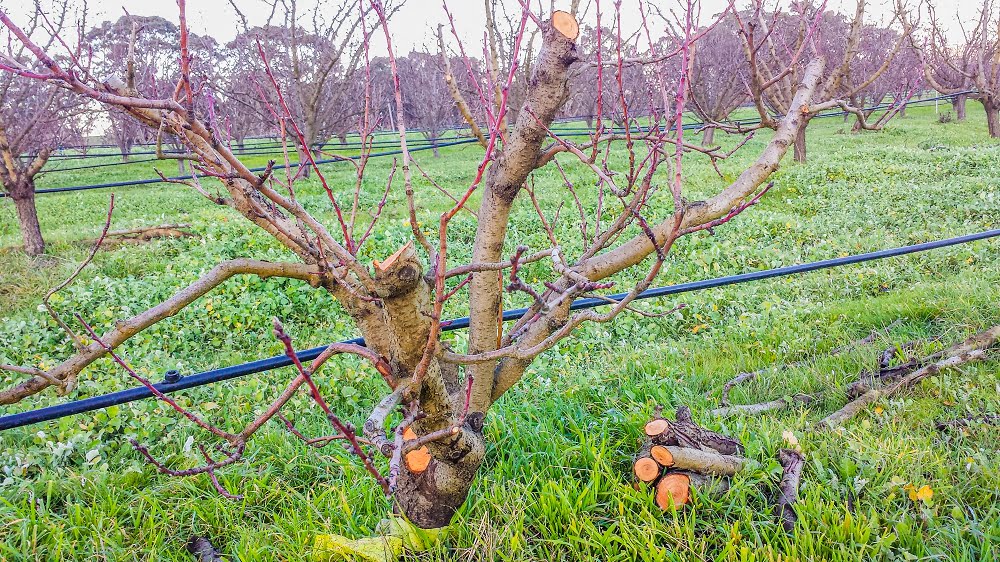
We learned a lot about this pervasive soil fungus after the flooding rains we had a few years back. A lot of trees died, but our soil improvement work helped us to save a lot of sick trees. We thought we would have to pull them out, but they recovered, as you can see in this photo below.
The key to beating Phytophthora is a healthy soil improvement regime. It should be based on (a) increasing the organic matter in the soil, and (b) making sure you have active (healthy) soil microbes doing their work.
How to make your soil healthier
Here are some suggestions for what to use:
- compost (just spreading compost on top of the weeds or grass is good enough, as the worms quickly take it into the soil);
- compost tea — aim to put it on at least three times a year (though even more would be great if you have time);
- microbe food — things like fish, kelp, and humates put through the irrigation system will feed your soil microbes;
- occasional soil remediations, e.g. calcium if needed.
Soil improvement is a long, slow, continuous process. You’ll probably find you’re soon seeing improvements to help you know you’re on the right track.
You’ll find more information about how to identify and treat Phytophthora (and other common fruit tree diseases) in our short course “Keep Your Fruit Trees Free from Disease“.
We also have a great article on three simple ways to improve your soil health to help you prevent canker on fruit trees in the future.
Join our Organic Pest & Disease Control for Fruit Trees Webinar
Understand the “big three” disease types and how to treat them. One hour of learning to identify and treat pests and diseases in your fruit trees.
Related Articles
Does fruit love rain?
Rain can be both good and bad for fruit, depending on the context. We share the 6 main pros and cons of rain for fruit growers.
Can fruit trees reduce your stress levels?
In a tense, crisis-filled world, fruit trees, gardens, and nature provide the perfect (and proven) way to reduce stress levels.
The organic food pathway to glowing good health
Organic food is better for your health, your garden, and the environment, so it makes sense to learn how to grow your own.
A section on what to do wth existing cankers would have been more immediately useful
Thanks for the feedback. This blog is about treating the cause, rather than the symptom, which we generally find ultimately works better than short term solutions. The short course linked in the blog goes into more detail on the different solutions we’ve experimented with for bacterial diseases like canker if you’re looking for more info! Cheers, Meg – GGF team.
That “toad” would be a frog, as the only toads in Australia are Cane Toads which is unlikely to have made it so far south. Banjo frogs are one species that burrow into the earth, Litoria dumerlii.
Thanks for clarifying! Always so much to learn 🙂 Meg – GGF team.
Thank you so much for the information on cankers. I have just found some on my cherry trees. Haven’t smelt them yet. Would you believe they are the only two fruit trees I haven’t put mulch around. Just goes to show you. I really appreciate your informative emails.