Estimated reading time: 6 minutes
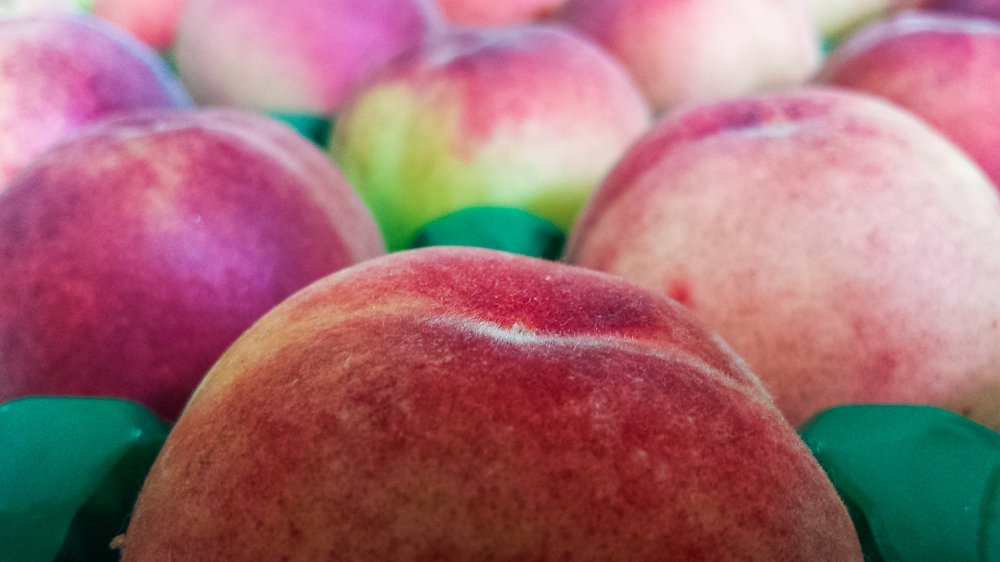
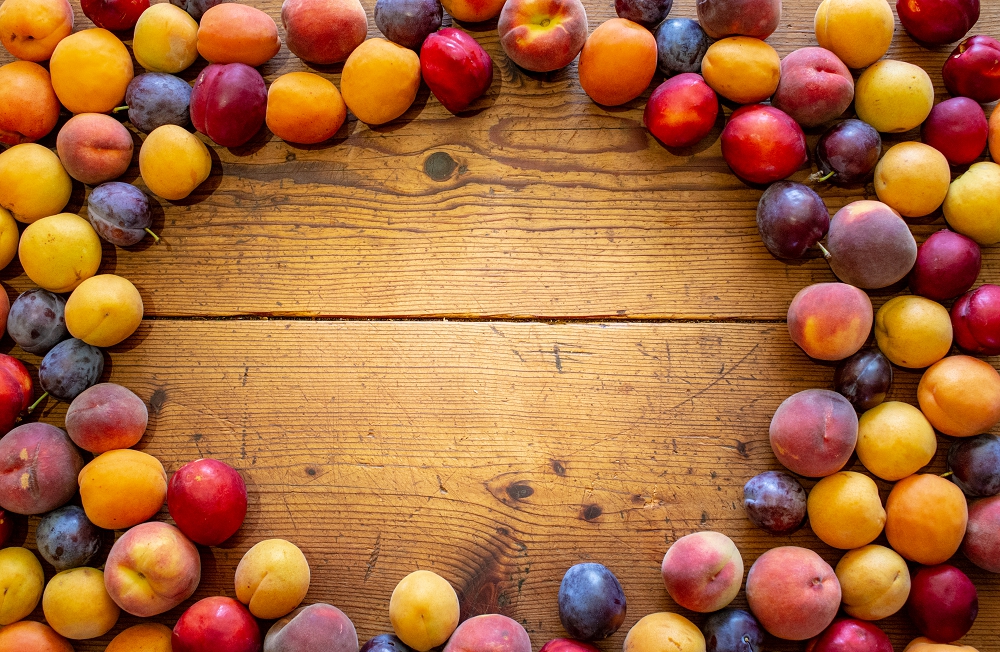
Is there any such thing as too many white peaches?
You wouldn’t think so, would you? But sometimes you can find yourself with a sudden glut of fruit that just can’t wait to be dealt with.
That’s when it’s time to start thinking about chutney.

Turning fruit gluts into chutney
In peak fruit season, if your peach trees are productive (as they should be), it’s easy to curse an excess of white peaches (or plums, or apricots…) sitting on the bench waiting to be eaten or processed.
And yes, we’re speaking from experience here.
Some of the early-season white peach varieties ripen around Christmas time in the southern hemisphere. That’s usually when everyone takes a couple of days off, so it’s easy to get behind with the picking.
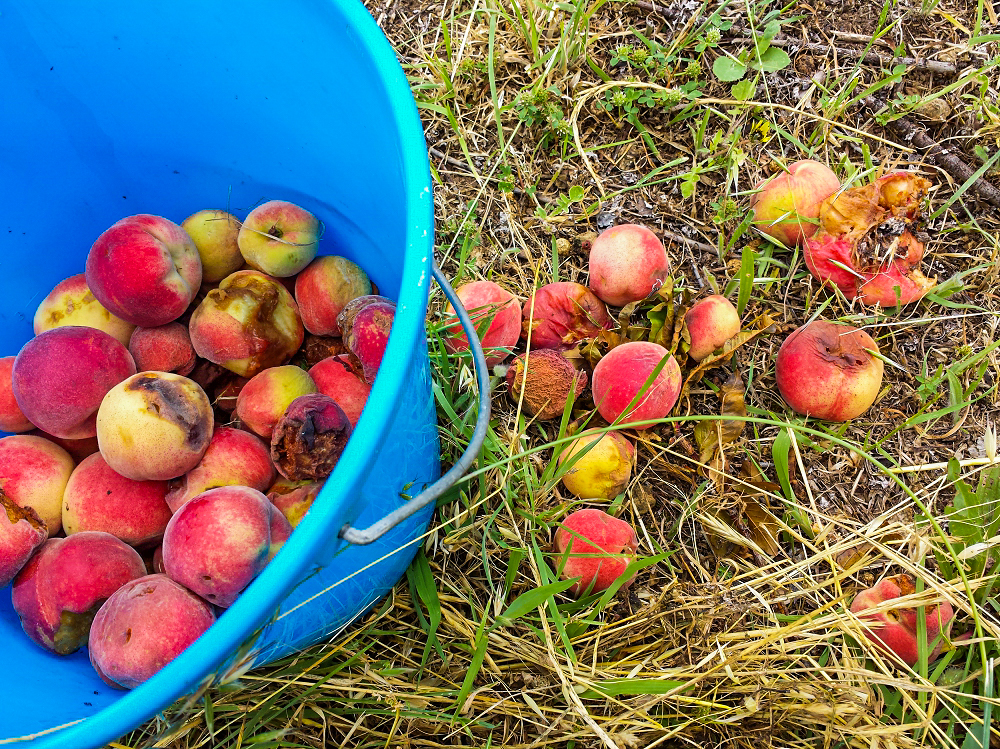
We have definitely had years when we’ve fallen behind, and some fruit has become overripe and sadly ended up on the ground.
One of the basic principles of keeping your organic fruit trees healthy is picking up all of the fruit that falls on the ground. That means all the fruit that hits the deck has to be collected!
Using fruit for its highest purpose
We’ve always committed to using every piece of fruit that we grow for its highest purpose. Any fruit picked up off the ground is used firstly for people’s food if it’s of good enough quality. If it’s undamaged, it can be eaten fresh or put in the fridge for later.
But to be perfectly honest, windfall fruit more often than not doesn’t look great.
It might be bruised from the fall. Or it’s fallen onto a twig or some grass, which has put a hole in it. If it’s been there for a couple of days, it might have developed some brown rot (or that might be the reason it fell in the first place).
That doesn’t mean the fruit’s not usable, just that it’s going to need cooking rather than eating fresh. The more damaged it is, the more quickly it will have to be processed and cooked before it gets any worse.
Regardless of what it looks like, we collect all the windfalls and then sort them into different grades.
If it’s not good enough for human consumption, it still finds a use. We’ll either give it to the animals (cows, chooks, etc.) or put it into the compost or worm farm.

Using windfall white peaches … in a hurry
Windfall fruit is a very common experience. If you grow fruit, chances are at some stage you’re going to have to deal with a glut. This might be because you’ve managed your ripening tree beautifully and just have too much fruit. Or it might be because you let the white peaches (or other fruit) get too ripe and fall to the ground.
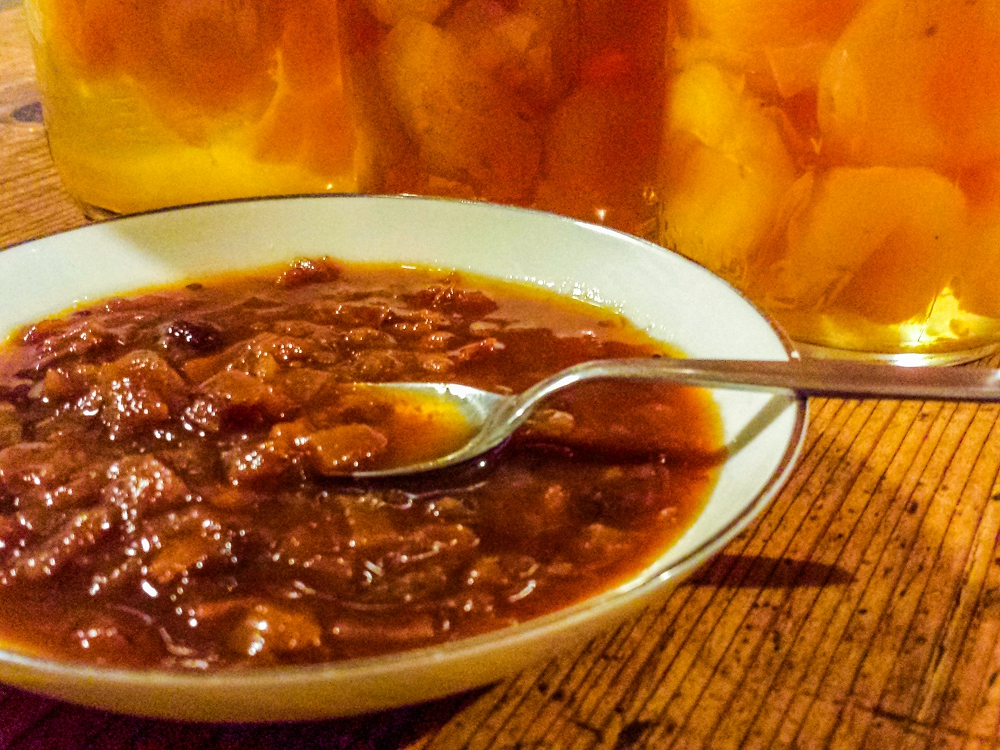
So, we want to share with you one of our favourite peach chutney recipes. It was passed on to us by one of our lovely customers, via the Australian Women’s Weekly “The Book of Preserves” (thanks Robbie).
We modified the recipe slightly when we made it, so we bring you the Grow Great Fruit version here. It was modified based on what we had in the pantry and the fridge when we made it (which is how so many good recipes evolve!).
It’s a terrific way of using white peaches, which are in abundance at this time of year. But you could also substitute apricots, nectarines, or even plums.

Grow Great Fruit Peach and Lemon Chutney
Ingredients
1/4 tsp ground black pepper
1/2 tsp chilli powder (or 4 small dried red chillies)
1/8 tsp ground cloves
1/4 tsp ground cinnamon
1 kg organic white peaches (you could use yellow peaches)
3 medium organic brown onions, chopped finely
2 cups organic brown sugar
2 cups organic apple cider vinegar
3/4 cup sultanas or currants
1/4 cup dried peel
3 tsp grated fresh ginger
2 cloves garlic, crushed
2 tsp grated lemon rind
1/4 cup lemon juice
Method
- If using clingstone white peaches, first simmer the peaches. Use just enough water to prevent them from sticking, and simmer for 10-15 minutes or until the flesh will easily come off the stones.
- Cool, and remove flesh from stones by hand. Discard peach stones. There’s no need to peel the peaches, just wash them and remove any bad bits before you boil them.
- Combine all ingredients in a large saucepan.
- Stir over heat without boiling until the sugar is dissolved.
- Bring to a boil and simmer uncovered, stirring occasionally, for about 1.5 hours or until the mixture is thick.
- Pour into hot sterilised jars, and seal immediately with sterilised lids.
Pre-Christmas is the perfect time to whip up a batch, as it goes perfectly with Christmas ham. It also makes a stunning homemade Christmas gift.
There really is no such thing as too many peaches. The trick is being ready at the drop of a hat to make the most of every single one!
Would you like to learn more about growing peaches?
Peach and nectarine trees are some of the most productive fruit trees you can have in your garden. They’re relatively easy to grow, but have a few “fussy” spots you need to master. Here are some more resources to help you get good at growing delicious organic peaches.
🍑 Do you have peaches on your tree?
🍑 Peach leaf curl (and how to prevent it)
Related Articles
10 excellent reasons to grow pears
Learn how easy it is to grow pears. They’re easy to look after, don’t mind a wet spot in your garden, and are fabulously healthy to eat.
21 varieties of apricot trees: pros and cons
Apricot trees are loved by many people. But what are the pros and cons, and how do you choose one variety over another?

Five things we wish we’d known about fruit growing
We wish we’d known these five things when we started fruit growing to help us become better fruit growers faster.
Interesting to try to make it
It’s so delicious, you’re going to love it!
Hi Katie,
Those peaches are a lovely colour. What variety are they?
Thanks and regards,
Grant Bailey
Hi Grant, they’re Briggs Red May, a heritage variety that’s worth tracking down.
Add peach salsa to your recipe collection. It’s also an amazing southern us tradition for using up that peach glut. Great on summer tacos, fish, chicken etc.
Ooh great tip, thanks Kelly! Yum! Meg – GGF team.