Estimated reading time: 10 minutes
Bramley apples (properly Bramley’s Seedling) are one of the most famous cooking apples in the world. If you’ve got your hand up because you love a Bramley apple, you’re probably either from the UK or have close links there.
They have a very dedicated following, and are the apple most people ask us about, presumably because they’ve been a relatively common apple in England for a very long time.
Bramley apples: A complete guide
Bramleys have a most romantic history.
The mother of all Bramley trees was planted as a seed by a woman called Mary Ann Brailsford in Southwell, Nottinghamshire, at the start of the nineteenth century.
That gives these apples a fairly impressive pedigree. They have the right to be called a ‘heritage’ apple (though they still don’t compete with Snow apples, which are known to have originated in France in the 1600s).
Anyway, the name Bramley came from the man who inherited that first tree (rather than the woman who planted it – typical!).
According to The Apple Source Book, that tree is still alive today. Despite having fallen over numerous times in the last 200 years, it can still pick up to a ton of fruit each year!
Due to the magic of grafting, all the Bramley trees in the world come from this original tree (or a graft from a graft from a graft…but that’s a story for another time.
Can you eat Bramley apples?
One of the most common questions people ask is whether Bramley apples are best for eating or cooking.
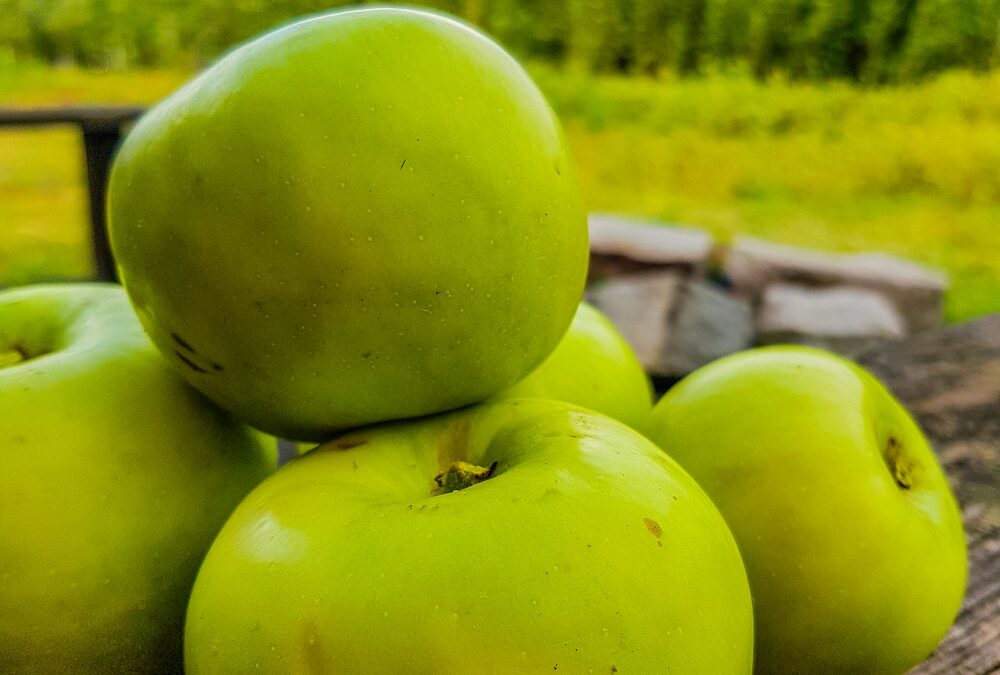
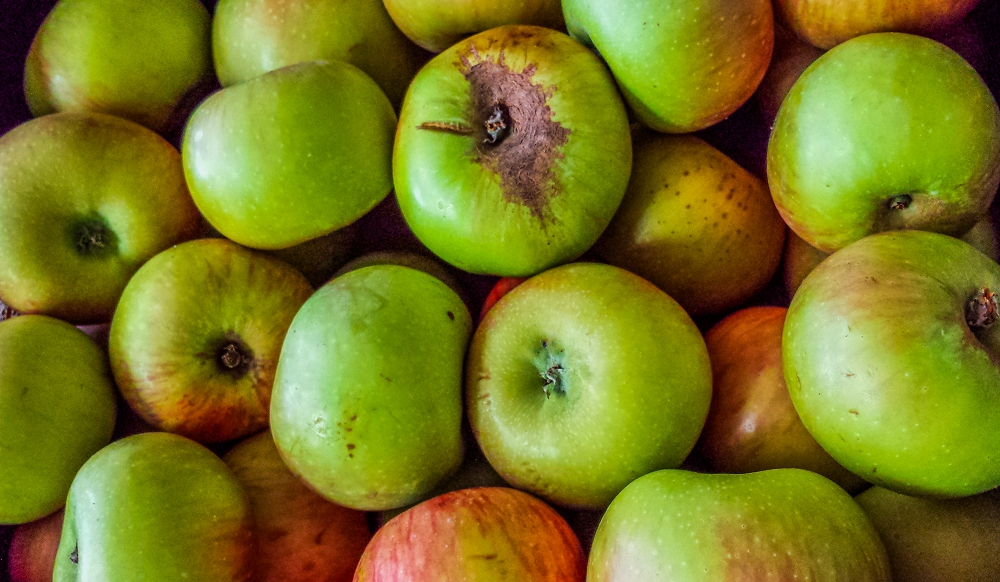
They are large green apples that go a greenish yellow when ripe. They might also have a red flush and stripes. The flesh is firm, yellowish, and very acidic.
This is the main characteristic that makes them prized as a cooking apple rather than an eating apple, and they behave very differently depending on how you use them.
To Aussies, brought up thinking Granny Smith was the ultimate cooking apple, it can take a while to see what all the fuss is about. But once you’ve used them, it’s easy to understand why they’re so popular.
What do Bramleys taste like?
Though Bramleys are famous for being a very tart apple, they will keep getting sweeter if you leave them on the tree after they’re ripe.
They’ll also gradually go a bit more yellow and get a redder stripe on the skin. They can even end up ripe enough to eat raw – as long as you like your apples pretty sharp!
Why do Bramley apples go mushy when cooked?
Bramley apples are high in moisture and break down easily when heated. They collapse into a mush of delicious apple-ness when cooked.
This is one of the characteristics that makes it prized as a cooking apple. For apple pies and crumbles, this is exactly what you want, but it can also mean they turn to mush if overcooked or cooked on their own without structure.
Are Bramleys good for apple pie?
Bramleys are often recommended by name in recipes for apple pie, which is one of the main reasons people go looking for them.
The fact that they break down easily when cooked means they give a soft, fluffy filling without needing much extra thickening. This means that Bramley apples are also one of the best apples for:
- apple crumble
- apple sauce
- baked apples
Can you substitute Bramley apples?
If you can’t get Bramley apples, the most common substitutes are Granny Smith apples. They hold their shape a little more, but still give a similar sharpness in cooking.
Cooking apples used to be much more popular than they are now, and a lot of heritage cooking varieties have become as hard to find (or harder) than Bramleys.
It’s worth seeking out some of the interesting heritage cooking apples, including:
- Blenheim Orange
- Calville Blanc d’Hiver
- Peasgood Nonesuch
- Stewart’s Seedling
- Rome Beauty
- other tart cooking apples, depending on your region
How to grow Bramley apple trees
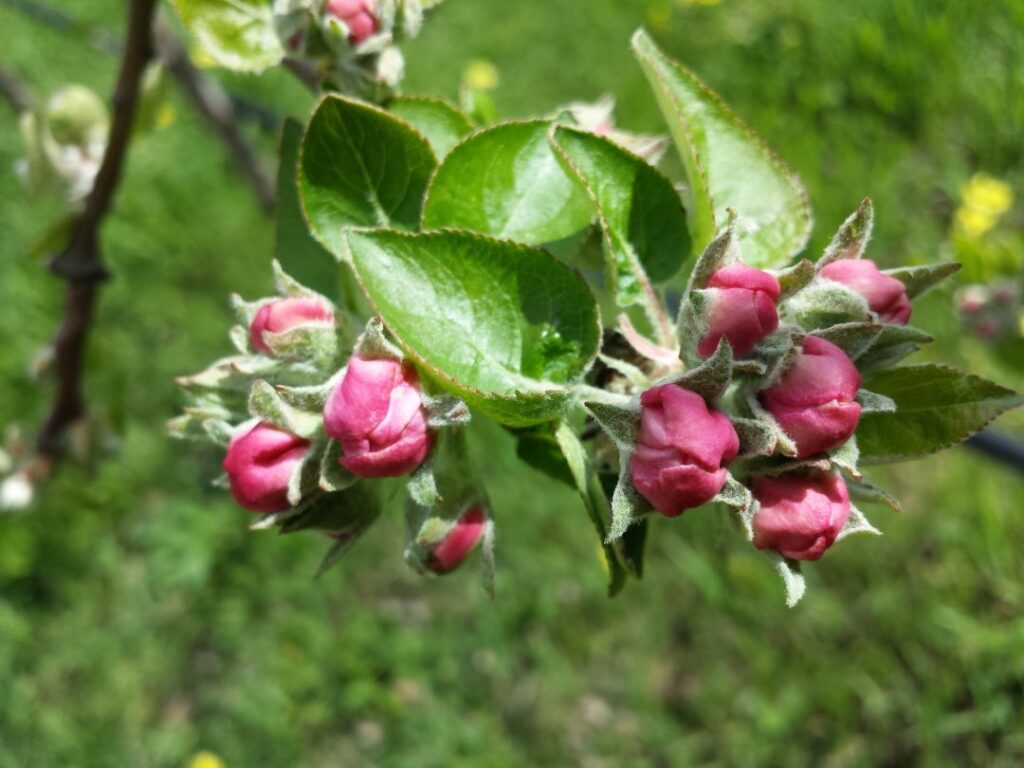
Bramleys are as easy to grow as any other apple. One of their main features is that they are triploid, which means they need to be planted with two pollinators.
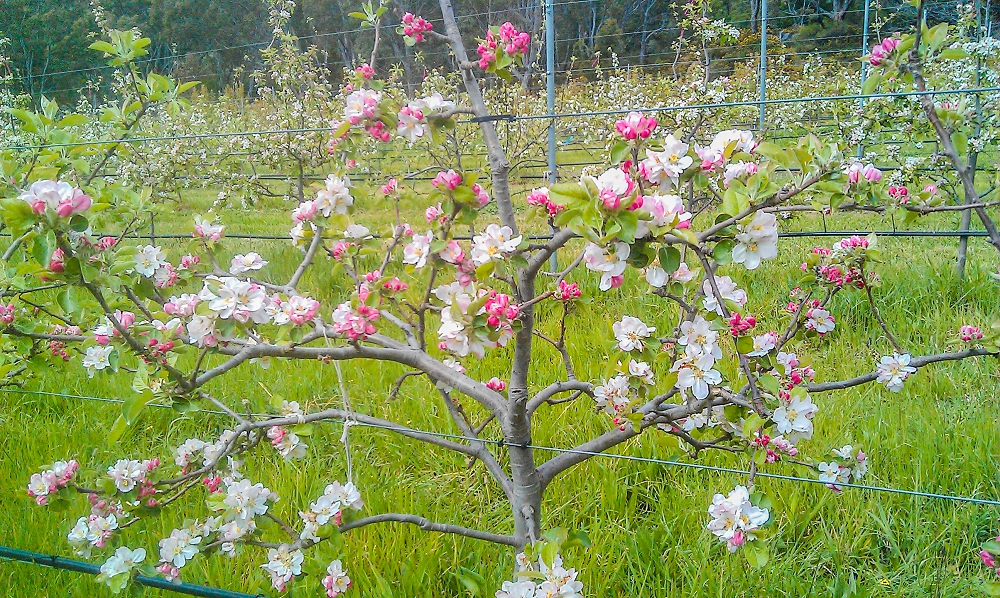
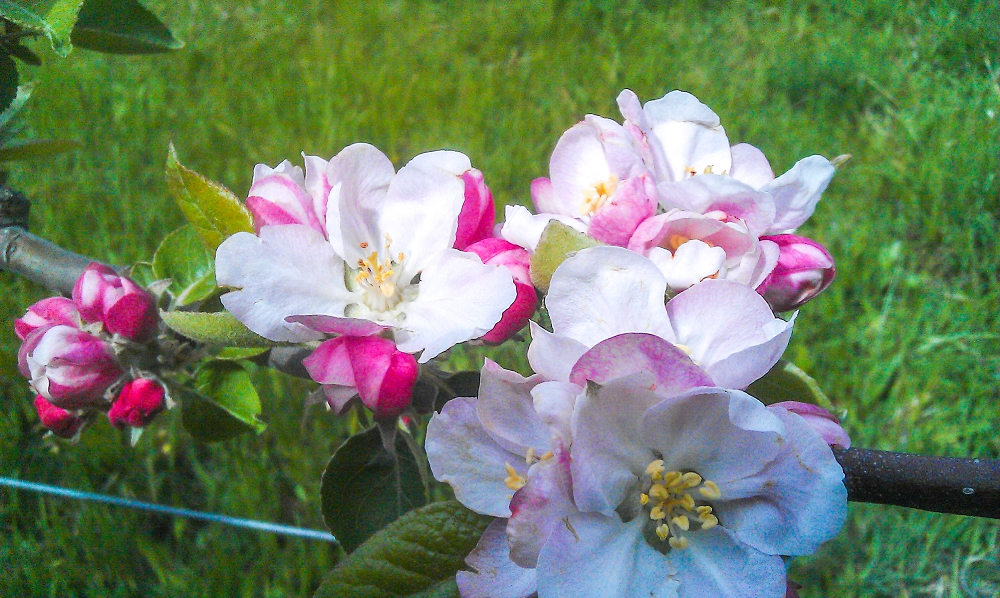
Triploid varieties produce sterile pollen, which won’t pollinate other varieties. Triploids are therefore usually planted with two other varieties that flower at the same time. The other two will then fertilise each other as well as the triploid.
Other triploid varieties include Mutsu, Gravenstein, Blenheim Orange, Jonagold, Ribston Pippin, Newtown Pippin, Roxbury Russet, and Winesap. That means that these varieties won’t act as pollinisers for your Bramley tree!
Despite this disadvantage, triploids have several advantages over the more common diploids. They produce large, vigorous trees and have large fruit. They also have good natural disease resistance and are quite resilient in difficult conditions.
That’s why Bramley apples have adapted so well to Australian conditions.
Because we’re certified organic and don’t use any pesticides or chemicals, we’ve always tried to plant varieties that have a higher natural resistance to pests and diseases. The Bramley grows a strong, healthy tree that’s quite resistant to black spot fungal disease (also called apple scab).
What to plant with your Bramley apple tree
If you’re planning to plant a Bramley, you need to plant other varieties that are diploid (not triploid, as explained above), that flower at about the same time.
There’s a long list of suitable candidates that includes:
- Gravenstein,
- Gala,
- Cox’s Orange Pippin,
- Golden Delicious,
- Fuji,
- Granny Smith
- Jonathon.
When are Bramley apples ready to pick?
Bramley apples are usually ready to pick when they have turned from bright green to a greenish-yellow, and when the seeds have at least started to turn from white to brown.
They are generally harvested as a cooking apple rather than a fully tree-ripened eating apple.
This means that you don’t need to be as fussy about getting the harvest time right. As soon as they’re large and mature, you can start picking them.
How to store Bramley apples
We’d like to share a word of caution from one of our Grow Great Fruit members (whose family, coincidentally, hails from Southwell, the birthplace of the Bramley apple).
Her experience is that Bramleys don’t store as well in Australia as they do in England.
This is probably due to higher temperatures when the fruit is picked, which can shorten their storage life significantly. It’s very important to cool them as quickly as possible after picking, and in most climates in Australia, apples will always store better if refrigerated, even in winter.
The keys are to:
- Pick them in the cooler part of the day
- Cool them quickly after picking
- Store them in refrigeration if possible
- Avoid leaving them in warm room temperatures
This helps preserve texture and slows down breakdown.
Caring for your Bramley crop
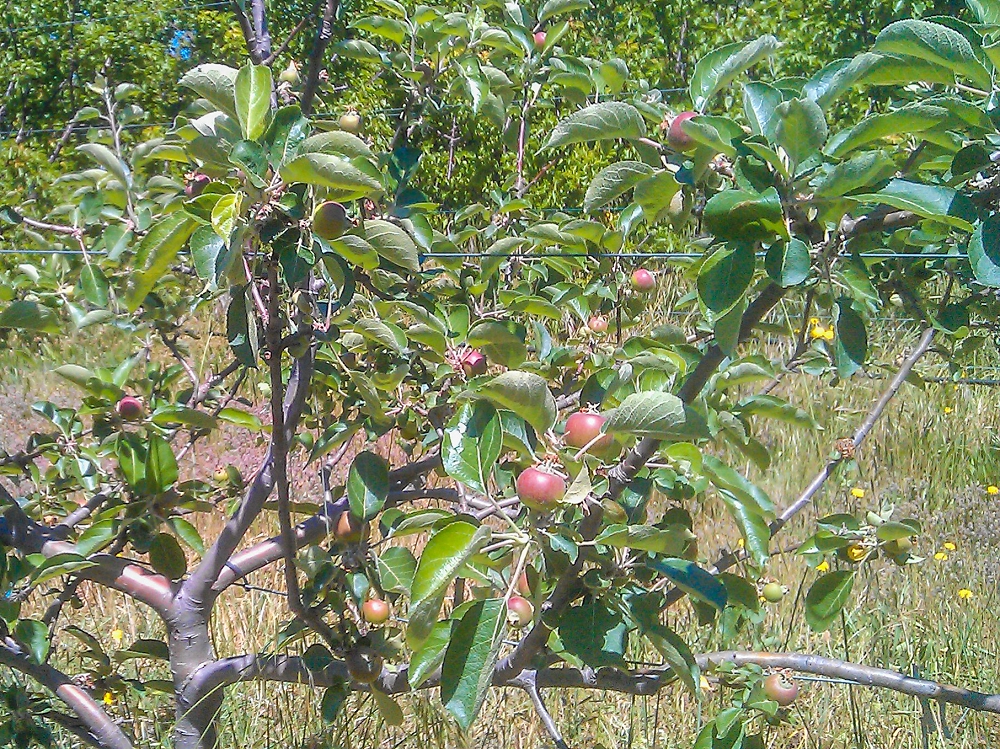
The Bramley is a large, irregularly shaped apple. They tend to be heavy croppers, which means they often have a lot of fruit on the tree.
You need to thin your crop every year. This means taking some of the fruit off when it’s tiny.
Bramleys can grow quite huge and need a lot of room to grow. If you leave them to grow in bunches, they can push each other off the branch or end up smaller than they would otherwise.
Pests also love to hide in the spaces between bunches of apples. It’s much better to leave them hanging singly rather than in bunches or pairs. We normally do our apple thinning in November and try to get it all finished by the middle of December.
Like all fruit trees, it’s a good idea to protect the crop from the birds and any other predators that might like to have a munch on them.
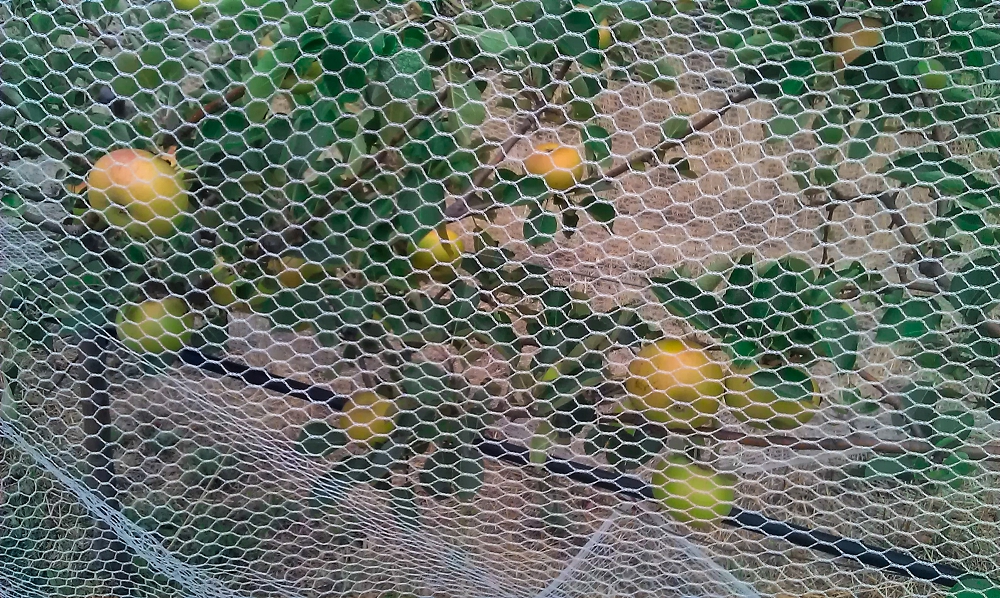
For us, that includes kangaroos, but luckily, they are deterred by nets. If you’re going to net your Bramley tree, put the nets on just after thinning, and leave them in place until you pick.
Where to buy Bramley apples
Bramley apples are a heritage cooking variety, and in Australia, they are not something you will usually find in supermarkets.
Instead, they are most commonly found through:
- farmers markets
- local apple growers
- heritage orchard networks
Because they are not a mainstream commercial supermarket apple here, you usually need to connect directly with growers.
You can buy them in season through our on-farm orchard, but we only grow small quantities and sell very locally. Your local farmers markets are often the best place to start. It is worth asking stallholders specifically for cooking apples and heritage varieties, because availability changes seasonally and by region.
They’re so hard to find that we strongly recommend including a Bramley apple tree in your garden if you want to make really awesome apple pies.
Where to buy Bramley apple trees
If you want to grow Bramley apples yourself, the best option is to look for a specialist fruit tree nursery rather than a general garden centre.
And yes, we do sell the trees, but if you want one, we recommend you get your order in early because they usually sell out. Orders usually open in April each year.
Because Bramley is a heritage variety, it is more likely to be available from nurseries that specialise in traditional fruit trees.
It is also best, where possible, to buy trees that were grown in your local climate.
Trees grown in your own conditions tend to establish more easily and perform better in the long-term than trees grown in different climates.
Why Bramley apples are worth growing
Despite their quirks, Bramleys remain one of the most useful cooking apples you can grow.
They are:
- highly productive
- reliable croppers
- excellent for cooking and preserving
- one of the most important heritage cooking apples worldwide
Want to know more about how to grow heritage apples?
If you love growing fruit, you’re going to really love growing heritage varieties. It adds a whole new layer of fun to your garden adventures!
🍎 Discover heritage varieties you’ve never heard of
🍏 How to grow apples – the organic way
🍎 Awesome Apples: Apple growing answers, from pruning to pests
🍏 7 reasons to grow heritage and heirloom apples
🍎 Save heritage fruit trees by planting them
🍏 Growing (book-worthy) heritage fruit
🍎 A visit to Petty’s Heritage Apple Orchard
🍏 How to prune your apple tree
🍎 Do you have apple tree leaf curl?
🍏 Why are my apples brown inside?
🍎 Apple Fermentation Masterclass
Related Articles
Where to get fruit trees (and how nurseries work)
Our goal is to send our organic fruit trees to good homes (and gardens) far and wide. There’s always room for one more fruit tree, right?
Grafting citrus – ouch!
Grafting citrus is a great way to change varieties or create a new tree, as long as you can avoid those potentially painful prickles.
Discovering bush food
Learn from indigenous farming heritage and give Australian native foods a place in your garden, kitchen, and diet.
Would love to find out if Bramleys are ever available up here in Townsville? Watched my Grandma and mam bake apple tarts just slicing the bramleys straight onto the pastry. My apple crumbles at our vegetarian B&B that we had in the north of England were favourites. There was a Bramley in the garden as well as a Pink Lady.
Hi Rosemary, thanks for the comment and for reading the blog. You’d be hard pressed to find them in Townsville I reckon, unless you can find someone to send you some (we used to do that but stopped because of biosecurity concerns). Bramley need a cold winter to set fruit so don’t do that well in Australia generally, but there are few crazy growers like us who grow them anyway!
Hello from Newcastle
Do you know of any other suppliers of Bramley apples or trees in Australia?
Chris
Hi Chris, we sell them through our on-farm nursery called Carr’s Organic Fruit Tree Nursery – https://openfoodnetwork.org.au/harcourt-coop/shop#/producers, but you should also be able to find them at other nurseries.
found a bramley apple tree in the Adelaide hills
Where. Can I purchase a young tree?
Sarah
I grow Bramleys here in Tasmania very successfully, absolutely beautiful.. I will attempt to grow them now in WA where we are moving to.
They’re such a great apple aren’t they Sallyanna? Of course Tassie is the perfect environment for them, good luck with them in WA.
I bought my Bramley from Diggers in Victoria in about 2018.
I was wondering if you had any Bramley Apple trees for sale at present.
Also, do you have quince tree for sale?
Hi Lindy, thanks for the enquiry. Yes, we have Bramley apples and Quince (two varieties) for sale at the moment. Our nursery is called Carr’s Organic Fruit Tree Nursery, and here’s the link where you can see the trees for sale and order them: https://openfoodnetwork.org.au/carrs-organic-fruit-tree-nursery/shop. Orders have to be completed by June 30, and then the trees will be available to pick up from the farm on the weekend of 13/14 July. Cheers, Katie
Hello, do you know how many chill units (hours) that Branley apples require. Preferably using the Utah model (Richardson method).
Hi Peter, thanks for the enquiry. Sorry, but this is one of the bits of data we don’t have in our Fruit Tree Database yet, but thanks for the prompt, we’ll do some research and remedy the fact asap!
Hi do you have any Bramley apples and can you ship them to the Gold Coast?
Hi Laura, thanks for getting in touch. Get in touch with Ant Wilson through his website Tellurian Fruit Gardens for fruit enquiries, as he’s managing the orchards on the farm these days. Cheers!
Hi, I would love to buy a Bramley apple tree. I am a descendant from Matthew Bramley who owned the house where the original Bramley tree still survives today. We moved to Australia 12 years ago after living within a few miles of the original Bramley apple tree. I would love to buy one here in Perth.
Allison Rollitt (maiden name- Bramley.)
Hi Allison, sorry but we don’t have any contacts with WA nurseries at all. We sell them each winter through our nursery Carr’s Organic Fruit Tree Nursery – https://openfoodnetwork.org.au/carrs-organic-fruit-tree-nursery/shop, but we don’t normally do mail-order. If you can’t find one anywhere else get in touch and we’ll see what we can work out. The best we can suggest is a local area search of local nurseries on your browser of choice. Failing that, Daleys nursery in NSW grow great trees and also do mail-order, and Diggers Club in Victoria also do mail order, so if you can’t find a good local nursery you could try them.
I live in Dubbo NSW
Any chance that a Bramley cooker would grow here?
Ditto Cox’s Orange Pippen
Hi Barbara, yes, you shouldn’t have any problems growing apples in Dubbo. Cheers.
Hello out riding my motorbike come across a apple tree apples looked good but tasted sour picked some and found out that they were bramley apples.Going to get a cutting to put on my apple tree
Hey James – don’t you love those fantastic finds? And it’s so great to preserve a good variety once you find it with grafting, good on you. Just a word of caution – if it’s a roadside tree there’s a good chance it’s not be a genetic Bramley (i.e. if it grew from a seed from a Bramley apple it will have been pollinised by a different variety, so the offspring are genetically different to the parent). This makes no difference at all, just don’t give the wood to anyone as “Bramley” – but it’s a great opportunity to name your very own apple! Maybe the “Motorbike Cooker”?
Hi Katie sorry didn’t answer you thought id lost this page .I had showed the apple to my English friend he new the apple straight away and asked where the tree was but im not telling him. He can find his own
what’s an equivalent type apple in Melbourne?
Hi Caz – Bramley! You can buy the trees in Australia (we have them here at Carr’s Organic Fruit Tree Nursery – and I think other nurseries stock them as well). Failing that, the traditional Australian cooking apple is the ever-reliable Granny Smith, and it’s a winner!
Hi Caz don’t know what apples are the same in Melbourne
I have bought Bramleys here in Tasmania and grown them successfully… beats a granny smith any day which is an eating apple only for us europeans.. Bramleys are for cooking and cant beat them !
My dwarf Bramley’s have a good crop (Canberra) .
Which month will they mature in please?
Thanks for the tip about thinning them out!
I couldn’t get enough of them when lived in the UK.
Hi Margaret, the earliest we’ve ever picked them in Harcourt is 21/2, but usually late Feb to early March – probably similar time in Canberra
Hi
Would you share where you bought your dwarf bramley apple trees please? I live in Sydney and would just love to buy a couple.
Kind regards
Caron
Hi Katie – we have 2 bramley apple trees (in Albany, WA) and they are doing well and producing fruit. Our dilemma is, we are not sure when to pick them. Can you give us an idea of the right time to do this?
Hi Phil and Sue – the main things you’re looking for are whether the seeds have gone a nice dark brown, and are good and plump. With other apples you’d also be taking things like taste, background colour etc. into account, but because Bramleys are only used for cooking and are tart anyway, this doesn’t matter so much. We also have a short course on the topic of figuring out the right time to pick if you’re interested – https://growgreatfruit.com/product/fruit-to-be-proud-of/
Hi,
Can you tell me if there are any suppliers or growers that I can purchase a Bramley Apple tree from over here in Perth WA?
You help would be appreciated.
Warmest regards,
Chas Smith
Hi Chas, sorry but we don’t have any contacts with WA nurseries at all, so the best we can suggest is a local area search on your browser of choice. Daleys nursery in NSW grow great trees and also do mail-order, so if you can’t find a good local nursery you could try them.
The last comment i see is from 2021.
I am in WA, is there any change with you sending a sapling here?
Hello Mark! We are still here and still growing our Bramley apples in our nursery – but unfortunately, we only sell our trees for local pick up. Best of luck finding a local nursery that can provide you with a tree of this wonderful heritage variety!
Jill – Grow Great Fruit Team
Hi, can you advise who is growing Bramleys in NSW in a commercial Orchard. My usual course Silver Springs Orchard in Bilpin in probably running down their operation. I have heard someone in Young NSW is growing. Also would be interested Victorian Growers
Hi Gary, sorry can’t help with Bramley growers – we don’t really know of anyone who grows them, other than us, and we only have 20 trees so not a huge supply.