Estimated reading time: 8 minutes
This is a question we get asked a lot — many people are curious about how a fruit tree nursery works, and the answer is more interesting than you might expect.
Most fruit trees from a nursery are around 1- 3 years old, depending on how they’ve been grown. Some can be older, particularly if they’ve been grown on for extra size, or turned into multigrafts, as we regularly do in our on-farm Carr’s Fruit Tree Nursery.
Unfortunately, it’s a bit tricky to answer the “how old is a tree” question, because there are lots of “ifs” and “buts”. And it’s useful to remember that the fruit tree nursery experience differs depending on the type of tree.
But here goes – we’ll try to answer succinctly, without writing a whole essay on fruit tree production!

How we grow our fruit trees
Fruit trees aren’t usually grown from scratch in one go. There are a few steps that happen throughout the year, and different types of trees go through different processes, so they can take varying amounts of time. In fact, the methods we use at our fruit tree nursery are tailored to each variety.
But essentially, the process is always the same.
First, the rootstock is grown, which might be from seed or cuttings. That alone can take a year or more. Sometimes, the rootstock will be pruned before it’s grafted, for example, if you’re trying to create a multigraft tree.
Then the fruiting variety (or varieties) is grafted onto the rootstock, and the tree is grown on for another season (or sometimes longer) before it’s ready to sell. Our fruit tree nursery follows these steps closely to ensure healthy trees for customers.

Which fruit trees grow from seed?
In our Carr’s Fruit Tree Nursery, we grow apple, pear, quince, peach, and citrus rootstocks from seed. Cherry, dwarf apple, and quince rootstocks are created by layering trees in a stoolbed. And we use cuttings for fig trees and plum rootstocks (which are used to graft both apricot and plum trees).
We collect the propagation material several months before the right time to plant it out, and store it over winter. The nursery is planted in spring, and the new seedlings/rootstock trees then grow over spring and summer, following fruit tree nursery best practices.
Bud-grafting happens in February, with follow-up grafting in winter. Grafted trees then grow out over the following season and are sold at the end of the season. All up, this is 2 years after the initial seed/cutting was planted.
And that’s if everything goes according to plan! Some trees go through a slightly different system, which takes an extra year, so they’re 3 years old by the time they’re sold. At our fruit tree nursery, we see these timelines vary depending on conditions.
Does the age of the tree actually matter?
This is the part that often surprises people. For folks thinking about buying from a fruit tree nursery, age is less important than health.
In most cases, the age of the tree doesn’t matter nearly as much as you’d think.
That’s because when you plant a fruit tree, you’ll usually prune it quite hard (which is called establishment pruning) when you plant it.
This starts the process of shaping the tree and establishing the right number of branches, in the right place, for the type of tree you want to grow, whether it’s vase-shaped, espalier, or something else. Certainly, the fruit tree nursery’s initial work sets you up for success, but your ongoing care is crucial.
Now it gets a bit more complicated
It sounds like a lot of steps, right? This is something every fruit tree nursery deals with regularly.
You might be surprised that this is the simple version! We actually use five different grafting techniques to grow our fruit trees, and each one has several steps involved.
A couple of factors can add layers of complexity. The first one is that at each stage of the process, we don’t get 100% success (though we’re always striving to improve our techniques).
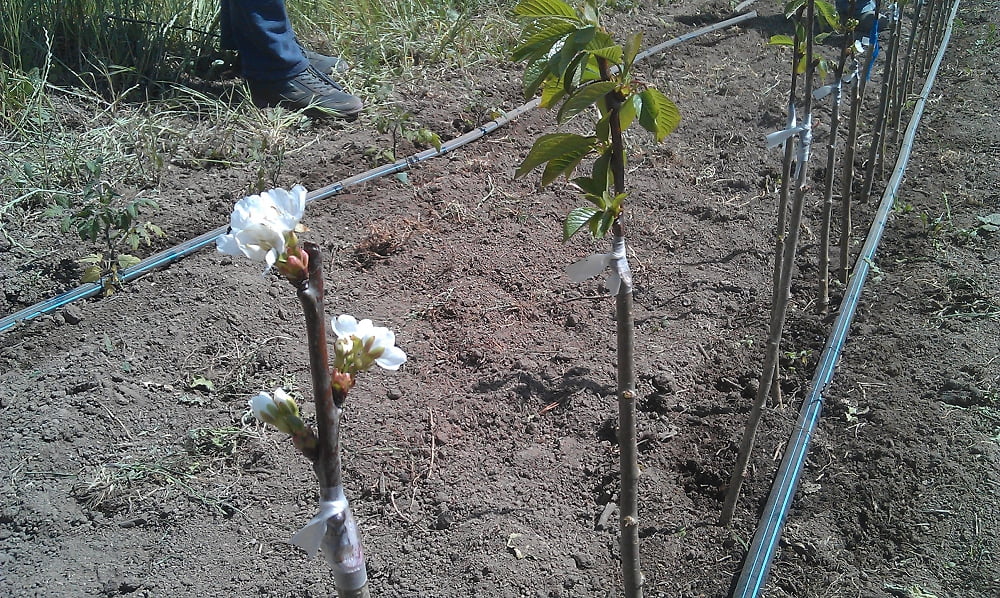
When we do the bud-grafting, for example, not all the buds will take. At the fruit tree nursery, we need to adapt if grafts don’t succeed.
Grafts that have failed will either be rebudded with a different technique or left to grow and be grafted the following winter.
Likewise, not all grafts are successful. The failures will be cut back to the original rootstock and allowed to grow for a bit longer before being bud-grafted the next summer. In the fruit tree nursery, this approach helps us keep production moving forward.
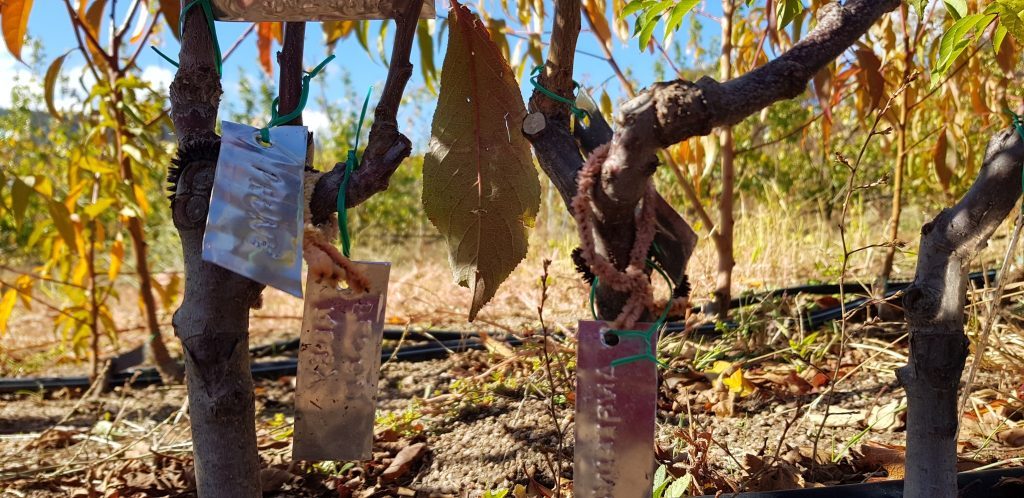
How to create multigraft fruit trees
Some rootstocks are destined to be sold as multigraft fruit trees, and they go through a slightly different process. These trees are headed in early summer to create the multiple branches we need. The fruit tree nursery team ensures the proper steps are taken for quality multigrafts.
Any that branch and grow strongly enough are then bud-grafted with multiple varieties in February. We cut back to the buds the following summer, and the trees are ready for sale the following winter.
All up, this may take up to 3 (or occasionally even 4) years since the original cutting/seed was planted. This longer process is typical at a fruit tree nursery that specialises in multigraft options.
What matters more than age?
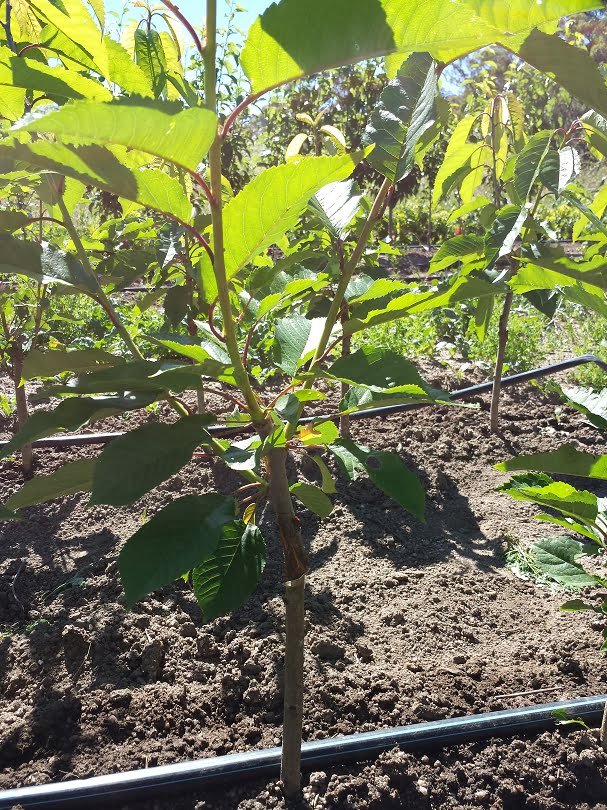
You’re probably starting to see why it’s not a simple question to answer, but in summary, most trees we sell are between 1 and 3 years old from seed to finished tree. If you ask the team at a fruit tree nursery, they’ll highlight tree health over age every time.
However, the age of the tree isn’t as important as things like:
- How well the tree has grown
- The health of the root system
- How it’s planted and cared for in the first year
These factors will have a much bigger impact on how your tree performs than whether it’s one year old or three. Looking after your tree well, after it leaves the fruit tree nursery, matters most.
The takeaway
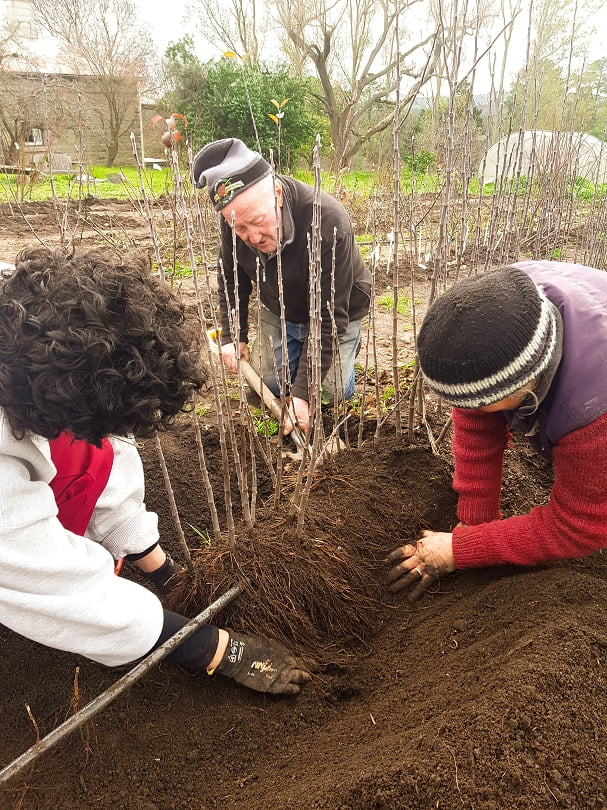
Nursery fruit trees are usually 1–3 years old, sometimes a bit older — but that’s not the most important thing. As you can see, the fruit tree nursery provides trees of various ages, but your care is what counts.
What really matters is how you establish and manage the tree once it’s in the ground.
Related Articles
Where to get fruit trees (and how nurseries work)
Our goal is to send our organic fruit trees to good homes (and gardens) far and wide. There’s always room for one more fruit tree, right?
Grafting citrus – ouch!
Grafting citrus is a great way to change varieties or create a new tree, as long as you can avoid those potentially painful prickles.

What home fruit growers can learn from farmers
Backyard growers can learn a lot about growing food from farmers’ experience and insights into the highs and lows.
Really interesting- lots of work, skill and also luck involved. Thanks for the explanation. Are you doing dwarf cherries?