The time for budding fruit trees in the nursery comes around so quickly.
Amidst the busyness of summer harvest time, it’s a slow pleasure to take the time to bud graft.
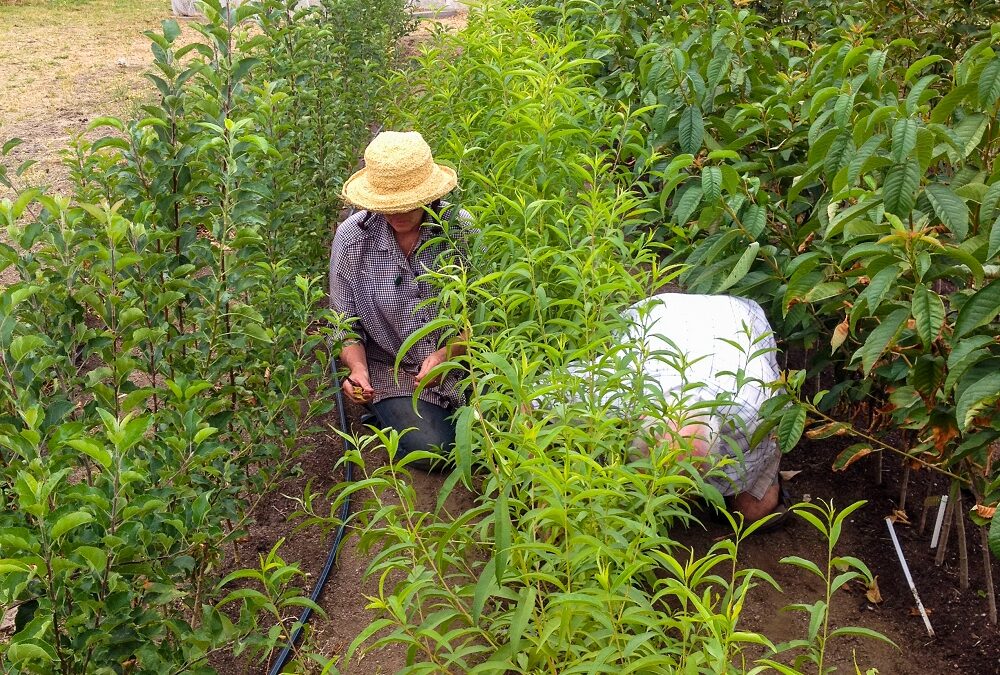
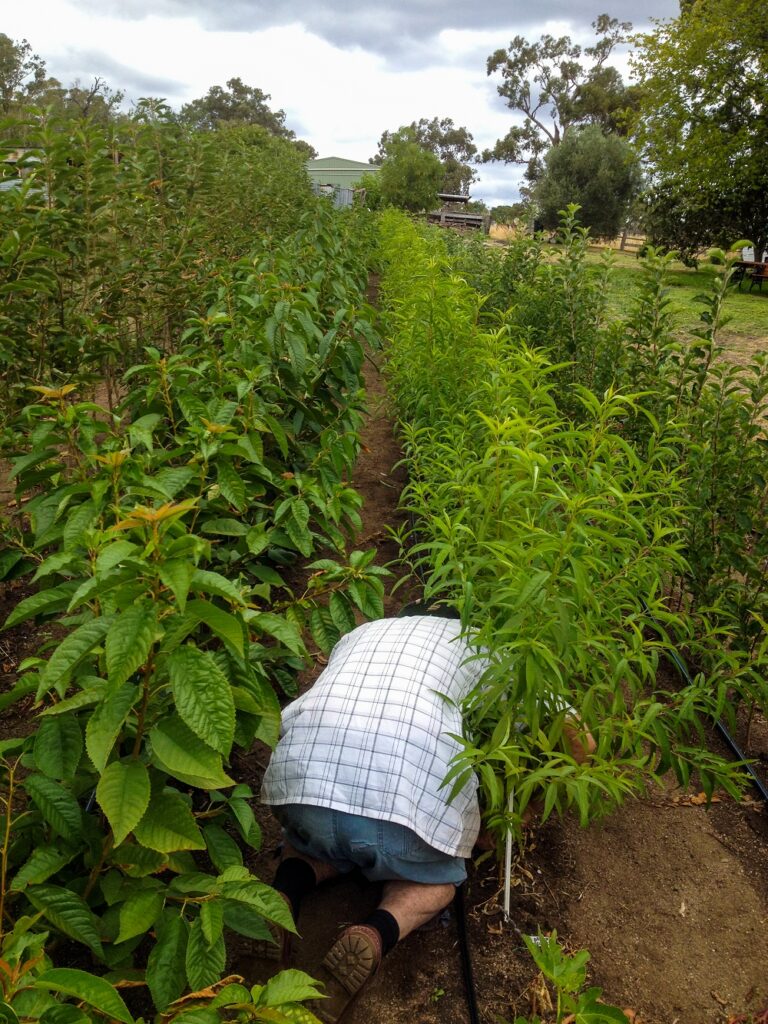
We spend hours kneeling among our beautiful rootstocks in the fruit tree nursery doing the tiny, almost magical job that will turn them into a new variety and create a whole new tree.
Why bud graft your fruit trees?
Budding fruit trees is a little bit Frankenstein, a little bit God, as described in this blog. It’s the way we change the destiny of a tree that has grown from seed, and transform it into the varieties of juicy, tasty fruit we want them to be.
The trees in our nursery (or the ones that come up in your compost pile) start life growing from a seed or a cutting.
If we let them grow to maturity, they will usually (but not always) bear fruit. But there’s a good chance that the fruit will be small, inedible, or just not very nice. Unfortunately, they don’t usually grow “true to type”, so the fruit will often be different from the parent.
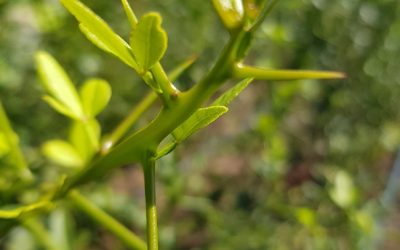
In the case of citrus and plum seedlings, they will most likely be extremely spiky too!
Transforming trees with budding
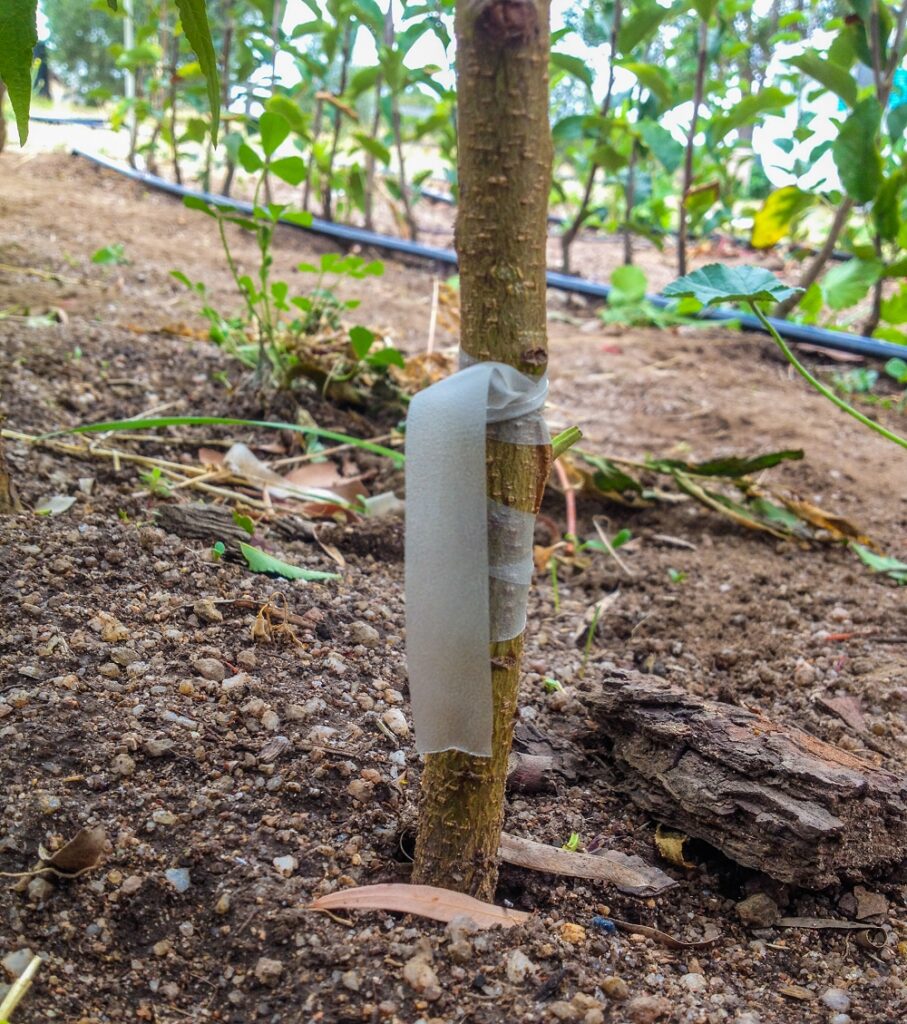
That’s where summer budding comes in. By budding, we graft one or more known varieties of fruit cultivars to the seedling rootstock.
That’s where the Frankenstein thing comes in.
You have to have a surgeon’s precision (and ideally over 50 years’ experience, like Katie’s dad, Merv) to cut the fine incisions in the bark of the rootstock trunk just big enough for the bud to slide in and get taped on.
Choosing the right time for summer grafting
By late summer (the ideal time for bud grafting), the seedlings are about the thickness of your index finger.
February is the ideal time for budding fruit trees in the nursery (or your garden) in the southern hemisphere (six months different for northern gardeners).
The rootstock trees are as big as they’re going to get (more or less) and the sap is still flowing. Happy unions between bud and tree can happen.
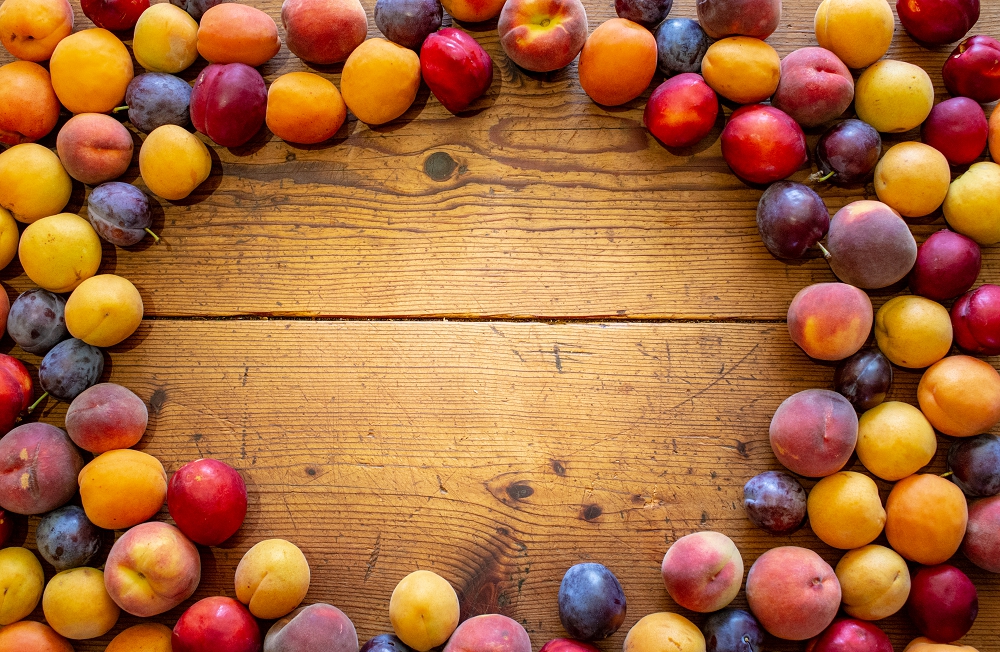
About this time of year, we start summer budding on the peach rootstocks. With freshly sharpened knives in hand, we bud a couple of hundred trees with all sorts of varieties of peach and nectarine.
The rootstock trees were grown from seed that we saved from last year’s bottling adventures. If the buds are successful, the trees should be ready for local gardeners to plant by next winter.
Once the trees start to slow down for autumn and their winter hibernation, then the bark won’t ‘lift’ anymore to receive a bud. All is not lost even then, because we just switch to the chip budding technique.
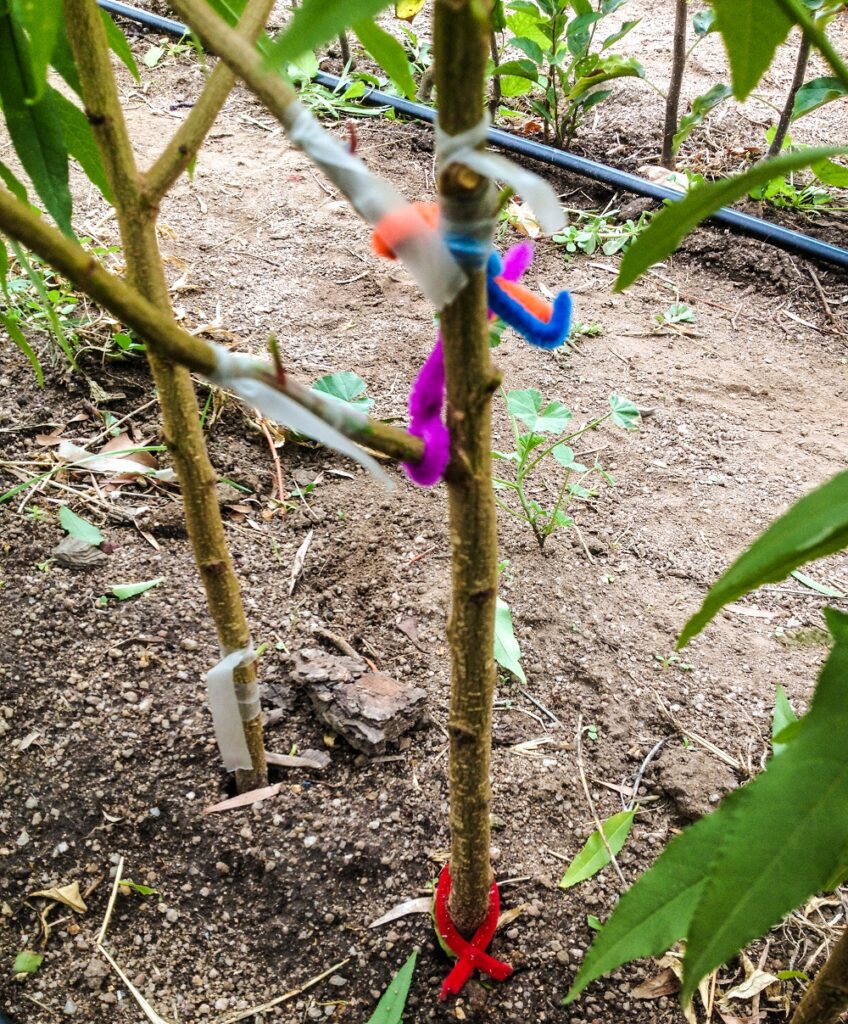
Budding success
Once the sap starts to flow and joins the new bud onto the original rootstock tree, then we have success.
But if our cuts are a bit out of whack, the bud’s a bit big or dry, or the season is too late, then the bud might not ‘take’.
In that case, we have to wait until spring to try again with a different grafting technique.
It’s not the most glamorous or elegant activity, spending hours on your elbows and knees, carefully slicing open small trees.
But it is so incredibly interesting to see how the trees grow and learn about all the different varieties and experiment with different techniques, such as multi-buds on single trees.
If we’re creating monsters, at least they’re edible monsters!!!
Grow well
Want to learn more about grafting fruit trees?
If you’ve already tried grafting, we don’t need to persuade you how addictive this hobby is! And if you’re new to grafting, you’re going to love it, we promise! Here are some extra resources to get you started.
🌿 Fruit tree grafting for home gardeners
🌿 How to tell fruit buds from leaf buds
🌿 Grow your own fruit trees for free
🌿 Grafting technique #4: summer bud-grafting
Related Articles
Where to get fruit trees (and how nurseries work)
Our goal is to send our organic fruit trees to good homes (and gardens) far and wide. There’s always room for one more fruit tree, right?
Grafting citrus – ouch!
Grafting citrus is a great way to change varieties or create a new tree, as long as you can avoid those potentially painful prickles.
Five things we wish we’d known about fruit growing
We wish we’d known these five things when we started fruit growing to help us become better fruit growers faster.
I did two bud grafts here in Perth about two weeks ago, and I’m tentatively hopeful they’ve both taken. Monty’s Surprise buds onto an Anna Apple tree, in a pot. I’m planning to add another two buds next week, as it’s warm enough here to extend the season a little.
Are bud grafts likely to take if they’re done in spring as well? I’m thinking yes, as the tree is actively growing, but I haven’t tried it as yet. Can you advise on that?