Estimated reading time: 5 minutes
If you take an interest in sub-tropical fruit trees you might remember that a while ago we visited sub-tropical experts Daleys Nursery.
Related Articles

Warming winter cakes with home-grown fruit
Bake delicious warming winter cakes from the fruit you’ve grown on the fruit trees in your own garden for extra satisfaction.
How to grow your own multigraft or fruit salad tree
Multigraft trees are a no-brainer for many gardens, as they reduce risk and provide a bigger variety of fruit, without taking up more space.

Saving heritage fruit trees by planting them
Many heritage fruit tree varieties are in danger of going extinct. The best way to save them is by planting them in your backyard.
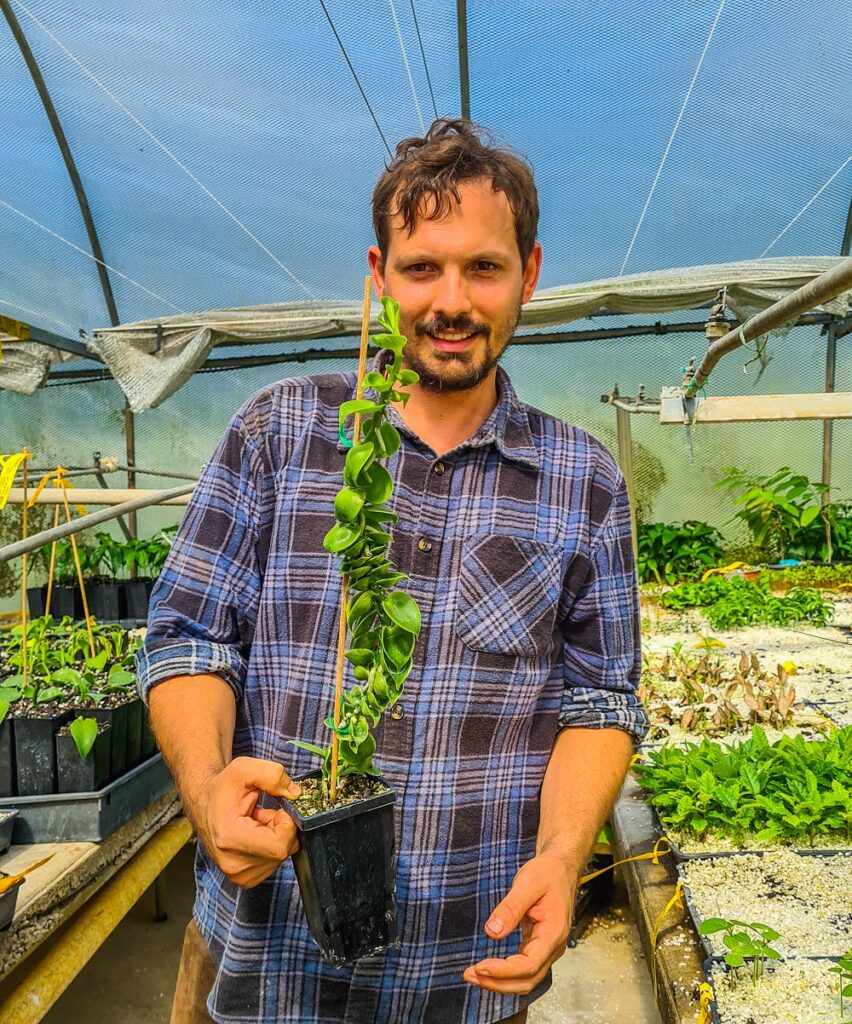
Then we were lucky enough to secure Paul Daley (who showed us around the nursery when we were there) and Andre Madeira (a long-time employee and also a family member) to do a Masterclass on How to Grow Subtropical Fruit for us!
Subtropical fruit flavours
One of the things we were keen to do on our visit was actually taste some of the fruit.
Most of the subtropical fruits seem exotic to us. They’re unfamiliar because they’re not easy to grow in our arid, temperate climate.
However, it’s not impossible! They just need the right microclimate and some special care. This is one of the topics Paul and Andre delve into in the Masterclass.
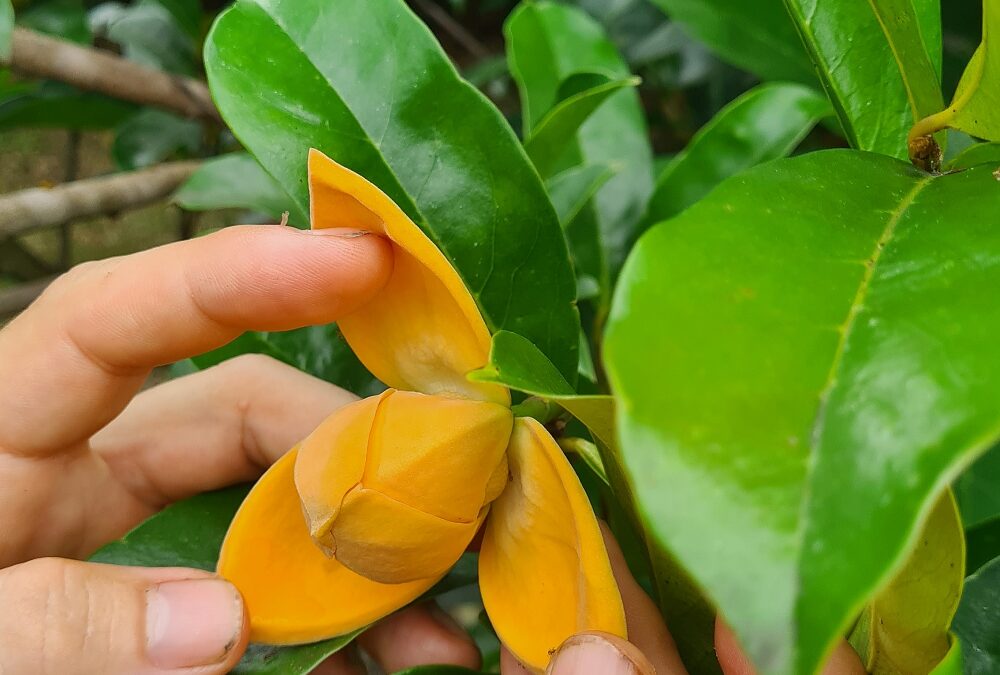
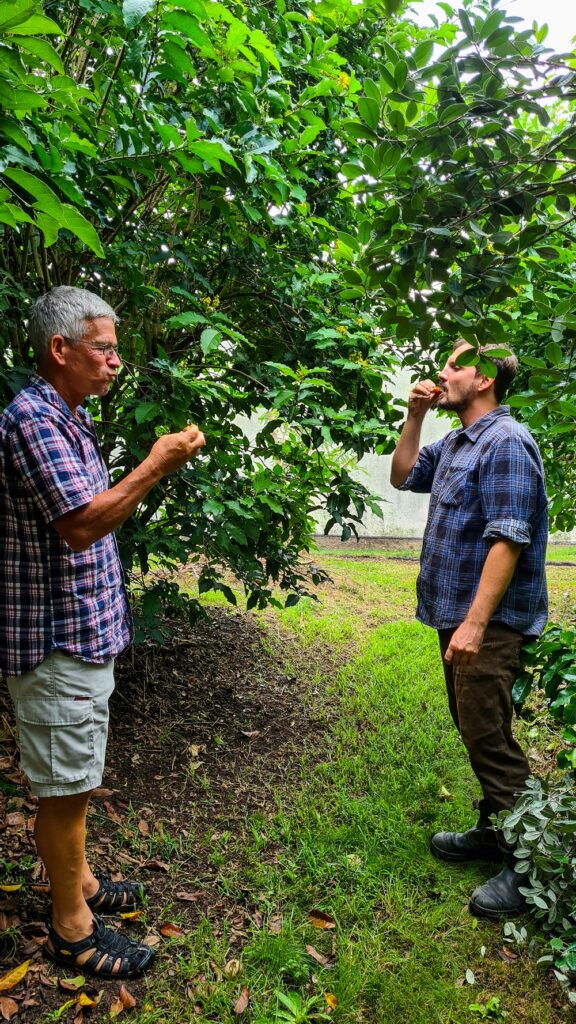
We hadn’t even heard of a Peanut Butter tree (Bunchosia glandulifera) before our visit. We were incredibly lucky they were in season while we were there. As you can see from Hugh’s face, they’re delicious (and yes – amazingly – they taste like peanut butter!)
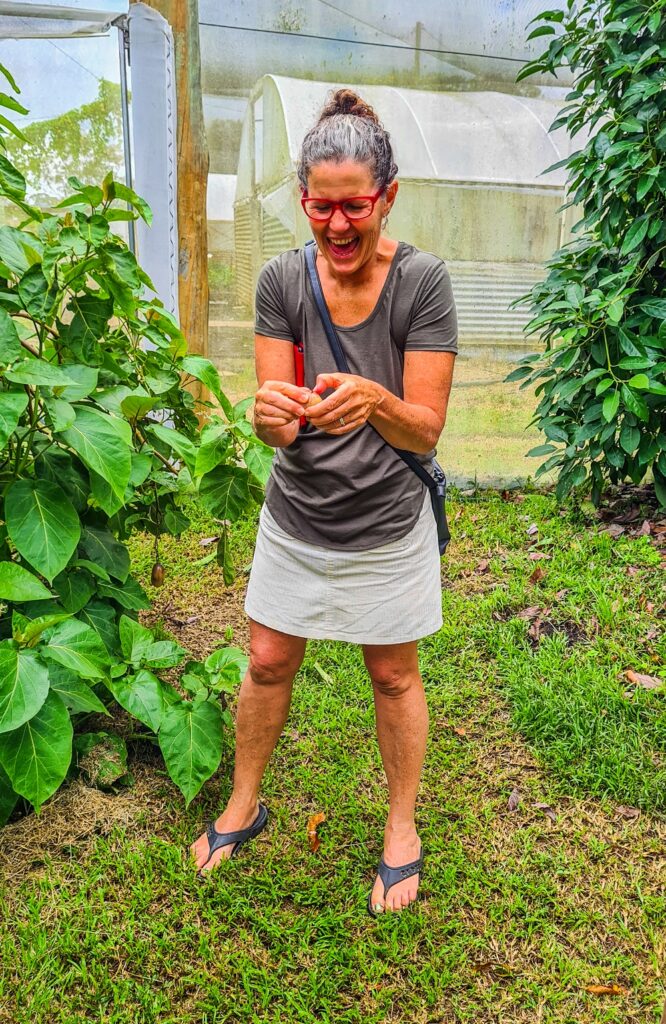
Tamarillo is something that we can grow relatively easily in temperate zones, and in fact, we grow it here on the farm.
However, we had no idea there are different types! We’ve only grown red tamarillos before, so Katie jumped at the chance to try a grafted tamarillo, which is milder and sweeter than the red (seedling) type. They’re also very juicy!
Growing subtropical fruit trees outside their comfort zone
One of the features of the nursery we were most intrigued by was the Biodome. This is a project that Paul and Andre established a few years ago.
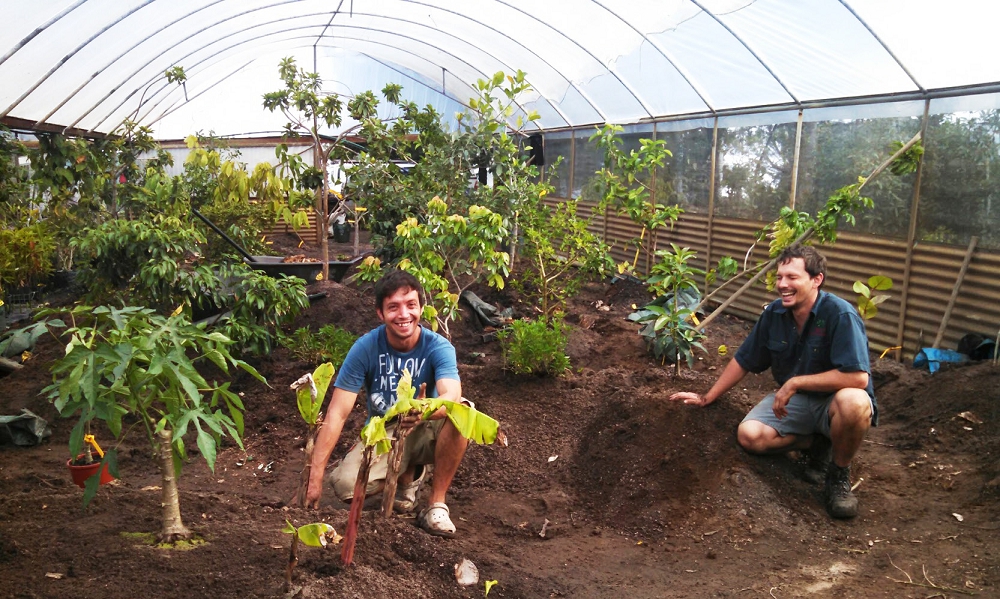
The concept draws on an understanding of original food forest cultures to establish a very special type of growing environment.
As Paul and Andre explain in the Masterclass, “modern” systems like permaculture, syntropic agriculture, and successional agroforestry all have their roots in indigenous food forest cultures.
A biodome is just one way you can aim to recreate forest conditions in a modern setting. It cleverly uses a few different elements to make it work on a small scale, such as using dwarf trees like this cute little Irwin mango tree.
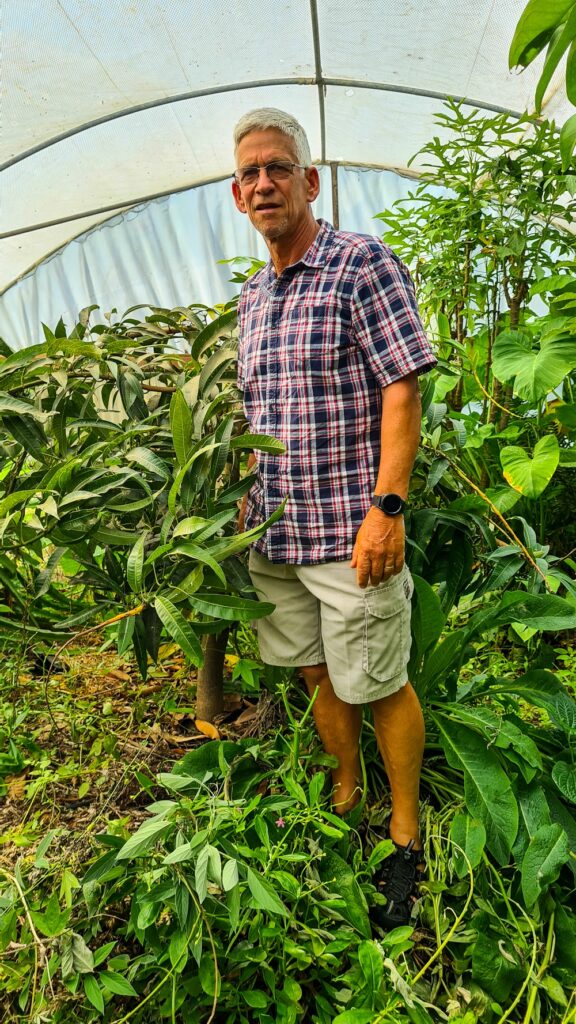
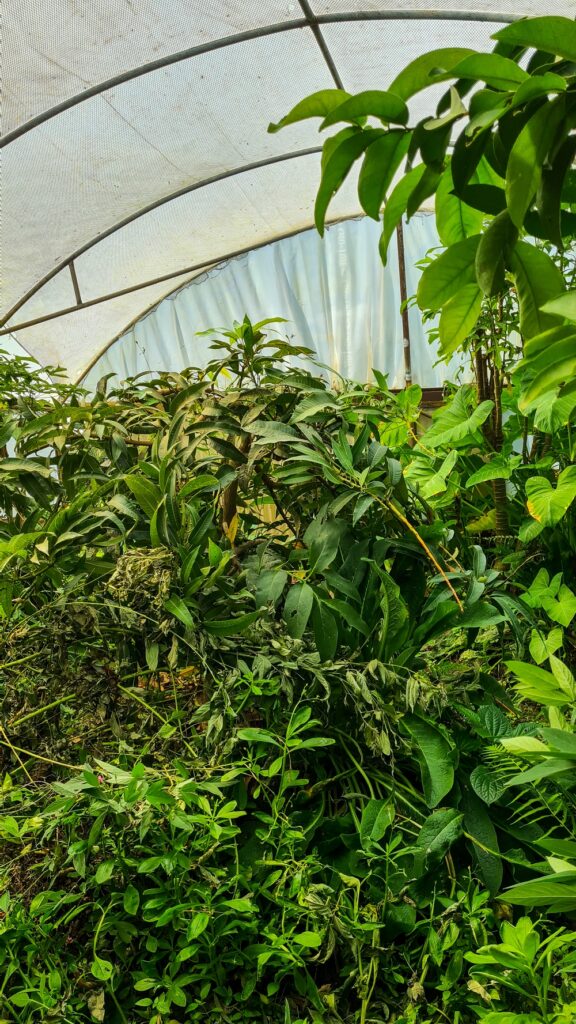
Another concept that’s integral to a biodome is the idea of layering the plants. You can think of it as 7 discrete layers:
- Canopy
- Sub-canopy
- Shrubs
- Herbaceous layer
- Rhizome and root layer
- Soil cover
- Creepers
One of the things we love most about the Masterclass is that Paul and Andre include plant suggestions for each layer!
Techniques for managing the height of trees
A lot of people are put off subtropicals because of the height that some of the trees can reach.
Considering many subtropical fruit trees have their origins in rainforests, it’s really not surprising they are genetically designed to be very tall. It’s the only way to compete for sunshine and nutrient within a very dense forest.
However, that doesn’t mean they can’t be grown at a much smaller height. That’s one of the reasons dwarf trees are so often used in urban settings. Not all subtropicals are available as dwarf trees, but many are.
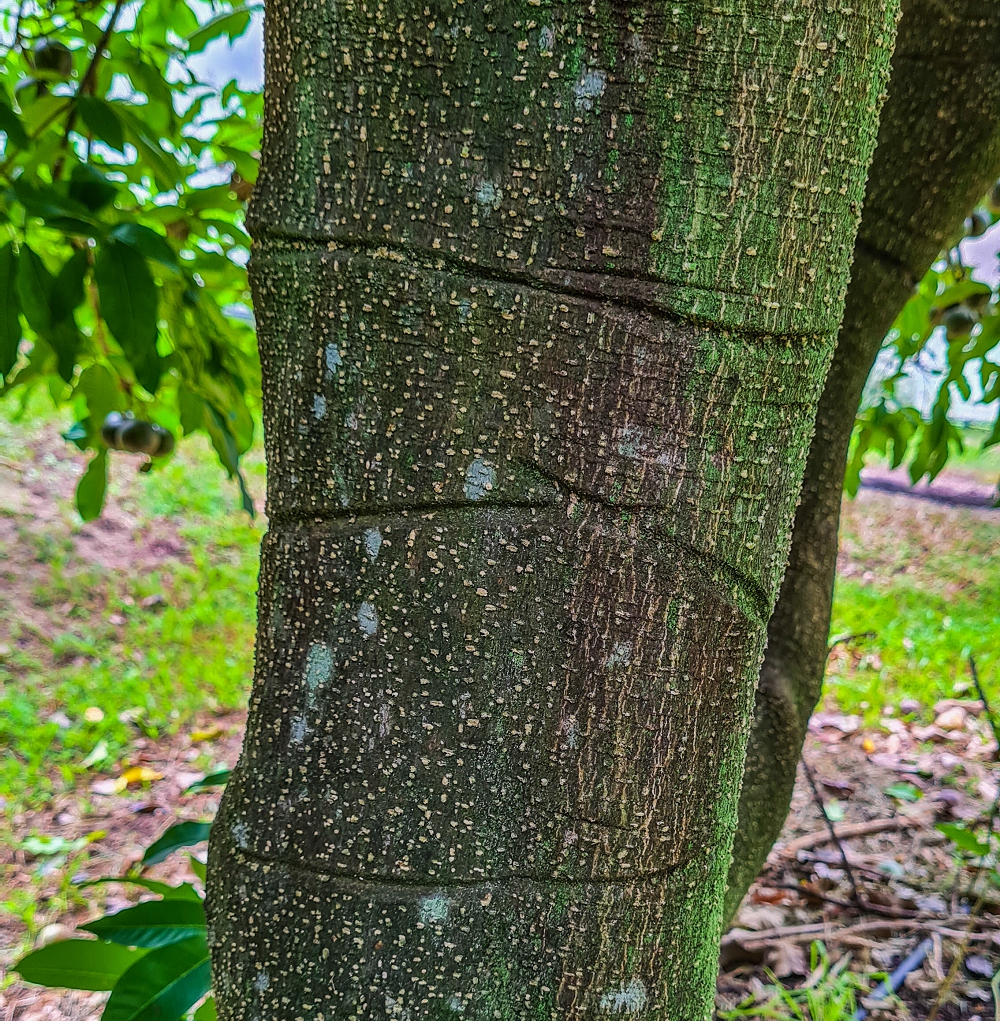
We were also fascinated to see a range of techniques in use at Daleys like pruning and cincturing to try to keep trees to a more manageable height.
It’s certainly not common to grow subtropicals outside of their natural climate. But visiting Daleys and doing the Masterclass has definitely opened our minds to new opportunities.
Finding and creating microclimates in your garden (or your house) is just the beginning of this exciting journey!
Related Articles
Warming winter cakes with home-grown fruit
Bake delicious warming winter cakes from the fruit you’ve grown on the fruit trees in your own garden for extra satisfaction.
How to grow your own multigraft or fruit salad tree
Multigraft trees are a no-brainer for many gardens, as they reduce risk and provide a bigger variety of fruit, without taking up more space.
Saving heritage fruit trees by planting them
Many heritage fruit tree varieties are in danger of going extinct. The best way to save them is by planting them in your backyard.